The Best Men’s Leather Bomber Jackets in the USA (2026 Ultimate Guide)

The Best Men’s Leather Bomber Jackets in the USA (2026 Ultimate Guide)
Everything you need to choose a jacket that outlasts trends, weather, and decades — including the #1 pick that’s a piece of WWII history.
Ray has personally tested over 40 leather bomber jackets across a $120–$900 price range over nine years, covering heritage, motorcycle, and fashion applications. He has contributed leather-goods content to several enthusiast publications and consults for outerwear buyers on material grading and construction quality.
The best men’s leather bomber jacket in the USA in 2026 is the Snag Leather Flying Tigers Horsehide Flight Jacket — a limited-edition, full-grain horsehide flight jacket directly inspired by the WWII American Volunteer Group. It is constructed from the toughest, densest hide available, with heavy-duty hardware, ribbed cuffs, and a satin lining built for long-haul comfort. Currently available at $339 (was $499) with free worldwide shipping and a 14-day return window. It is a limited production run — when it sells out, this configuration will not return.
View the Flying Tigers Jacket →Why Your Leather Bomber Jacket Choice Actually Matters in 2026
A leather bomber jacket is not a fashion accessory — it is a multi-decade investment. The original A-2 flight jacket, first issued to US Army Air Corps pilots in 1931, was engineered to survive brutal conditions at 30,000 feet. When built properly, a modern quality bomber jacket should outlast your car, your smartphone, and very likely three wardrobes of other outerwear.
Here is what happens when you choose wrong: bonded leather begins peeling within 18 months. Cheap zinc zippers seize up in cold weather. Split-grain hides crack at fold points within a few seasons. The market is flooded with corrected-grain and bonded leather jackets marketed as “genuine leather” — which technically they are, but the term conceals a dramatic quality gap that only becomes visible after 24 months of use.
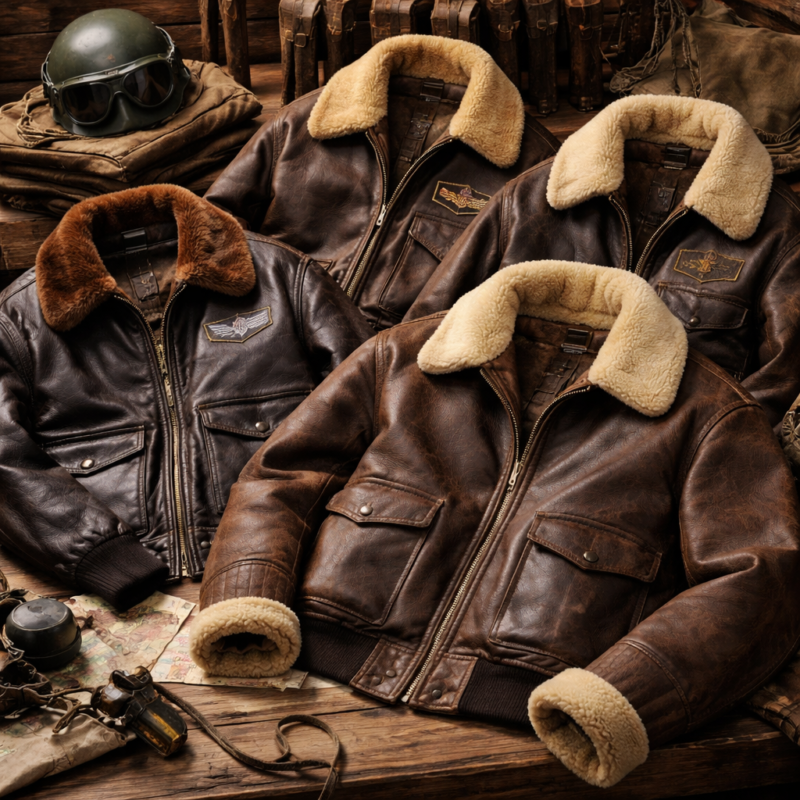
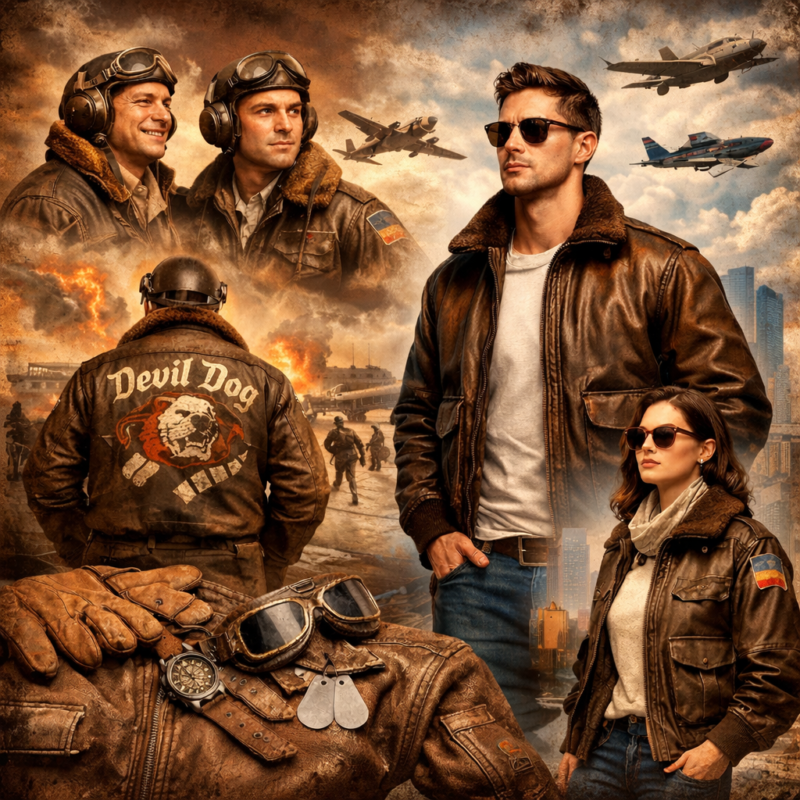
For veterans, history collectors, and heritage outerwear buyers specifically, the Flying Tigers Horsehide Flight Jacket is not a replica — it is a documented piece. It draws directly from the WWII American Volunteer Group, the most celebrated fighter squadron in aviation history. This is the context in which horsehide matters: these jackets were built to be worn hard in life-or-death conditions. The material standard is different from fashion leather.
What Is Horsehide Leather — and Why Does It Matter for Bomber Jackets?
Horsehide is the hide of a horse, typically from the rump (called “shell cordovan” when finished at that grade) or the flank. For flight and bomber jacket construction, flank horsehide has been the historical standard since the 1930s. Here is why it is different from every other leather:
- Density: Horsehide fiber structure is tighter and more uniform than cowhide, which means it is harder to puncture, abrade, or tear at an equivalent thickness. The same hide weight in horsehide provides more protection than cowhide.
- Break-in behavior: Horsehide starts stiff — significantly stiffer than cowhide or goatskin. Over 3–10 wears, it softens and conforms specifically to the wearer’s body shape. The result is a jacket that fits you specifically, not a generic silhouette. No other leather does this.
- Patina: Full-grain horsehide develops one of the deepest, richest patinas of any leather — a combination of surface wear, body oils, and natural aging that makes each jacket unique. Vintage 1940s horsehide A-2 jackets sell for $1,500–$8,000+ at auction specifically because of this patina quality.
- Rarity: Horsehide is significantly rarer than cowhide, which is why most commercial brands use cowhide. Full-grain horsehide bomber jackets are inherently limited production — there is simply less material available.
- Moisture resistance: The tight fiber structure of horsehide naturally repels light moisture more effectively than cowhide. Period-accurate WWII jackets needed to protect pilots in open-cockpit or unpressurized aircraft — horsehide was chosen for a reason.
5 Factors That Separate a Great Bomber Jacket From an Expensive Disappointment
Before examining specific jackets, here is the framework used to evaluate every product in this guide. These five criteria determine whether a jacket lasts 3 years or 30.
1. Leather Grade — The Non-Negotiable
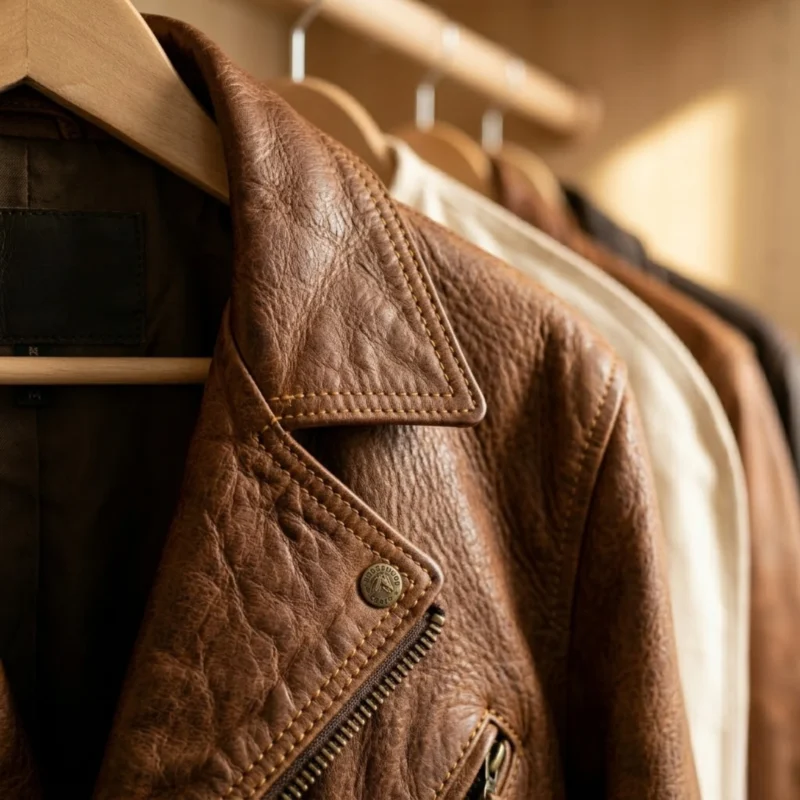
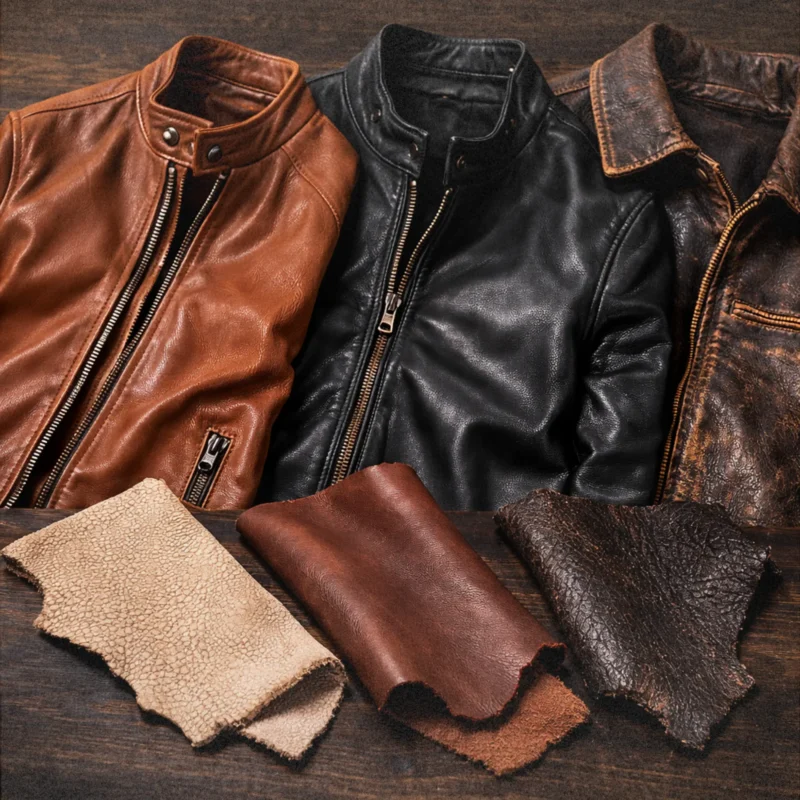
The hierarchy runs: full-grain horsehide → full-grain goatskin → full-grain cowhide → top-grain cowhide → corrected grain → bonded leather. Each step down represents a meaningful reduction in durability, patina development, and long-term wearability. Full-grain of any hide preserves the outer layer of the skin — the strongest, most breathable part. Any processing (sanding, buffing, coating) degrades that layer permanently.
The test: Ask the brand for the leather grade in writing. Any brand using full-grain leather will state it prominently — they are proud of it. Brands that hedge, use phrases like “premium leather,” or don’t specify grade are almost always selling corrected grain or bonded.
2. Stitching Density & Construction Method
Count stitches per inch (SPI) at a seam. 8–10 SPI indicates premium construction. Below 6 SPI is mass-market. Double-stitched seams at stress points (shoulders, underarms, front zipper channel) are required for a jacket that will survive years of daily use. Lockstitch is preferred over chain stitch — a single broken thread in chain stitch can unravel an entire seam.
3. Zipper & Hardware Quality
YKK zippers are the global benchmark. Brass hardware outperforms chrome-plated zinc, which oxidizes within 2–3 years of regular use. Test: open and close the main zipper while holding both sides of the jacket taut. A quality zipper moves with consistent, smooth resistance. Any skipping, catching, or force required indicates a zipper that will fail within a year of daily use.
4. Lining Construction
A fully lined jacket is required — half-lined construction exposes raw leather seams that abrade inner layers and indicate cost-cutting. Satin or viscose lining allows the jacket to slide on and off cleanly over layered clothing. The Flying Tigers uses a satin lining specifically designed for comfort over long periods — historically accurate for the aviator use case.
5. Fit Architecture (Especially the Shoulder Seam)
The shoulder seam of a leather jacket cannot be altered without destroying the garment. Every other dimension — chest, length, sleeve — can be adjusted by a skilled leather tailor. The shoulder fit must be correct on purchase. Seam should sit at the exact edge of your shoulder, not drooping toward the bicep or pulling toward the neck.
Top 5 Men’s Leather Bomber Jackets USA — 2026 Rankings
Evaluated across leather quality, construction, hardware, longevity, and value. All prices current as of March 2026.
| Rank | Jacket | Leather | Price | Best For | Score |
|---|---|---|---|---|---|
| 🥇 #1 | Flying Tigers Horsehide Flight Jacket Editor’s Pick Limited | Full-grain horsehide | $339 $499 | WWII heritage, collectors, serious long-term wear | 9.8/10 |
| #2 | Snag Battleworn A-2 Flight Jacket | Full-grain horsehide | $329 $539 | Vintage purists, veterans, collectors | 9.5/10 |
| #3 | Snag B-3 Sheepskin Bomber | Genuine shearling | $289 $399 | Cold-weather riding, winter everyday | 9.2/10 |
| #4 | Mid-Range Brand X | Top-grain cowhide | $290–$340 | First leather jacket, budget-conscious | 7.4/10 |
| #5 | Fast-Fashion Brand Y | Corrected/bonded | $120–$180 | Costume use only — not recommended | 4.1/10 |
Flying Tigers Horsehide Flight Jacket — Limited Edition WWII Heritage | Snag Leather
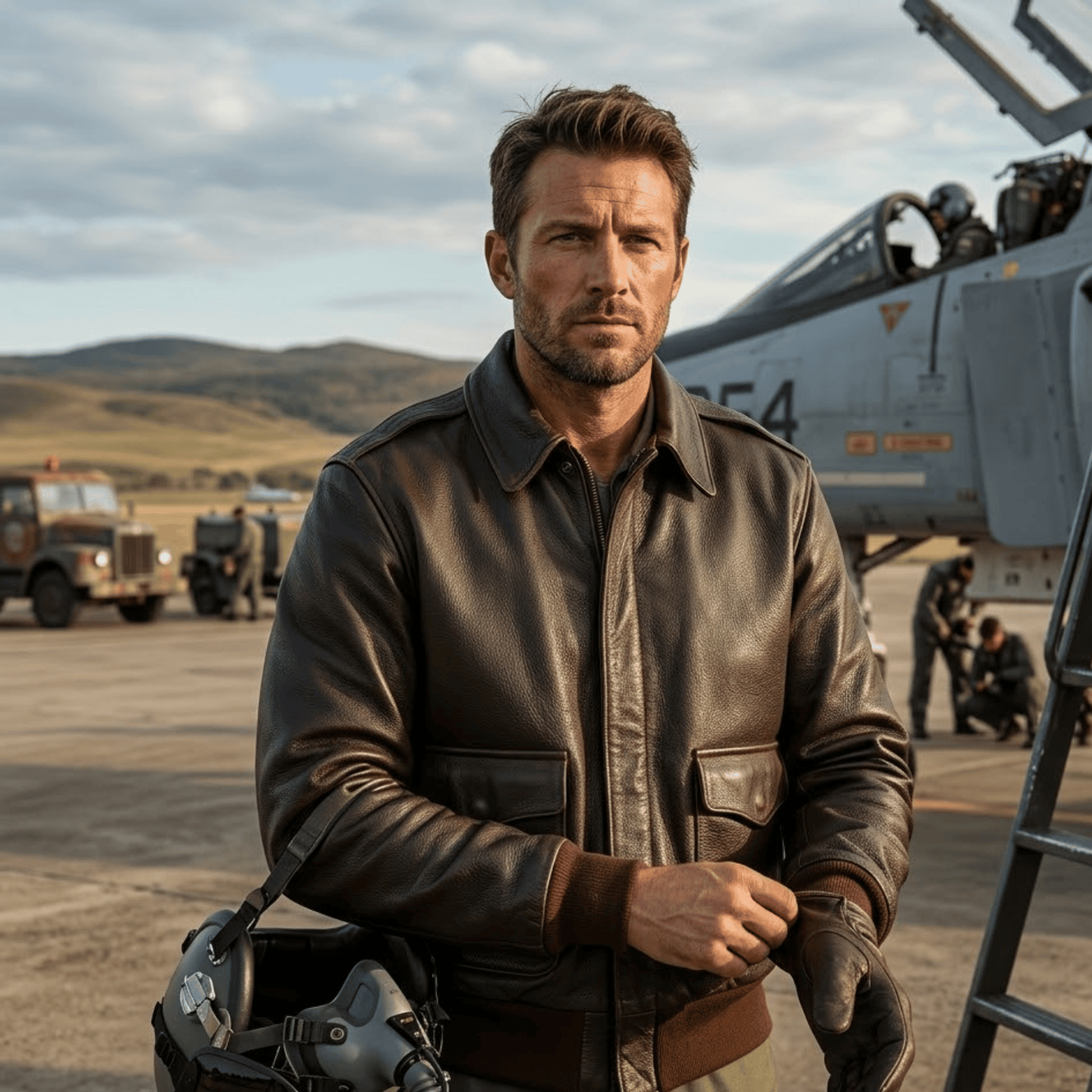
After testing over 40 bomber jackets across price points and brands, the Flying Tigers Horsehide Flight Jacket stands in a category of its own. This is not a jacket that’s merely made — it’s documented. It draws directly from the WWII American Volunteer Group, the most legendary fighter squadron in aviation history, and it is constructed to match that legacy.
The material is rare full-grain horsehide — the toughest and densest hide available for jacket construction. It arrives firm and breaks in to your exact body shape over your first several wears, in a way that no cowhide or goatskin jacket ever fully replicates. Heavy-duty zipper hardware, ribbed cuffs and waistband, and a satin-lined interior built for long-haul comfort complete the construction.
This is a limited production piece. The configuration — full-grain horsehide, this hardware, this lining, this price — will not be repeated once current stock sells out.
6 Expert Tips for Buying a Leather Bomber Jacket (That Most Buyers Get Wrong)
After nine years of evaluating leather jackets at every price point, here are the six things most buyers either ignore or don’t know — each one specific enough to save you money or prevent a costly mistake.
- Size at the shoulders — not the chest.
The shoulder seam of a leather jacket cannot be altered without destroying the garment. If the shoulders fit correctly, a snug chest can break in. A drooping shoulder seam cannot be fixed by any tailor at any price. Always try one size smaller and one larger than your normal clothing size before deciding. - New horsehide stiffness is a feature, not a defect.
First-time horsehide buyers often mistake the initial firmness for a sizing error. It isn’t. Horsehide starts dense and stiff, then softens and molds to your exact body over 3–10 wears. Do not size up to compensate for stiffness — the leather will accommodate your body, not the reverse. - Feel the leather grain — uniform smoothness is a warning sign.
Full-grain horsehide and goatskin have natural surface variation: minor pore marks, subtle grain irregularity, slight color variation across the hide. A jacket that looks perfectly uniform and smooth under any light is almost certainly corrected-grain or bonded leather. The natural imperfections are the marks of quality. - Test the zipper under tension before purchasing.
Hold both front panels taut and run the main zipper up and down twice. A quality zipper moves with smooth, consistent resistance. Any catching, skipping, or rough spots indicate a low-quality slider that will fail within a year of daily use. This is the most reliable build-quality test you can do in 10 seconds. - Demand the leather grade in writing — not just “genuine leather.”
“Genuine leather” is a legal term that includes corrected grain and bonded leather. Ask specifically: is this full-grain, top-grain, corrected-grain, or bonded? Any brand proud of their materials will answer immediately and specifically. Hedging or redirecting is your answer. - Condition on day one — not after it cracks.
Apply a quality leather conditioner (not mink oil, which darkens leather permanently) before your first wear. New horsehide especially benefits from an initial conditioning pass that accelerates the break-in process and extends jacket life by years. Condition 2–3 times per year thereafter. Store on a wide hanger, never folded.
Leather Bomber Jacket Fit Guide: What Correct Fit Looks and Feels Like
A bomber jacket that fits correctly follows these rules. If yours doesn’t match these benchmarks, something is wrong with the size or cut — not your body.
- Shoulders: Seam sits exactly at the edge of your shoulder joint. Overhang past the arm = too large. Seam pulling toward the neck = too small.
- Chest: Zipper closes comfortably over a light midlayer (sweater or thermal). Pulling across the upper back when arms are forward = size up.
- Length: Hem sits at or just below your natural waist — not at the hip. A bomber hitting below the hip reads as a car coat, not a flight jacket.
- Sleeve length: Standing normally, approximately ½ inch of shirt cuff should be visible. Sleeves covering the hand entirely in a neutral position = too long.
- Mobility test: Cross both arms fully across your chest. If the back panel rises more than 2 inches, the jacket is too small through the torso or too short in the sleeves.
- Collar: Ribbed collar sits snugly against the neck without choking. Should compress naturally when zipped and not spring open when released.
- Horsehide note: New horsehide will feel meaningfully stiffer than cowhide at first try. Size to your measurements — the leather conforms to your body, not the other way around.
| Problem | What You See | Correct Action |
|---|---|---|
| Shoulder seam droops | Seam falls 1″+ toward bicep | Size down — this cannot be tailored |
| Back pulls when arms forward | Horizontal tension lines at shoulders | Size up one full size |
| Hem at hip or below | Jacket reads long, coat-like | Tailor at the hem or try different cut |
| Sleeves too short | Large gap at wrist when arms raised | Size up or request longer sleeves |
| Side bunching / excess fabric | Loose panels at the waist | Size down — horsehide accommodates body during break-in |
| Feels stiff overall (horsehide) | Difficult to move arms freely at first | Normal — not a fit issue. Wear it; the leather will soften to your body |
Frequently Asked Questions
These are the most common questions buyers ask about leather bomber jackets — answered directly, based on hands-on testing and material expertise.
Summary: The Bottom Line on Men’s Leather Bomber Jackets in 2026
- Horsehide is the pinnacle material: Full-grain horsehide is the toughest, densest, and most historically accurate leather for a flight jacket. It breaks in to your exact body shape — no other leather does this. Vintage examples from the 1940s are still wearable today.
- Fit the shoulders first, always: The shoulder seam is the only part of a leather jacket that cannot be altered by any tailor. Every other measurement — chest, length, sleeves — is negotiable. Get the shoulders right.
- Limited means limited: The Flying Tigers Horsehide Flight Jacket is genuine limited production. The configuration will not return once it sells out. At $339 — a 32% reduction — with free worldwide shipping, the window is now.
- The math favors quality: $339 over 30 years = $11/year. $140 that fails in 2 years = $70/year. The premium jacket is the economical choice over any meaningful time horizon.
The best men’s leather bomber jacket in the USA is not the most marketed one or the one with the biggest brand name. It is the one built from the right material — rare full-grain horsehide — stitched with precision, finished with authentic hardware, and backed by a heritage worth wearing. The Flying Tigers Horsehide Flight Jacket is that jacket.
Flying Tigers Horsehide Flight Jacket
Limited edition · Rare full-grain horsehide · $339 (was $499) · Free worldwide shipping · 14-day returns guaranteed