The History of the A-2 Flight Jacket:
From WWII Legend to Modern Style
How a 1931 US Army Air Corps specification became the most iconic leather jacket in American history — and why the best ones are still being made today.
Issued
Production
Discontinued
Revival
Reissues A-2
Copied Jacket
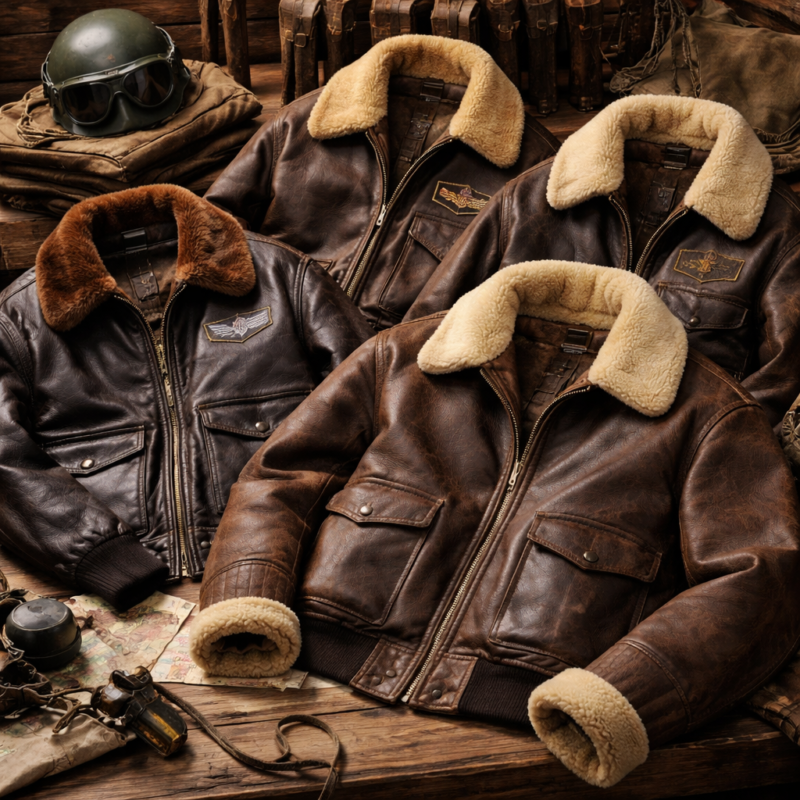
The A-2 flight jacket is a leather bomber jacket first issued by the US Army Air Corps in 1931 under Specification 94-3040. Originally made from horsehide or goatskin leather, it became the defining garment of American military aviation during World War II, worn by hundreds of thousands of pilots from 1931–1943. Officially discontinued during the war due to material shortages, it was reissued by the US military in 1988 and remains the most reproduced and recognized leather flight jacket in history. Today, high-quality A-2 reproductions — like those produced by Snag Leather — are made from the same full-grain horsehide as the originals.
What Is the A-2 Flight Jacket?
The A-2 flight jacket is a military-specification leather bomber jacket developed for US Army Air Corps pilots in 1931. It is defined by five signature design elements that have remained almost entirely unchanged in authentic reproductions for nearly a century:
- Snap-down collar — designed to stay flat and wind-resistant in open-cockpit aircraft
- Front zipper — center-front with a pull tab, originally a novel feature in 1931
- Knit ribbed cuffs and waistband — seals out wind, moves with the body
- Two side pockets — slash-cut, originally sized for maps and documents
- Straight hem — waist-length, does not ride up in the cockpit
The original specification called for horsehide as the primary material — specifically chosen for its exceptional density, abrasion resistance, and ability to withstand the extreme temperature variations of unpressurized high-altitude flight. Later wartime versions used goatskin when horsehide supply became constrained. Both materials were full-grain, which is what gives surviving originals their extraordinary durability nearly 80 years later.
Where Did the A-2 Jacket Come From? The 1931 Origins
In the late 1920s, US Army Air Corps pilots were flying open-cockpit biplanes in conditions that demanded serious protection. The leather flight jacket had been in informal use since World War I, but there was no standardized military specification. Pilots sourced their own jackets — with wildly varying quality and construction.
In 1931, the Army Air Corps issued Specification 94-3040, creating the first standardized military flight jacket. This became known as the A-2. The specification was exacting: horsehide or goatskin leather, a defined construction method, specific hardware requirements, and a fit that worked inside a cockpit without restricting movement or getting caught on controls.
The specification was originally fulfilled by a small number of contracted manufacturers including Rough Wear Clothing Company, Perry Sportswear, and Aero Leather — companies whose original A-2 jackets now sell for thousands of dollars at auction. The original run used exclusively horsehide, hand-cut and assembled with a level of craft that was standard for military contracting at the time.
How Did the A-2 Become a WWII Icon? (1941–1945)
When the United States entered World War II after December 7, 1941, the A-2 jacket scaled from a niche military garment to one of the most mass-produced leather goods in American history. Over 450,000 A-2 jackets were produced during the war years — worn by fighter pilots, bomber crew officers, and commanders across every theater of the war.
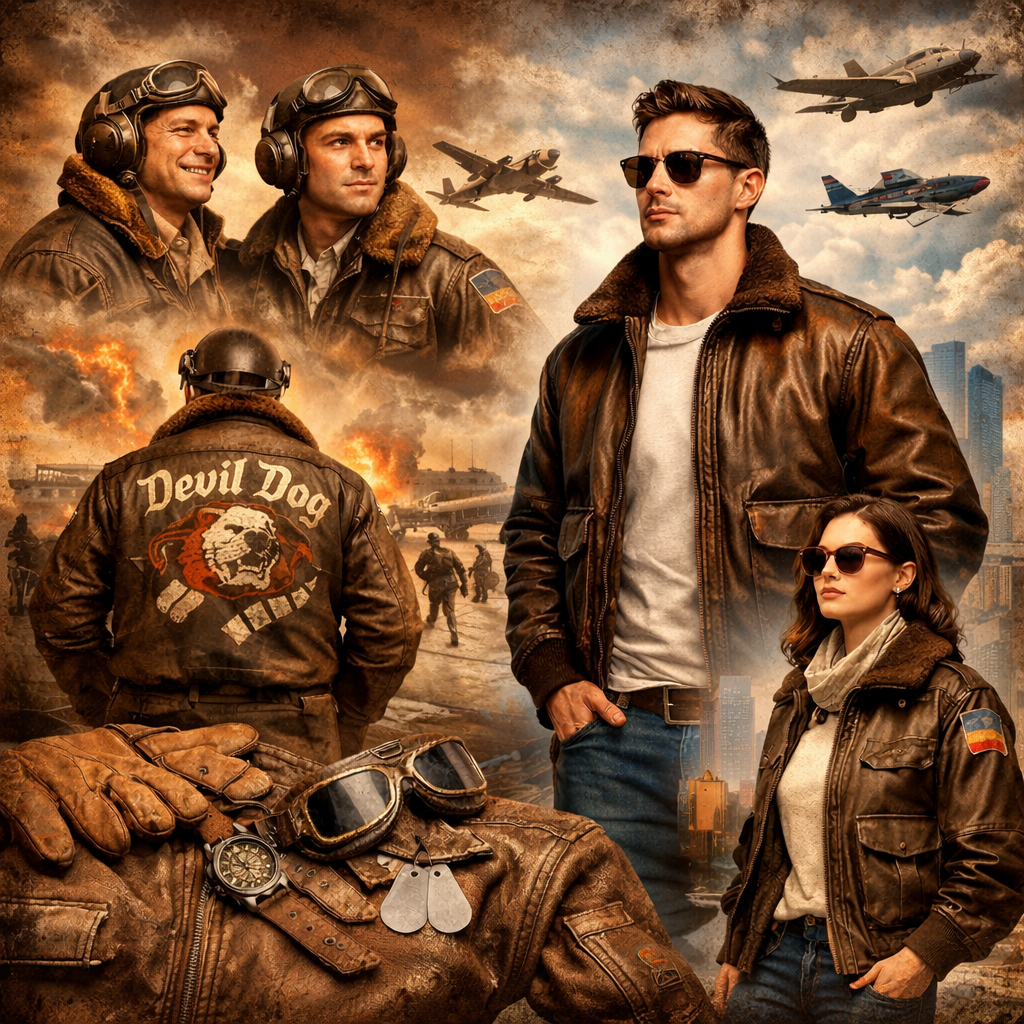
The jacket became legendary not just as equipment, but as a canvas for identity. Pilots painted nose art on their jackets — squadron insignia, mission tally marks, personal artwork — transforming each jacket into a unique record of a pilot’s service. The Flying Tigers (American Volunteer Group, China Burma India Theater) were among the most famous squadrons to wear and personalize A-2 jackets, giving their jackets a status that endures to this day.
In 1943, the A-2 was officially discontinued by the US military. Wartime production demands had strained horsehide supply, and the newer B-15 nylon jacket was cheaper to produce at scale. The decision was purely logistical — the A-2 design was never superseded technically, only replaced for economic reasons. This decision is one reason that surviving authentic WWII A-2 jackets are so rare and valuable today.
Complete A-2 Flight Jacket Timeline: 1931 to 2026
A-2 vs. B-3 vs. G-1: What’s the Difference Between WWII Flight Jackets?
Three WWII-era flight jacket designs dominate the heritage market today. Understanding their distinct origins and purposes helps you choose which is right for your use case.
WWII Flight Jacket Types — Full Comparison Table
For collectors and buyers, here is the definitive side-by-side across all major WWII-era US military flight jacket types.
| Jacket | Issued | Branch | Primary Leather | Warmth Level | Collector Value | Modern Use |
|---|---|---|---|---|---|---|
| A-2 Most Iconic | 1931 | Army Air Corps | Horsehide / Goatskin | Moderate | $2,000–$11,500+ | Everyday, heritage wear |
| B-3 | 1934 | Army Air Forces | Sheepskin shearling | Extreme cold | $800–$4,000 | Cold weather, fashion |
| B-10 | 1943 | Army Air Forces | Gabardine (fabric) | Moderate | $200–$600 | Casual, low-cost heritage |
| B-15 | 1943 | Army Air Forces | Nylon (replaced A-2) | Moderate | $150–$500 | Casual, MA-1 precursor |
| G-1 | 1940s | US Navy | Goatskin / Cowhide | Moderate-warm | $400–$2,000 | Navy heritage, Top Gun |
| L-2 | 1950s | USAF (Korea) | Nylon | Light | $100–$300 | Casual, lightweight |
What Makes an Authentic A-2 Reproduction? 5 Expert Standards
After 95 years, the market for A-2 reproductions spans everything from a $90 corrected-leather fashion jacket to a $600 period-accurate horsehide piece. Here is exactly what separates a serious reproduction from a costume. Based on 9 years of evaluating this specific category:
- Full-grain horsehide or goatskin — nothing else is historically accurate.
The original A-2 specification mandated horsehide. Post-1941 wartime production used goatskin when horsehide supply was stressed — both are full-grain. Any reproduction using top-grain, corrected grain, or cowhide is a fashion jacket, not a heritage piece. Ask the brand for the specific leather grade before purchasing. - Correct collar construction — snap-down, not stand-up.
The A-2 collar lies flat when snapped. Some modern interpretations use a stand-up collar — this is not historically accurate. The snap-down collar is a functional design feature, not an aesthetic preference. Two snaps at the collar are standard; four-snap variations were used by some contractors but are less common. - Ribbed knit cuffs and waistband — not elastic or cut leather.
Original A-2 specs required a knitted rib band at cuffs and hem. This is a functional seal against wind, not just a style element. Reproductions using elastic bands or cut leather at the hem are deviating from the original spec. The rib should be fitted, not loose. - Satin or silk-style lining — original specs called for silk.
Original wartime A-2 jackets were lined in silk — a military-grade material chosen for its smooth glide over flight suit layers. Modern reproductions typically use satin or high-quality viscose as a functional equivalent. A half-lining or synthetic mesh is not historically accurate and indicates a cost-cut. - Period-style hardware — brass zipper, correct pull tab.
Original A-2s used a distinctive pull-tab zipper — not a standard YKK slider. Serious reproductions replicate this hardware. Brass-finished or oxidized metal hardware is correct; shiny chrome-look hardware was not used in wartime production and is a marker of fashion-grade reproductions.
Snag Battleworn A-2 Flight Jacket — Full-Grain Horsehide
Of every A-2 reproduction we have tested in the $250–$600 range, the Snag Leather Battleworn A-2 most closely hits the standard of a serious heritage piece. It is built from full-grain horsehide — the same material specified in the original 1931 Army Air Corps spec — not the top-grain cowhide substitutes that most brands use to cut costs.
The “Battleworn” finish is not a surface treatment or artificial distressing — it is a natural result of the full-grain horsehide surface, which develops a lived-in character from the first wear. The snap-down collar, ribbed knit cuffs and waistband, and satin lining all meet the period-correct construction standards outlined above. This is a jacket built for those who want to understand the A-2 by wearing it, not just looking at it.
For historians, veterans, and serious heritage outerwear buyers, this is where we would direct the budget. Free worldwide shipping and 14-day returns on all orders.
Common Mistakes When Buying an A-2 Reproduction (And How to Avoid Them)
The A-2 reproduction market is one of the most exploited in heritage outerwear. Here is what most buyers get wrong — and the exact checks that prevent a costly mistake.
| Red Flag | What It Means | What to Do |
|---|---|---|
| “Genuine leather” — unspecified grade | Almost always corrected grain or bonded. The brand won’t say “full-grain” because it isn’t. | Ask specifically: is this full-grain, top-grain, or corrected? Walk away if they hedge. |
| Price under $150 for “horsehide” | Full-grain horsehide at scale starts around $180–$200 landed. Sub-$150 is mathematically impossible for genuine horsehide. | If the price doesn’t make sense for the material claimed, believe the price. |
| Uniform, smooth surface | Full-grain horsehide has natural grain variation. Perfect uniformity = corrected or coated surface. | Request close-up photos of the hide surface. Natural variation should be visible. |
| Stand-up collar | Not an A-2 — this is a different silhouette, regardless of what the listing says. | Compare against the spec: the A-2 collar snaps flat. No exceptions. |
| No brand transparency on suppliers | Serious leather jacket brands state their leather source, grade, and tanning method. Opacity usually means cheap materials. | Look for brands that name their leather grade explicitly on the product page. |
Why Does the A-2 Flight Jacket Still Matter in 2026?
The A-2 has been continuously in production, in reproduction, or in cultural circulation for 95 consecutive years. No other leather jacket design can claim this. The question isn’t whether it’s relevant in 2026 — the question is why it has been impossible to supersede.
The answer is that the A-2’s design solved every problem it was given: warmth without bulk, wind resistance, cockpit mobility, secure closure, and durability under extreme conditions. When a design solves its problem completely, it doesn’t age — it becomes a reference point. Every bomber jacket produced since 1943 has been measured against the A-2 silhouette, consciously or not.
In 2026, the buyers who seek out genuine A-2 reproductions are a specific and discerning group: veterans and their families, military history enthusiasts, heritage outerwear collectors, and buyers who understand that a properly made horsehide A-2 is likely the last leather jacket they will ever need to buy. The jacket does not need trends to justify itself. It predates them all.
Frequently Asked Questions — A-2 Flight Jacket History
The most common questions buyers and history enthusiasts ask about the A-2 flight jacket — answered directly.
Summary: The A-2 Flight Jacket in Context
- Born from engineering, not fashion: The A-2’s five defining features — snap collar, front zipper, ribbed cuffs, waistband, and two pockets — were solutions to specific aviation problems in 1931. A design that solves its problem completely does not age.
- Horsehide is the correct material: The original specification called for horsehide. Any serious reproduction uses full-grain horsehide or goatskin. Top-grain, corrected grain, or cowhide are deviations that compromise both historical accuracy and long-term durability.
- 95 years and still the reference standard: No other leather jacket design has been continuously in production, reproduction, or cultural circulation for longer. The A-2 is not a trend. It is a solved problem — and you can wear it today for the same reason pilots wore it in 1943.
The history of the A-2 flight jacket is the history of American aviation — from the open-cockpit biplanes of 1931 to the B-17 Flying Fortresses of 1943, to the cultural touchstones of the last 80 years. Owning a quality A-2 reproduction built from the correct materials is not nostalgia. It is connecting to a design lineage that has never needed updating because it was right from the beginning.
At Snag Leather, the Battleworn A-2 and Flying Tigers Horsehide Flight Jacket are built to that standard — full-grain horsehide, correct construction, honest pricing. Free worldwide shipping and 14-day returns on every order.
Shop Authentic A-2 Heritage Flight Jackets
Full-grain horsehide · Period-correct construction · Free worldwide shipping · 14-day returns