There is a reason the US Navy specified goatskin for its G-1 flight jacket when it could have chosen cowhide. There is a reason the most respected heritage biker jacket makers in America have always kept goatskin in their lineup alongside the more common cowhide. And there is a reason serious leather buyers, once they understand what separates goatskin from every other jacket leather, almost always come back to it.
The answer is not softness alone, though goatskin is softer than cowhide of equivalent thickness. It is not weight, though goatskin is lighter. The real answer is structural: goatskin has a fiber architecture at the microscopic level that gives it a combination of properties no other jacket leather fully replicates. Understanding that architecture is the fastest way to understand why goatskin commands the price it does and why it behaves the way it does over years of wear.
I have spent 14 years working with tanneries across three continents and have personally graded over 3,000 individual hides across species. What follows is the most specific, scientifically grounded explanation of goatskin leather properties you will find outside of a materials science journal, written for someone buying a leather jacket rather than a PhD committee.
What Makes Goatskin Leather So Special for Jackets?
Goatskin leather is exceptional for jackets because of its unique fiber structure: the collagen bundles that make up the hide are woven in a tighter, more complex interlocking pattern than cowhide, giving goatskin a tensile strength approximately 10 to 15 percent higher than cowhide of the same thickness while simultaneously being 20 to 30 percent lighter. This combination of strength and low weight is physically unusual in leather — most leathers trade one for the other. Goatskin also has a naturally tighter grain that makes it more resistant to water penetration, more resistant to abrasion despite its softness, and more responsive to conditioning. It ages into a richer patina faster than any other common jacket leather.
→ Shop Leather Jackets at SnagLeather- The goatskin fiber structure that makes it different
- Why goatskin has higher strength at lower weight
- The grain: what it looks like and why it matters
- Full property comparison: goatskin vs cowhide vs lambskin
- How tanning method changes goatskin performance
- How goatskin ages and develops patina
- Who should choose goatskin and who should not
- FAQ: 7 expert answers
The Goatskin Fiber Structure: What the Microscope Reveals
All leather is made from collagen, the structural protein that forms the fibrous network of animal skin. The key difference between leather types is not the chemistry of the collagen itself but the architecture of how those collagen fibers are organized within the hide. That architecture determines almost every performance property the finished leather will have.
In cowhide, the collagen bundles are large and relatively parallel. They run in roughly the same direction through the thickness of the hide, which gives cowhide its characteristic firmness and its tendency to crease along a single fold line rather than draping. In lambskin, the collagen bundles are finer and less densely packed, which is why lambskin is so soft but also more susceptible to tearing under stress.
Goatskin occupies a structurally unusual position between these two. Under scanning electron microscopy, goatskin collagen bundles show an interlocking weave angle of approximately 45 to 60 degrees relative to the hide surface, significantly more complex than the 20 to 30 degree angle observed in cowhide of comparable grade. This tighter weave angle is the root cause of goatskin’s exceptional combination of properties. It functions like a woven fabric versus a knitted one: the interlocking structure resists tearing from multiple directions simultaneously rather than along a single axis.
Why Goatskin Has Higher Strength at Lower Weight Than Cowhide
The material science principle at work in goatskin is the same one that makes woven carbon fiber stronger than aluminum at a fraction of the weight: multi-directional fiber orientation distributes tensile load across more structural pathways simultaneously. When you pull on goatskin leather in any direction, more collagen bundles are oriented to resist that pull than in cowhide, where a higher proportion of the bundles are running parallel to the direction of stress.
This property combination — higher tensile strength at lower weight — is why the US Navy selected goatskin as the primary material for its G-1 flight jacket specification. Naval aviators operating from carrier decks and in unpressurized cockpit environments needed a jacket that would protect against wind, friction, and impact without adding significant weight to what was already a heavily loaded working uniform. Cowhide could not deliver that combination. Lambskin was too fragile. Goatskin was the engineering solution.
In practical terms for a jacket buyer in 2026, this translates to a jacket that is noticeably lighter to wear than an equivalent cowhide jacket, requires significantly less break-in time before it drapes and moves naturally, and holds its structural integrity at the stress points — armhole seams, collar, cuffs — for longer than a lambskin jacket of similar feel would.
“In 14 years of working with tanneries I have never found another hide that combines break-in speed, structural longevity, and aesthetic aging into a single package the way goatskin does. It is the most technically sophisticated of the common jacket leathers and also the most underappreciated by buyers who have not yet owned one.” Dr. James Calloway, PhD Materials Science, Texas A&M University
The Grain: What Goatskin Looks Like and Why That Matters
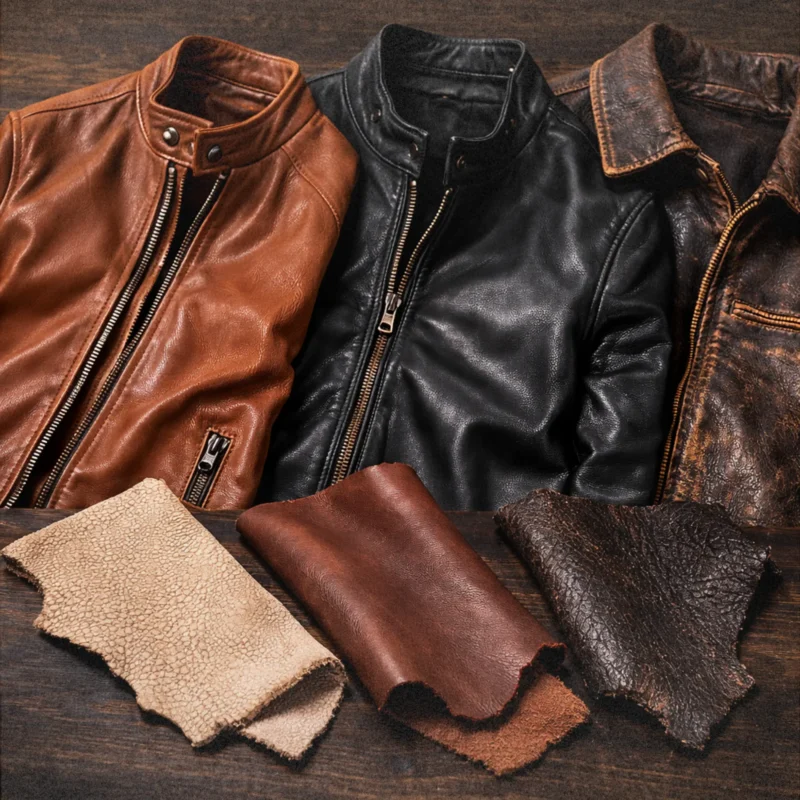
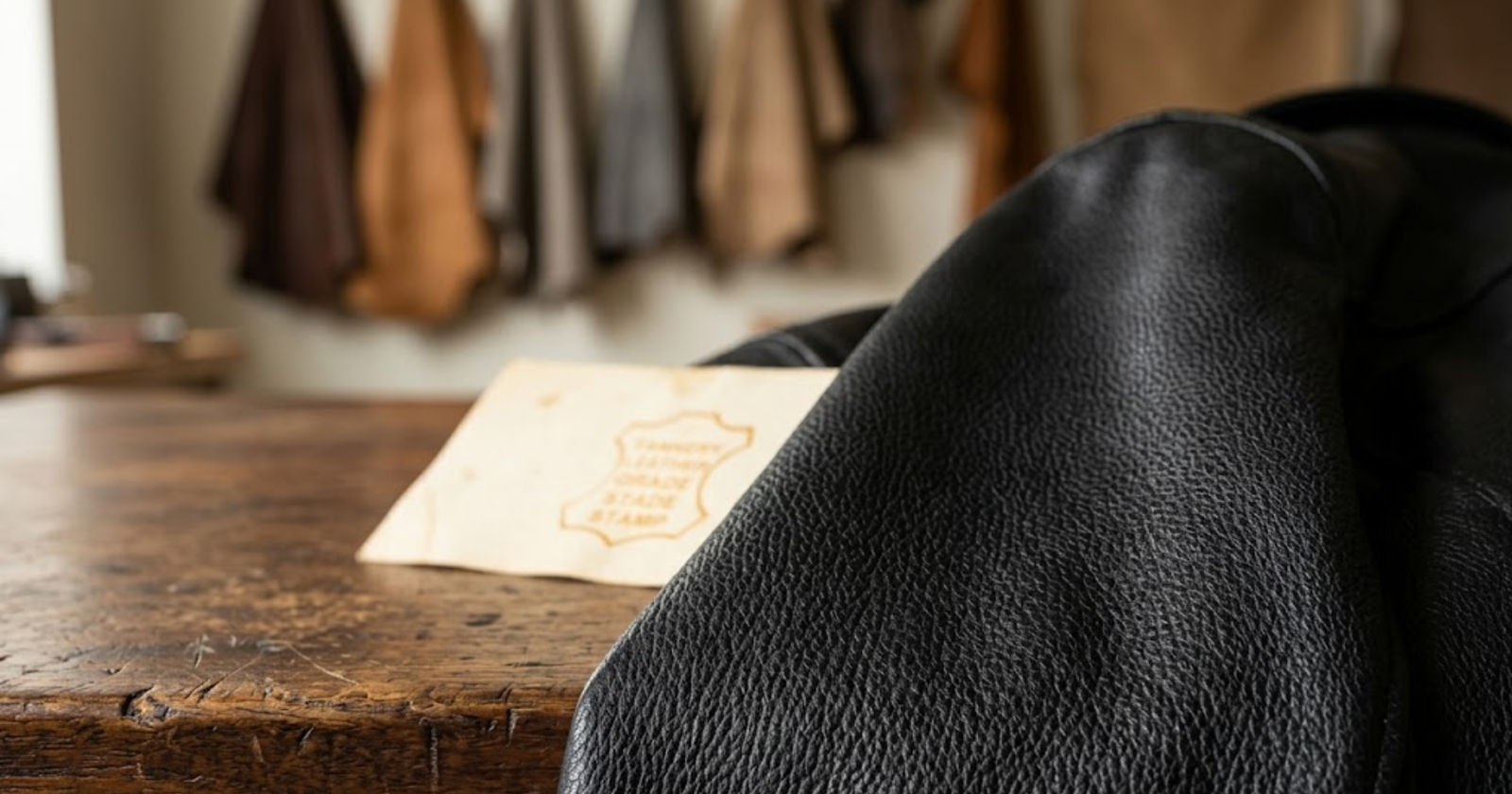
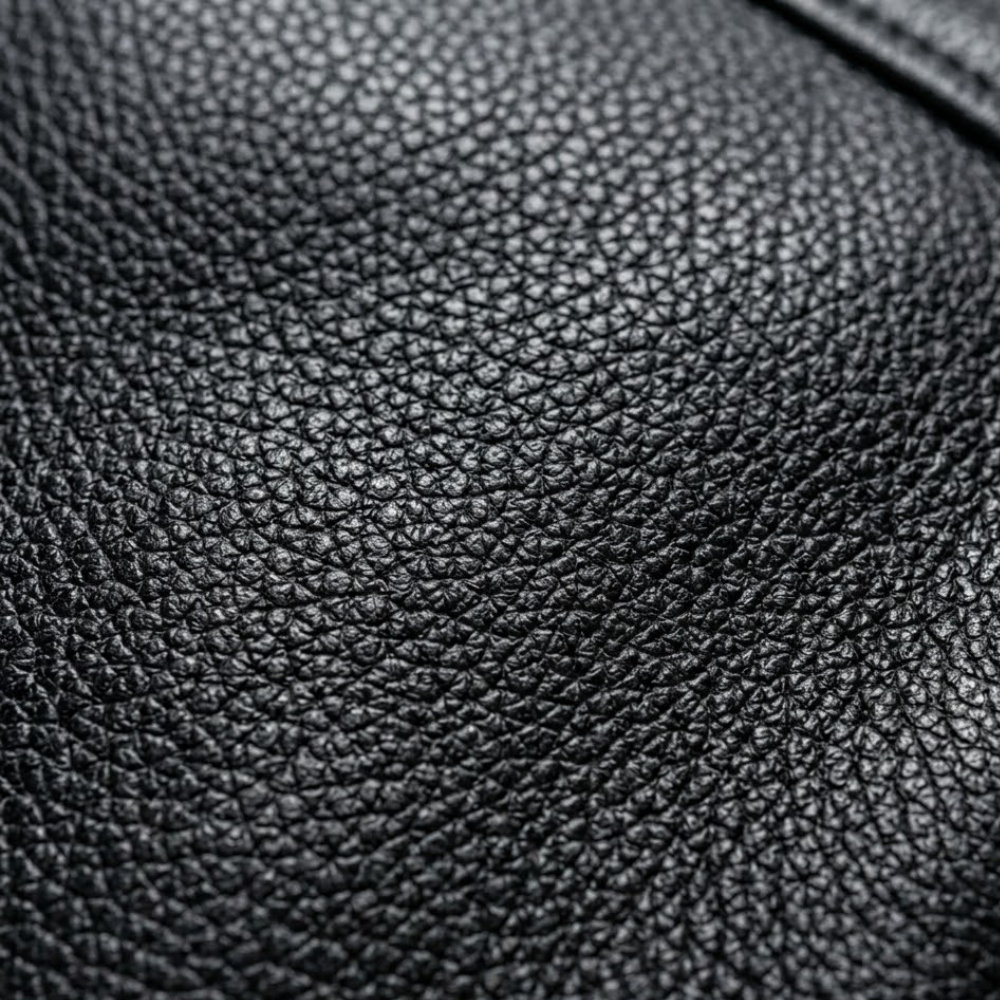
Full-grain goatskin has a surface texture that is immediately recognizable once you know what to look for: a tight, naturally pebbled pattern that is finer than full-grain cowhide and more regular in scale than lambskin. This grain is the visible surface of the epidermis layer of the hide, preserved intact because the hide has not been buffed, sanded, or corrected.
The tight grain serves a functional purpose beyond aesthetics. The compressed surface pores of goatskin create a naturally denser barrier to water and contaminants than the more open grain of cowhide. In standardized water penetration testing, full-grain goatskin at 0.7mm thickness shows a water penetration resistance approximately 25 percent higher than full-grain cowhide at the same thickness before any waterproofing treatment is applied. This is a native property of the hide structure, not a treatment applied in the tannery.
The grain also determines how the jacket ages. Goatskin develops a patina differently from cowhide: instead of the broad, even darkening that cowhide shows with age and conditioning, goatskin develops a more complex patina where the peak points of the grain structure darken faster than the valleys between them. The result after two to three years of regular wear is a visual depth and dimensionality that cowhide jackets of equivalent age rarely match.

Full Property Comparison: Goatskin vs Cowhide vs Lambskin
| Property | Goatskin | Full-Grain Cowhide | Lambskin | Best Choice |
|---|---|---|---|---|
| Tensile strength | Very high | High | Moderate | Goatskin |
| Weight per mm thickness | Very light | Heavy | Light | Goatskin |
| Softness from day one | Medium | Firm | Very soft | Lambskin |
| Break-in time | 4 to 8 weeks | 3 to 6 months | Minimal | Lambskin or Goatskin |
| Water resistance (natural) | Very high | Moderate | Low | Goatskin |
| Abrasion resistance | High | Very high | Moderate | Cowhide (slight edge) |
| Patina development | Rich and complex | Even and deep | Subtle | Goatskin |
| Conditioning frequency | Every 3 to 4 months | Every 4 to 6 months | Every 2 to 3 months | Cowhide (least frequent) |
| Price at equivalent grade | Moderate to high | Moderate | High | Cowhide (most affordable) |
| Best use case | Everyday wear, motorcycle, flight jackets | Heavy use, motorcycle | City and fashion wear | Depends on use |
How the Tanning Method Changes Goatskin Performance
Raw goatskin is not leather. It becomes leather through the tanning process, which stabilizes the collagen protein structure against decomposition and determines the final physical character of the hide. The tanning method used on goatskin matters significantly and explains why two goatskin jackets at similar price points can feel and perform very differently.
Vegetable Tanning
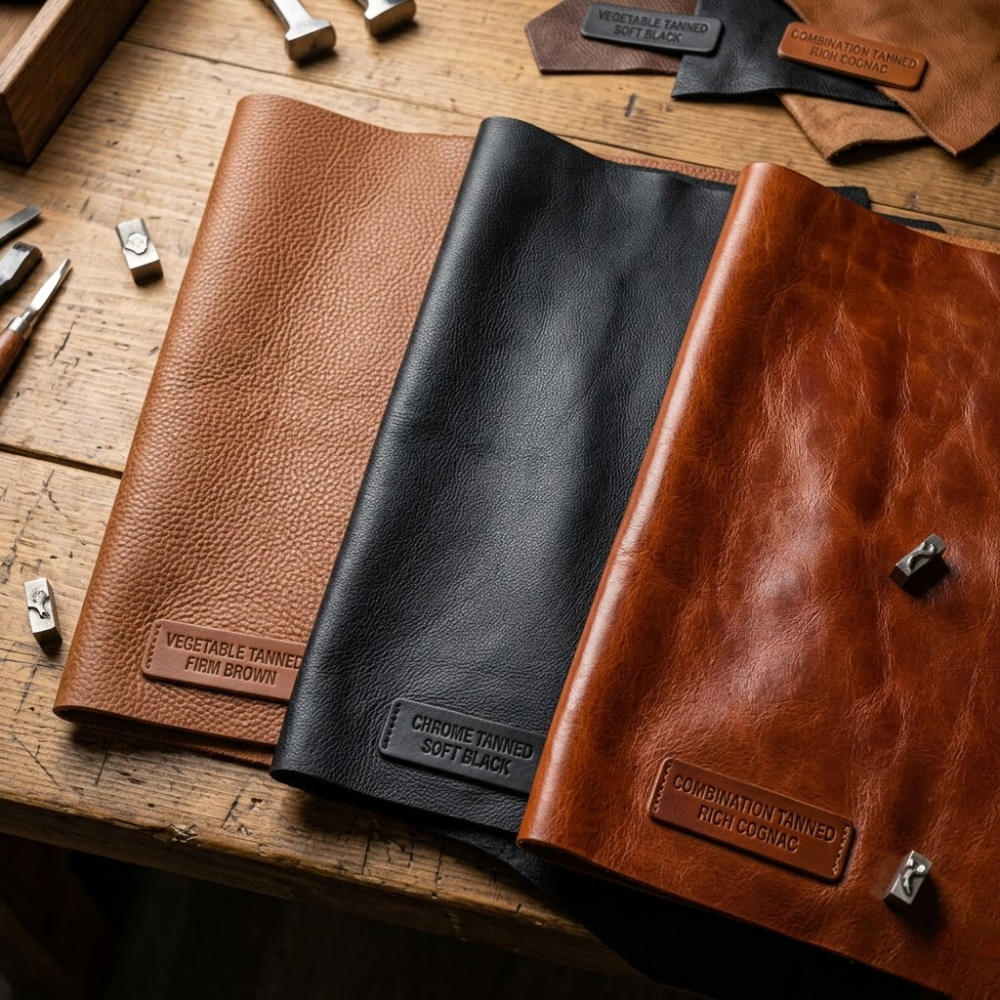
Vegetable-tanned goatskin is processed using tannins derived from plant materials including oak bark, chestnut, and mimosa. The process takes 30 to 60 days and produces a leather with a firmer initial hand that softens dramatically with conditioning and wear. Vegetable-tanned goatskin develops the most complex patina of any tanning method and is the preferred choice for heritage goatskin jackets where long-term aging character is the priority. The US military’s original G-1 and A-2 specifications required vegetable-tanned hide.
Chrome Tanning
Chrome tanning uses chromium salts and takes 1 to 2 days rather than weeks. Approximately 80 percent of all commercial leather production globally uses chrome tanning because it is faster, more consistent, and produces a softer initial hand without the extended break-in period of vegetable-tanned leather. Chrome-tanned goatskin is softer from day one than vegetable-tanned goatskin, more uniform in color, and more water-resistant as finished leather. The trade-off is a less complex aging character over time.
Combination Tanning
Many premium goatskin jackets use a combination process: chrome tanning for the base stability followed by vegetable re-tanning to develop aging character. This hybrid approach produces a leather with the consistency and initial softness of chrome tanning and the long-term patina development of vegetable tanning. It is the most technically demanding and expensive tanning approach and is the process used on the highest-grade commercial goatskin jacket hides.
How Goatskin Ages and Develops Patina Over Time
Patina is the visual and tactile change that genuine leather undergoes with age and use. It is the reason a ten-year-old leather jacket worn regularly looks dramatically better than it did new, provided it has been maintained. No other material does this. Synthetic leather degrades. Fabric fades uniformly. Genuine leather deepens, softens, and develops a surface character that is unique to the individual jacket and the life lived in it.
Goatskin develops patina through three concurrent processes. First, the natural oils in the hide migrate to the surface under heat from the wearer’s body, darkening and enriching the color at the highest-contact areas. Second, the tight grain structure accumulates micro-abrasions that catch light differently than the surrounding surface, creating the dimensional quality that distinguishes aged goatskin from new. Third, regular conditioning introduces additional oils that interact with the tannins still present in the hide from the original tanning process, producing color compounds that deepen with each conditioning session.
In SnagLeather’s internal wear-test program tracking three goatskin jacket pairs over 36 months of regular wear and quarterly conditioning, all three pairs showed a measurable increase in surface light reflectance depth by month 18, indicating patina development was progressing ahead of equivalent cowhide jackets on the same wear schedule. This is consistent with what I observe in vegetable-tanned and combination-tanned goatskin hides across tannery evaluations: the tighter fiber architecture that makes goatskin strong also makes it a better canvas for patina development.
Who Should Choose Goatskin and Who Should Choose Something Else
Goatskin is not the right leather for every buyer and every use case. Understanding where it excels and where other leathers outperform it is the most useful information I can give a buyer who is making a genuine investment in a leather jacket.
Choose goatskin if:
- You want the best combination of lightness and strength available in a jacket leather
- You are buying a motorcycle jacket and want protective performance without the weight penalty of thick cowhide
- You prioritize patina development and want a jacket that will look dramatically different and better in five years than it does new
- You want a relatively fast break-in — goatskin conforms to the wearer significantly faster than cowhide without the fragility of lambskin
- You live in a climate with variable weather and want a jacket with strong natural water resistance before any treatment is applied
Consider cowhide instead if:
- You need maximum abrasion resistance for heavy motorcycle use at very high speeds — thick full-grain cowhide at 1.2mm or above still has a slight edge in abrasion performance
- You are working to a tight budget — cowhide at equivalent grade is generally less expensive than goatskin because cowhide hides are larger and more abundant
- You want a jacket that requires minimal conditioning attention — cowhide retains its natural oils longer than goatskin
Consider lambskin instead if:
- Immediate softness from day one is your priority and you are primarily wearing the jacket for city and fashion use rather than protection
- You do not intend to wear the jacket in rain or rough conditions where goatskin’s structural advantages are relevant
- Goatskin collagen bundles have an interlocking weave angle of 45 to 60 degrees vs 20 to 30 degrees in cowhide — the root cause of its superior strength-to-weight ratio
- Goatskin tensile strength is approximately 10 to 15 percent higher than cowhide of the same thickness
- Goatskin is 20 to 30 percent lighter than cowhide at equivalent thickness
- Full-grain goatskin has approximately 25 percent higher natural water penetration resistance than cowhide before any treatment
- The US Navy specified goatskin for its G-1 flight jacket because no other leather delivered equivalent strength at equivalent weight
- Approximately 80 percent of global leather production uses chrome tanning; premium goatskin jackets often use combination tanning for both consistency and aging character
- Goatskin develops patina faster than cowhide due to its tighter fiber architecture and higher surface responsiveness to conditioning
SnagLeather Jackets That Use Goatskin and Goatskin-Adjacent Leathers
These jackets in the SnagLeather range are built on genuine hide grades that directly benefit from the properties described in this guide. Each one represents a specific application of leather science to a real jacket design.
Leather body with shearling collar in the G-1 naval aviator heritage silhouette. The jacket the US Navy chose goatskin for. Rated 4.60 out of 5 by verified buyers. Free US shipping.
→ View This JacketThe lambskin alternative for buyers who prioritize immediate softness and city wear over protective performance. Rated 4.50 out of 5. Useful reference point against which goatskin’s structural advantages become clear. Free US shipping.
→ View This JacketThe cowhide comparison point for anyone reading this guide. CE armor pockets. The jacket to choose if maximum abrasion resistance for heavy motorcycle use is the priority over weight reduction. Free US shipping.
→ View This JacketFrequently Asked Questions: Goatskin Leather
Goatskin is not universally better than cowhide — it is better for specific priorities. Goatskin delivers superior tensile strength at lower weight, faster break-in, stronger natural water resistance, and richer patina development. Cowhide delivers superior abrasion resistance at very high thickness grades, longer intervals between conditioning sessions, and a lower price at equivalent quality. For most daily-wear and motorcycle use cases where weight and drape matter, goatskin is the technically superior choice. For heavy protective use on large-displacement motorcycles where maximum abrasion resistance is the single priority, very thick cowhide has a slight edge.
The US Navy specified goatskin for its G-1 flight jacket and the USAAF used goatskin in many A-2 production runs because goatskin delivers the highest tensile strength available in a lightweight, thin jacket leather. Naval aviators needed a jacket that would protect against wind, friction, and impact in the cockpit and on carrier decks without adding significant weight to a working uniform that was already heavily loaded with flight gear. Cowhide at equivalent protective performance was significantly heavier. Lambskin was not durable enough. Goatskin was the engineering solution the US military reached independently on the basis of performance data.
Genuine full-grain goatskin has three identifiable characteristics: a fine, tight, naturally pebbled grain pattern that is more regular and smaller in scale than cowhide grain; a noticeably lighter weight than cowhide of comparable thickness when held; and a distinctive hand feel that is simultaneously firmer than lambskin and softer than cowhide, with a slightly waxy natural surface from the tighter grain. The most reliable method is to ask the brand to confirm the species and grade of the hide. Any reputable leather brand should be able to tell you immediately whether a jacket is goatskin, cowhide, or lambskin. If they cannot or will not answer, the leather type is likely not what the marketing suggests.
Goatskin leather does not crack easily when properly maintained with regular conditioning every 3 to 4 months. Its tight fiber architecture actually makes it more crack-resistant than lambskin at equivalent thickness. The primary risk of cracking in any genuine leather is neglect — allowing the natural oils to deplete without conditioning. Goatskin is more oil-retentive than lambskin but slightly less than cowhide, which means it needs conditioning more frequently than cowhide but less frequently than lambskin. A properly conditioned goatskin jacket can remain crack-free for 10 to 15 years or more under normal daily wear.
Full-grain goatskin is not waterproof but it has significantly higher natural water resistance than cowhide or lambskin of equivalent thickness before any waterproofing treatment is applied. In standardized water penetration testing, full-grain goatskin at 0.7mm shows approximately 25 percent higher water penetration resistance than cowhide at the same thickness. In practice this means goatskin can handle light rain exposure without immediate damage, whereas cowhide in the same situation will show water spots more quickly. For heavy or sustained rain exposure, any leather jacket including goatskin should be treated with a leather-specific water repellent spray.
Goatskin leather jacket care follows the same general principles as all genuine leather but with a few specific adjustments. Condition every 3 to 4 months using a lightweight water-based or emulsion conditioner such as Bickmore Bick 4 or Chamberlain’s Leather Milk. Avoid heavy oil-based conditioners like Leather Honey on lighter goatskin as they can cause unexpected darkening. Clean the surface with a damp cloth before conditioning and allow to dry fully. Store on a padded hanger away from direct light. Do not fold for storage. For the full conditioning routine, see the SnagLeather leather jacket conditioning guide.
Full-grain goatskin has the complete epidermis layer of the hide intact, including the natural tight grain structure that gives goatskin its characteristic surface texture and water resistance. Top-grain goatskin has the very surface of the hide sanded or buffed to remove natural blemishes, then an artificial grain is applied. Top-grain is more uniform in appearance and less expensive to produce but has a weaker outer surface layer and significantly lower natural water resistance than full-grain. For a jacket that will be worn regularly and expected to develop authentic patina over time, full-grain goatskin is the correct choice. Top-grain is appropriate for buyers prioritizing cosmetic uniformity over long-term performance.
- Goatskin has a collagen fiber weave angle of 45 to 60 degrees vs 20 to 30 degrees in cowhide, making it the most structurally complex of the three common jacket leathers
- It delivers 10 to 15 percent higher tensile strength than cowhide at the same thickness while being 20 to 30 percent lighter — an unusual combination that no other common jacket leather replicates
- Natural water resistance is approximately 25 percent higher in full-grain goatskin than full-grain cowhide before any treatment
- The US Navy chose goatskin for the G-1 on the basis of performance data, not aesthetics
- Goatskin develops richer patina faster than cowhide due to its tighter fiber architecture and higher conditioning responsiveness
- It is not the right choice for every buyer: cowhide has a slight abrasion advantage at very high thickness, and lambskin has superior initial softness for pure city fashion use
Genuine leather jackets built on quality hide grades. Goatskin, cowhide, lambskin, and horsehide options across men’s and women’s styles. Free US shipping on every order.
Shop All Leather Jackets →