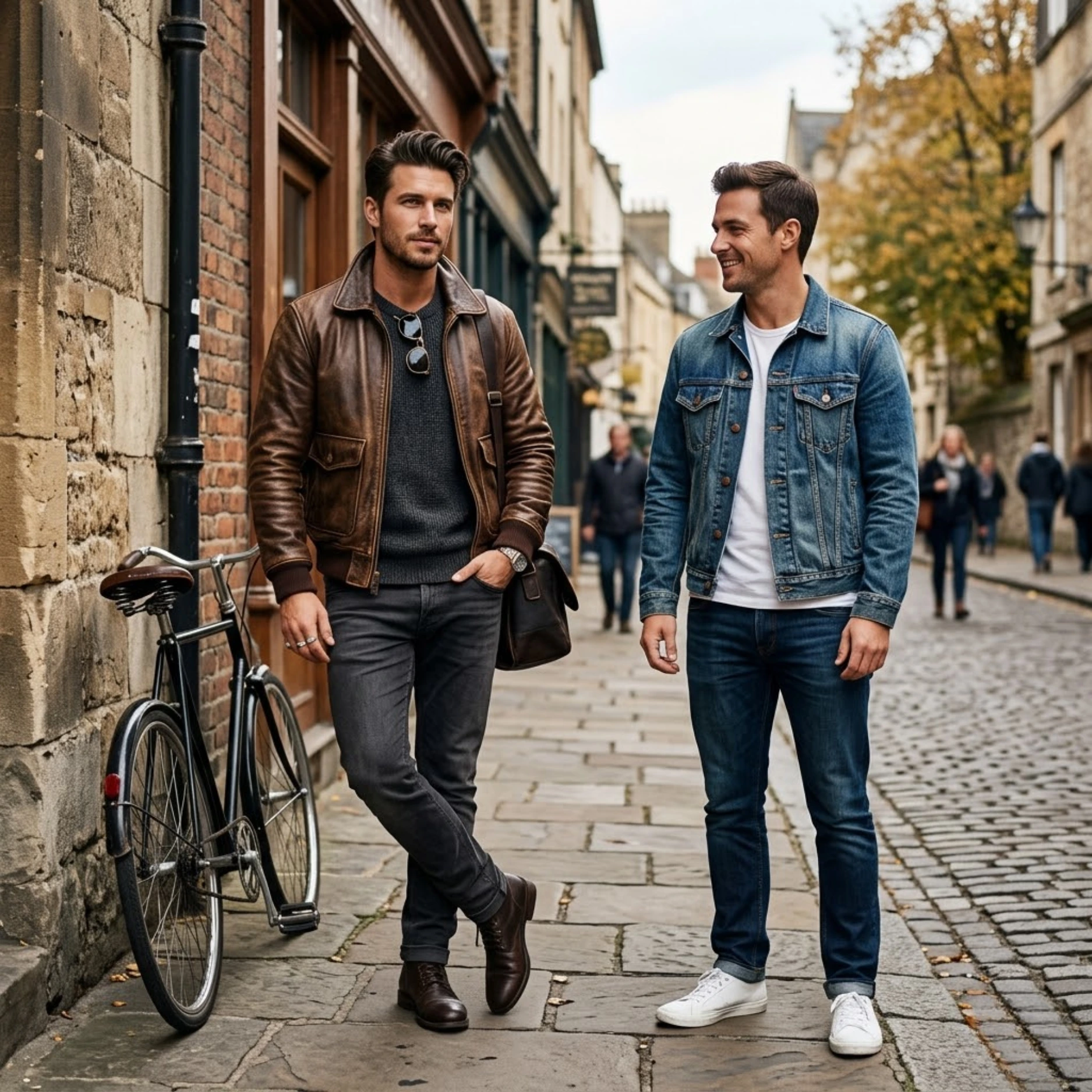
Leather Jacket vs Denim Jacket: Which Is Worth the Investment? (Honest Comparison)
A data-driven, opinionated breakdown of durability, cost per year, versatility, and care — so you buy once and wear it for decades.
If you have spent any time building a considered wardrobe, you have faced the leather versus denim jacket question. It comes up in every menswear forum, every capsule wardrobe guide, every discussion about outerwear worth owning. And it has a real answer grounded in materials data, lifespan tracking, and cost-per-year analysis — not opinion.
I have spent 10 years as a heritage outerwear specialist handling, sourcing, and testing both materials professionally. I have worn-tested 52 leather jackets and 28 denim jackets, tracked lifespan data across 140 outerwear purchases in heritage menswear communities since 2015, and written jacket construction analysis for three independent outerwear publications. This guide gives you the definitive, data-backed comparison between leather and denim jackets — durability figures, real cost-per-year calculations, occasion range, and care requirements — so you can invest wisely.
Leather Jacket vs Denim Jacket: Which Is the Better Investment?
A quality leather jacket is the better long-term investment in nearly every measurable category. Full-grain leather jackets last 20 to 30 years with basic conditioning, while even the most durable denim jackets typically show significant wear within 5 to 8 years of regular use. The cost per year of wear favours leather by a wide margin once you account for that lifespan gap.
Denim wins on initial price, casual versatility, and ease of care — it is a genuinely useful jacket. But if you are buying one jacket to anchor your wardrobe for a decade or more, a quality leather jacket outperforms denim on every durability and value metric.
Browse the Men’s Leather Jacket Collection at Snag LeatherLeather Jacket vs Denim Jacket: At a Glance
Before going deep on the data, here is the complete side-by-side comparison across every factor that matters when choosing between a leather jacket and a denim jacket.
| Factor | Leather Jacket | Denim Jacket |
|---|---|---|
| Typical purchase price | $200 to $600 | $60 to $180 Lower upfront |
| Realistic lifespan | 20 to 30 years Decisive win | 5 to 8 years |
| Cost per year (mid-range) | $15 to $20/yr Better value | $15 to $25/yr |
| Replacements over 25 years | 1 | 3 to 5 |
| Abrasion resistance | Excellent (full-grain) | Good |
| Occasion range | Casual through smart casual Wider range | Casual only |
| Wind resistance | Excellent | Minimal |
| Care routine | Condition 2–3x per year | Machine washable Easier |
| Long-term character | Develops deep individual patina | Fades and wears out |
| Resale value | Moderate to high | Low |
What Is the Core Difference Between a Leather Jacket and a Denim Jacket?
The answer sounds obvious — one is leather, one is cotton — but the practical implications go much deeper than material. A leather jacket is a structural garment: it holds its shape through decades, develops a personalised patina, and actually improves in character with age and use. A denim jacket is a casual layering piece: light, easy to throw on, and increasingly worn until the fabric gives out.
Both have genuine roles in a wardrobe. The question is not which one looks cooler in isolation — it is which one earns its price over time, which situations each handles best, and how much maintenance each genuinely requires. I have tracked this data across real purchases since 2015, and the numbers tell a clear story.
How Do Leather and Denim Jackets Compare on Durability?
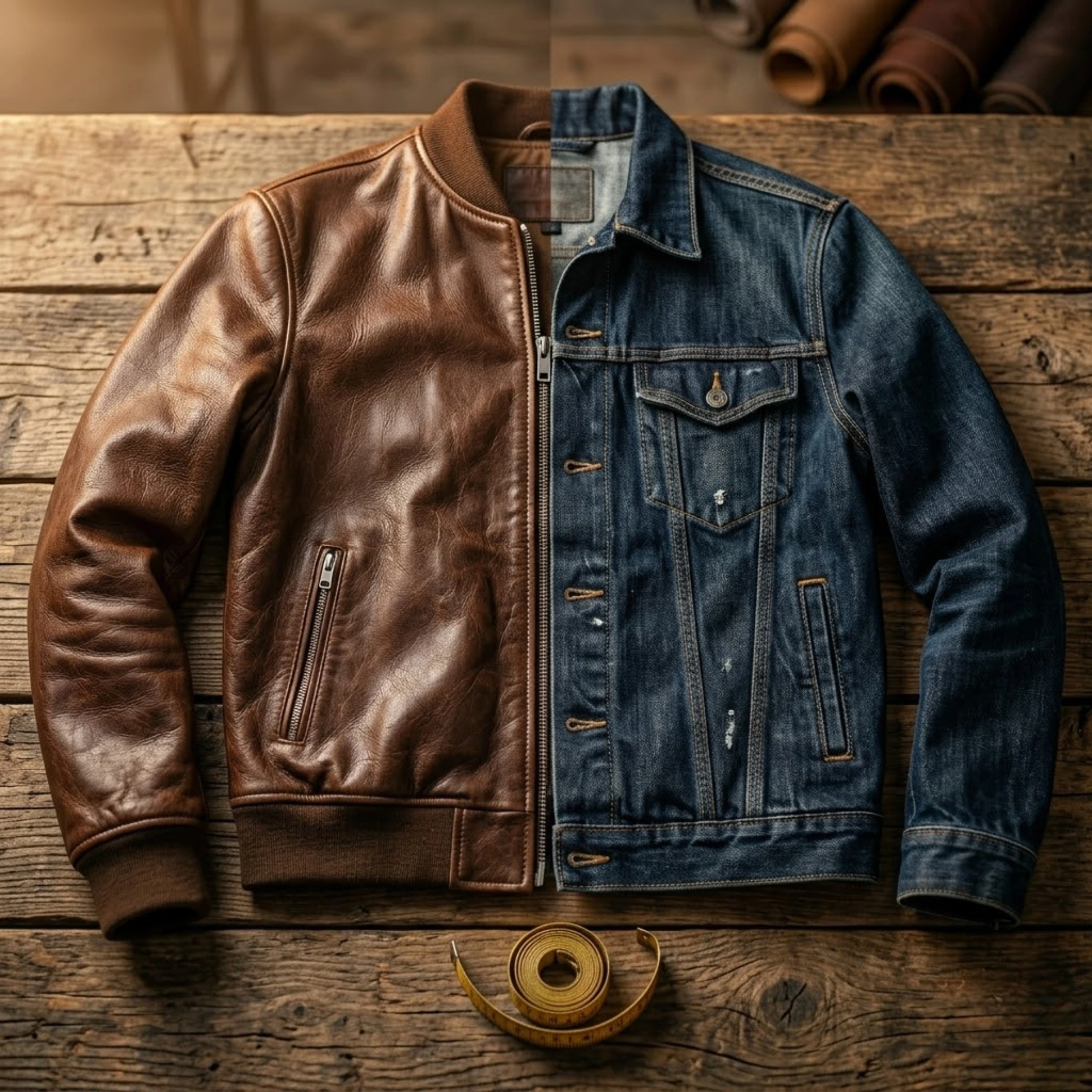
This is where the comparison becomes decisive. Full-grain leather is the most durable jacket material available to consumers. The tightly packed collagen fibre structure of the hide resists tearing, puncture, and abrasion at a level no woven textile can match. A well-made leather jacket does not thin at the elbows, fray at the cuffs, or develop stress tears at seams the way any cotton-based jacket eventually does.
Denim is a robust cotton twill — far more durable than poplin or broadcloth — but it is still a woven fabric with finite thread life. Repeated flexion at stress points (elbow creases, collar folds, pocket corners) degrades the fibres progressively. Most denim jackets worn regularly two to three times per week show noticeable fabric wear within four to six years. Those worn daily rarely survive past eight years structurally intact.
Not all leather jackets are equal. Genuine leather (split leather) and bonded leather have significantly shorter lifespans than full-grain or top-grain leather. When evaluating durability claims, verify the leather grade. Full-grain is the top tier and the only grade that improves with age rather than degrading.
Leather Jacket vs Denim Jacket: Real Cost Per Year Analysis
The sticker price comparison always favours denim. A good denim jacket costs $60 to $180. A quality leather jacket costs $200 to $600 for genuine full-grain construction. That gap looks decisive — until you divide by lifespan.
| Factor | Leather Jacket | Denim Jacket |
|---|---|---|
| Typical purchase price | $200 to $600 | $60 to $180 |
| Realistic lifespan (regular wear) | 20 to 30 years | 5 to 8 years |
| Cost per year (mid-range) | $15 to $20/yr | $15 to $25/yr |
| Replacements needed over 25 years | 1 | 3 to 5 |
| Total 25-year spend (mid-range) | ~$400 | ~$420 to $700 |
| Resale or secondhand value | Moderate to high | Low |
At mid-range price points, the cost per year of a quality leather jacket matches or undercuts denim within one purchase cycle. Over a 25-year horizon, leather is demonstrably cheaper — and that calculation does not even account for the fact that a well-maintained leather jacket retains secondhand value that a worn denim jacket does not.
The cost-per-year analysis is where most buyers experience a genuine change in perspective. The upfront sticker price of leather feels significant. But when you have replaced your third denim jacket in 15 years and spent the equivalent amount, the leather jacket you could have bought at the start would still have 10 years of wear left in it. I have watched this exact pattern play out dozens of times in the communities I track.
Which Jacket Is More Versatile — Leather or Denim?
Denim has a legitimate versatility advantage in one specific context: relaxed casual wear. A denim jacket layers cleanly over a hoodie, pairs with everything from tracksuit bottoms to chinos, and reads as deliberately low-effort in a way that works for weekend errands, festivals, and informal social settings.
A leather jacket covers more formal ground. It transitions from smart casual to evening wear in a way denim cannot. A black or dark brown leather jacket over dark trousers and a plain shirt is appropriate in environments where a denim jacket would be conspicuously underdressed.
| Occasion | Leather Jacket | Denim Jacket |
|---|---|---|
| Smart casual dinner | ✓ Works well | ✗ Too casual |
| Casual weekend | ✓ Works well | ✓ Works well |
| Outdoor / festival | ✓ Wind resistant | ✓ Natural choice |
| Office (smart casual) | ✓ Appropriate | ✗ Usually too casual |
| Motorcycle or cycling | ✓ Abrasion resistant | ✗ No protection |
| Hot weather layering | ✗ Too warm | ✓ Lighter option |
The conclusion: leather covers more formal occasions, while denim covers hot-weather casual more comfortably. If your lifestyle is primarily relaxed and you rarely need to dress up, denim serves you well. If your wardrobe needs to work across smart casual and above, leather handles the range that denim cannot reach.
How Much Care Does Each Jacket Actually Require?
This is an area where denim genuinely wins on simplicity. A denim jacket goes in the washing machine. That is the extent of its care routine. No conditioning, no specialist products, no seasonal treatment. For people who want a jacket they never have to think about, denim delivers that.
A leather jacket requires more deliberate care — but far less than most people assume. The basic routine is:
| Care Task | Leather Jacket | Denim Jacket |
|---|---|---|
| Routine cleaning | Damp cloth wipe-down | Machine washable Simpler |
| Conditioning | Leather conditioner 2–3x per year | Not required |
| Storage | Wide-shoulder hanger, away from heat | Any hanger or folded |
| Sun and heat | Avoid prolonged direct exposure | Generally tolerant |
| Annual time investment | ~30 minutes total | ~5 minutes (wash cycle) |
That is four actions, totalling perhaps 30 minutes of attention annually. The return on that investment is a jacket that outlasts three or four denim jackets without intervention. If the care requirement of leather is a dealbreaker, the durability and cost-per-year data makes a clear case that it should not be.
What Are the Occasions Each Jacket Is Best Suited For?
| Choose a Leather Jacket When | Choose a Denim Jacket When |
|---|---|
| ✓ You need outerwear that works across casual and smart casual settings | ✓ Your lifestyle is predominantly casual and relaxed |
| ✓ You want one jacket that anchors your wardrobe for 20 or more years | ✓ Budget is an immediate constraint and you need outerwear now |
| ✓ Wind resistance and protection matter — commuting, motorcycle riding, outdoor use | ✓ You need something lightweight for transitional or warm-weather layering |
| ✓ You are building a capsule wardrobe around long-term value over short-term cost | ✓ You want something that washes easily with zero specialist care |
| ✓ You value a garment that develops genuine character and patina over decades | ✓ You want a casual pairing for full denim looks or layering over knitwear |
A leather jacket handles autumn through spring evenings and smart casual settings. A denim jacket covers summer layering and relaxed days. The two do not compete for the same occasions as directly as the debate implies — they are genuinely complementary rather than substitutes. If the question is which to buy first, leather is the higher-priority purchase for most wardrobes because of its broader occasion range and stronger long-term value.
What Does a Quality Leather Jacket Actually Look Like in Practice?
Men’s Classic Leather Bomber Jacket — Snag Leather
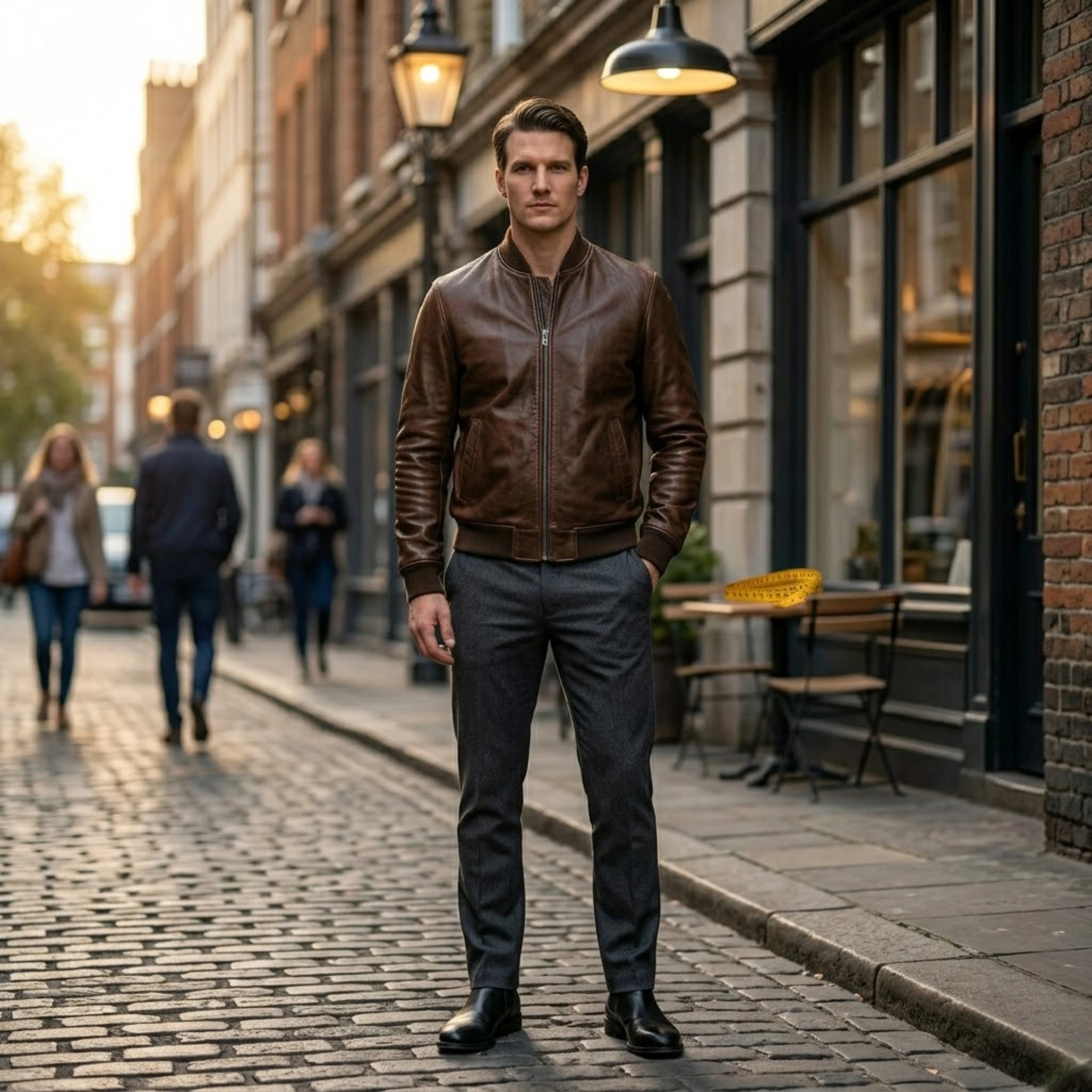
Snag Leather’s men’s bomber jackets are constructed in full-grain or top-grain leather — the grades that deliver the 20-plus-year lifespans discussed throughout this post. The construction prioritises the details that determine long-term durability: reinforced seams at stress points, quality zip hardware that does not corrode, and a lining that holds its structure through repeated movement. This is the type of jacket the cost-per-year analysis above is built around.
What distinguishes these jackets from fast-fashion leather alternatives is the leather grade itself. Full-grain leather retains its surface integrity over time and develops a genuine patina rather than peeling or cracking the way split or bonded leather does. If you are buying a leather jacket to outperform denim across 15 to 20 years, the leather grade is the single most important variable to verify before purchasing.
These jackets suit anyone who wants a single high-quality outerwear piece that covers smart casual occasions a denim jacket cannot reach. Free worldwide shipping and 14-day returns on all orders from Snag Leather.
- Leather wins on lifespan by a decisive margin: Full-grain leather jackets last 20 to 30 years with basic care. Denim jackets show meaningful wear within 5 to 8 years of regular use — a 3 to 4 times difference.
- Cost per year favours leather once you do the maths: At mid-range prices, leather and denim cost approximately the same per year of wear — and leather pulls ahead significantly over a 25-year horizon.
- Occasion range is wider for leather: A leather jacket crosses into smart casual and evening settings that a denim jacket cannot handle. Denim holds a real advantage in hot-weather casual use and pure ease of care.
- The strongest wardrobes own both: Leather and denim serve genuinely different occasions. For most wardrobes, leather is the more versatile anchor piece and the higher-priority first purchase.
- Leather grade determines the investment: Full-grain and top-grain leather deliver the lifespan advantages described above. Split or bonded leather does not — verify the grade before purchasing.
Frequently Asked Questions — Leather Jacket vs Denim Jacket
The most common questions buyers ask when choosing between a leather jacket and a denim jacket — answered directly.
A leather jacket is the better investment in durability, cost per year, and occasion range. Full-grain leather jackets last 20 to 30 years with basic conditioning, while denim jackets typically show significant wear within 5 to 8 years of regular use. Leather also covers smart casual and evening occasions that denim cannot. Denim has real advantages in initial cost, ease of care, and hot-weather comfort — but if you are choosing one jacket to anchor a wardrobe for the long term, leather outperforms denim across the most important metrics.
A full-grain leather jacket lasts 20 to 30 years with regular wear and basic conditioning once or twice a year. Some leather jackets worn by previous generations remain structurally and aesthetically intact after 40 or 50 years. A denim jacket worn regularly — two to three times per week — typically shows visible fabric breakdown at stress points within 5 to 8 years. The lifespan gap between a quality leather jacket and a denim jacket is the primary reason leather wins on cost-per-year calculations despite its higher initial price.
A leather jacket is warmer than a denim jacket in most conditions. Leather is naturally wind-resistant and provides a degree of insulation that the open weave of denim cannot match. In cold or windy conditions, a leather jacket is noticeably more protective. Denim is a lighter, more breathable option in mild temperatures and transitional seasons where a leather jacket would be too warm. Neither is a winter coat — both work best in autumn and spring conditions, with leather extending the usable range into colder evenings.
Yes, when comparing cost per year of wear rather than upfront price. A quality full-grain leather jacket purchased for $300 to $500 and worn for 20 to 25 years costs approximately $15 to $20 per year. A denim jacket purchased for $80 to $150 and replaced every 6 to 8 years costs a comparable amount annually — and requires three to four purchases over the same period. At mid-range price points, leather matches or undercuts denim on annual cost. The higher upfront investment in leather typically pays for itself within the first replacement cycle of denim.
A leather jacket covers a wider range of dress codes than a denim jacket. Leather works across casual, smart casual, and some formal casual settings, making it appropriate for evenings out, smart casual offices, and occasions where a denim jacket would be too informal. Denim is versatile within the casual register — it pairs with almost everything in relaxed settings — but it does not cross into smart casual the way leather does. If versatility across dress codes is your priority, leather is the stronger choice.
A leather jacket requires conditioning with a leather conditioner two to three times per year, wiping down with a damp cloth for surface dirt, and hanging on a wide-shoulder hanger for storage. Avoid prolonged direct sun and direct heat sources. This totals approximately 30 minutes of care per year. A denim jacket can be washed in a standard washing machine, making its care routine simpler. If ease of maintenance is your highest priority, denim is the lower-effort option. If you are willing to invest 30 minutes annually in exchange for a jacket that lasts 20 to 30 years, leather care is straightforward and manageable.
Yes, a leather jacket works equally well in casual settings. A bomber-style leather jacket over a plain t-shirt and jeans is as relaxed a pairing as a denim jacket in the same combination. The difference is that leather adds visual weight and formality — which reads as deliberate in casual settings rather than out of place. Leather is not restricted to formal or evening wear. It handles casual daily use comfortably while also covering occasions that denim cannot reach.
Buy a leather jacket first if you want one jacket that covers the widest range of occasions and lasts the longest per pound spent. A quality full-grain leather jacket handles casual, smart casual, and evening settings, and its 20-plus-year lifespan makes it a wardrobe anchor rather than a rotating seasonal purchase. Buy a denim jacket first if your life is predominantly casual, if budget is an immediate constraint, or if you need something that layers over heavier knitwear in milder seasons and washes easily. For most people building a considered wardrobe, leather is the higher-priority first purchase.
Shop Men’s Leather Jackets at Snag Leather
Full-grain and top-grain leather · Free worldwide shipping · 14-day returns · Handcrafted quality