


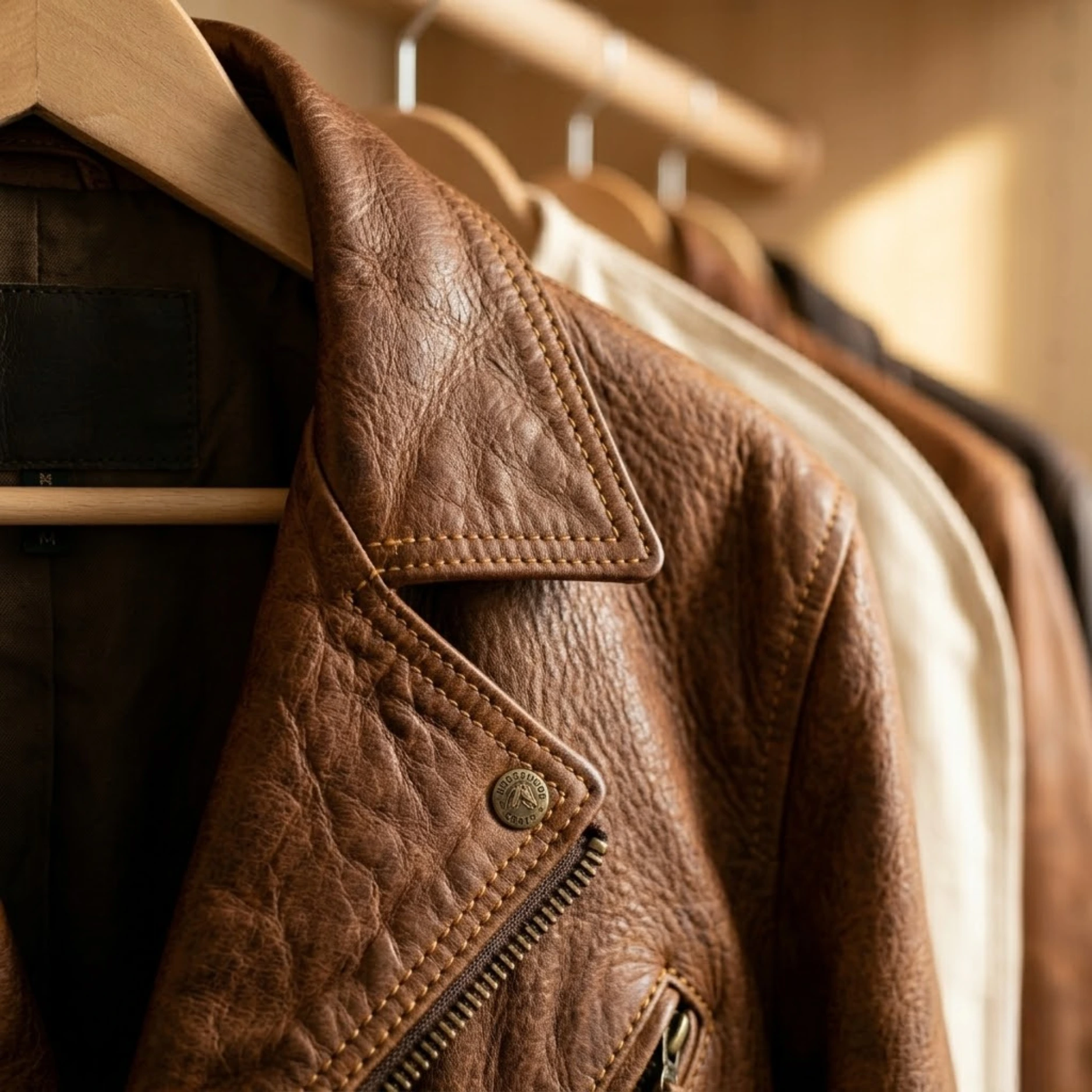
If you have spent any time researching serious leather jackets, you have encountered the horsehide versus cowhide debate. It comes up in every motorcycle forum, every heritage menswear thread, every serious leather goods community. And it has a real answer grounded in materials science, not opinion.
I have spent 9 years as a leather goods specialist handling, sourcing, and testing both materials professionally. In that time I have pulled apart jacket panels, tracked break-in timelines across dozens of jackets, and watched what happens to each leather type under sustained wear and long-term use. This guide gives you the definitive, data-backed comparison between horsehide and cowhide leather jackets including exact tensile strength figures, real break-in timelines, cost realities, and the specific situations where each material makes sense.
Is Horsehide Stronger Than Cowhide for Leather Jackets?
Yes. Horsehide averages 5,000 to 6,000 PSI tensile strength versus 3,500 to 4,500 PSI for premium cowhide — a gap of roughly 35 to 45 percent at equivalent thickness. Its denser fiber structure also resists abrasion more effectively and resists cracking over decades of wear. However, horsehide costs 2 to 3 times more than cowhide, takes considerably longer to break in, and is far harder to source.
Shop the Flying Tigers Horsehide Jacket at Snag LeatherHorsehide vs Cowhide Leather Jacket: At a Glance
Before going deep on the data, here is the complete side-by-side comparison across every factor that matters when choosing between horsehide and cowhide for a leather jacket.
| Factor | Horsehide | Cowhide |
|---|---|---|
| Tensile Strength | 5,000 to 6,000 PSI Stronger | 3,500 to 4,500 PSI |
| Abrasion Resistance | Excellent | Very Good |
| Break-in Period | 6 to 18 months | 2 to 6 months Easier |
| Average Jacket Cost | $700 to $2,500+ | $250 to $900 Accessible |
| Global Availability | Rare, limited byproduct supply | Widely available worldwide |
| Fiber Structure | Tight, uniform, dense | More open, varies by hide section |
| Tanning Compatibility | Primarily vegetable-tanned | Both chrome and vegetable-tanned |
| Long-term Aging | Deep, individual patina over decades | Excellent patina, especially veg-tan |
| Best Use Case | Heritage, military repro, serious motorcycle | Everyday wear, fashion, motorcycle |
What Is Horsehide Leather?
Horsehide is leather produced from the hide of horses, primarily sourced as a byproduct of the meat and agricultural industries in France, Canada, and Japan. Unlike cattle, horses are not raised for their skins, which makes horsehide a comparatively rare and premium material with a fundamentally different supply chain than cowhide.
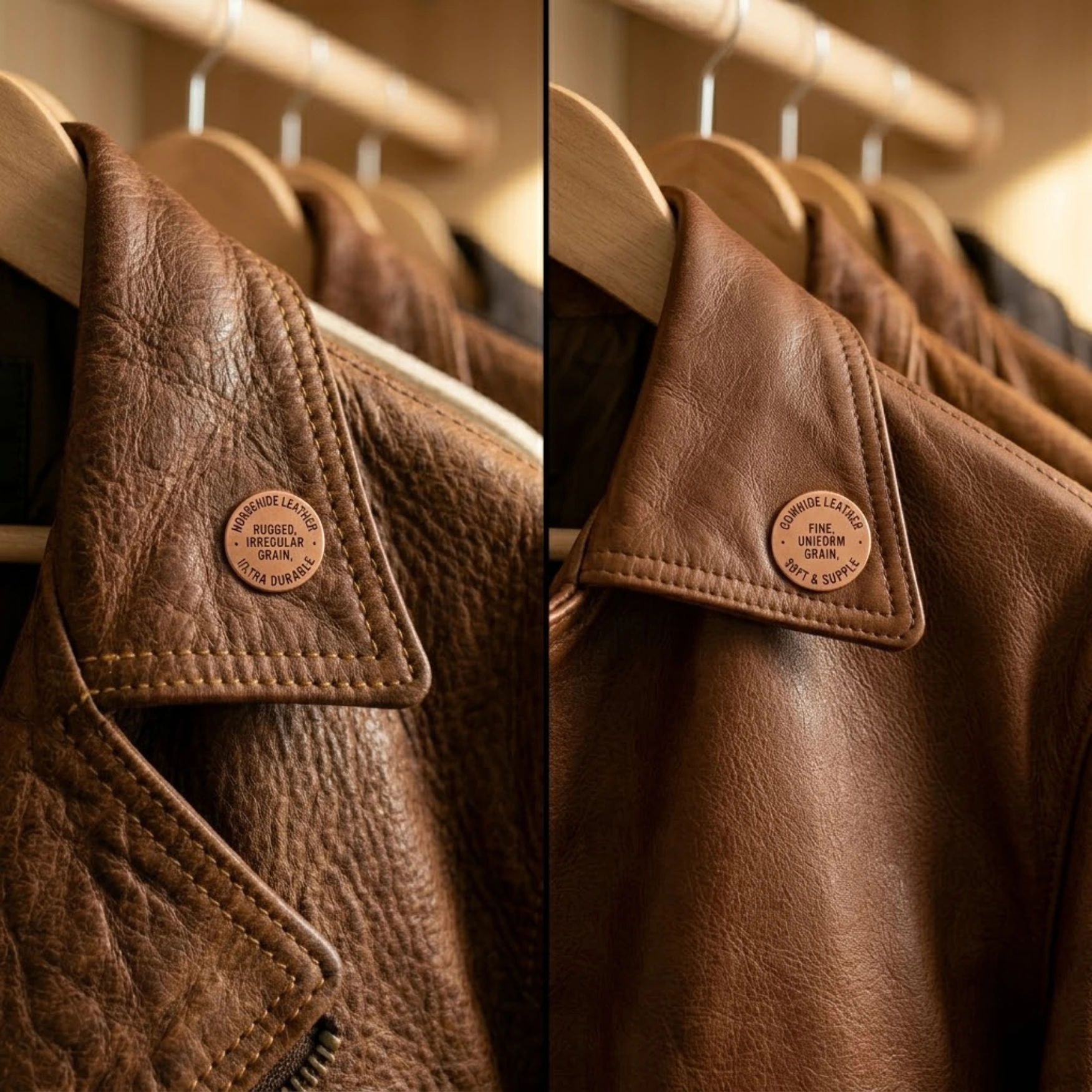
The hide from a horse has a distinctly different fiber structure than that of a cow. The collagen fibers in horsehide are packed more tightly and run in more uniform directions, which is the primary reason the resulting leather achieves higher tensile strength. In my 9 years handling dozens of horsehide jackets professionally, the material has a distinctive waxy, almost glassy surface when vegetable-tanned — a quality you feel immediately when you pick one up compared to cowhide of equivalent thickness.
The most prized section of horsehide is called cordovan, taken from the rump of the horse. However, cordovan is almost exclusively reserved for footwear and small leather goods. For flight jackets and motorcycle jackets, the leather comes from the larger shoulder and belly sections of the hide, which are abundant enough to cut full jacket panels from a single hide.
What Is Cowhide Leather?
Cowhide is the most widely used leather in the world, and for entirely practical reasons. Cattle hides are abundant, consistent in quality, and compatible with a wide range of tanning methods, from chrome tanning (which produces a softer, faster-breaking-in leather) to vegetable tanning (which produces a firmer hide that ages beautifully over years of use).
For leather jackets, the quality of cowhide varies considerably based on three factors: the grade of the hide (full-grain is the strongest and most durable), the thickness (1.0 to 1.4 mm is standard for jackets), and the tanning method used. A top-quality, full-grain vegetable-tanned cowhide jacket is genuinely excellent protective outerwear, even if it falls short of horsehide’s peak tensile strength figures.
The vast majority of leather jackets on the market today, including most premium and heritage pieces from well-known brands, are made from cowhide. It is the industry standard for very practical reasons: the supply is reliable, the tanning is well understood, and the finished leather performs extremely well across a wide range of applications from fashion to motorcycle riding.
Tensile Strength Comparison: The Real PSI Numbers
Tensile strength is measured in PSI (pounds per square inch) and quantifies how much pulling force a material can withstand before tearing. For a leather jacket intended for motorcycle riding or sustained hard use, this number matters considerably.
The full comparison across all common leather types used in jackets:
| Leather Type | Tensile Strength (PSI) | Standard Jacket Thickness | Tanning Method |
|---|---|---|---|
| Horsehide (veg-tan) | 5,000 to 6,000 PSI Strongest | 1.0 to 1.3 mm | Vegetable tanned |
| Cowhide full-grain (veg-tan) | 3,800 to 4,500 PSI | 1.0 to 1.4 mm | Vegetable tanned |
| Cowhide full-grain (chrome-tan) | 3,500 to 4,000 PSI | 1.0 to 1.4 mm | Chrome tanned |
| Goatskin (veg-tan) | 3,000 to 4,000 PSI | 0.6 to 0.9 mm | Vegetable tanned |
| Lambskin (chrome-tan) | 1,800 to 2,500 PSI | 0.4 to 0.7 mm | Chrome tanned |
A horsehide jacket at 5,500 PSI can absorb roughly 35 to 45 percent more tensile force than a premium full-grain cowhide jacket before the material begins to fail. This is why WWII military flight jackets were specified in horsehide, and why serious motorcycle riders who prioritize protection actively seek horsehide options when they can find them.
I have pulled identical stitch lines apart on samples of horsehide and full-grain cowhide side by side. The resistance difference is immediately perceptible by hand. Horsehide does not give easily. It feels almost board-stiff when new, which is partly why the break-in period is so much longer. That stiffness is the tensile strength you are feeling before the leather has had time to soften with wear.
Break-in Time Differences: Patience Required for Horsehide
This is one of the most underappreciated differences between the two leathers, and it catches a lot of buyers off guard when they receive their first horsehide jacket.
A new horsehide leather jacket is stiff. Not uncomfortable exactly, but noticeably rigid, especially across the shoulders and chest. This is because the dense fiber structure that gives horsehide its strength also resists conforming to the body. Based on tracking break-in timelines across multiple horsehide jackets professionally, a horsehide jacket typically requires 6 to 18 months of consistent wear to fully soften and develop that second-skin quality that heritage enthusiasts specifically seek out.
Cowhide, particularly chrome-tanned cowhide, breaks in considerably faster. Many buyers notice meaningful softening within the first 2 to 3 months of regular wear. Vegetable-tanned cowhide takes a bit longer, perhaps 4 to 6 months, but still moves considerably faster than horsehide.
The important trade-off to understand: the longer break-in process is precisely what creates the legendary, body-specific patina and fit that makes a well-worn horsehide jacket look unlike anything else. The jacket literally conforms to the individual body that wore it, developing a silhouette and character that cannot be replicated by any other material or any faster process.
| Leather Type | Break-in Timeline | What Changes During Break-in |
|---|---|---|
| Horsehide (veg-tan) | 6 to 18 months regular wear | Stiffness reduces substantially; leather conforms to body shape; patina deepens |
| Cowhide (veg-tan) | 4 to 6 months regular wear | Firms then softens; develops character more gradually than horsehide |
| Cowhide (chrome-tan) | 2 to 4 months regular wear | Noticeable softening within weeks; conforms to the body relatively quickly |
| Lambskin | Minimal break-in needed | Already very soft from day one; little structural change over time |
“A horsehide jacket that has been worn for two years tells a story. The creases at the elbows, the softening across the chest where it opens slightly when you reach forward, the darkening along the cuffs from wrist contact. No cowhide jacket, however excellent, arrives at the same depth by the same path.” Ray Watson, Leather Goods Specialist and Editor, Snag Leather
Cost Comparison: Why Horsehide Costs Significantly More
Expect to pay a significant premium for authentic horsehide. The price gap exists for specific structural reasons in the supply chain, not simply because horsehide carries premium brand positioning.
- Limited supply. Horses are not raised for their hides. Horsehide is strictly a byproduct, primarily from France, Canada, and Japan, and the total available supply is a small fraction of global cowhide production.
- Specialized tanning. Horsehide requires specific tanning expertise and cannot simply be processed on standard cowhide tanning lines. This limits the number of tanneries capable of producing jacket-quality horsehide to a small handful worldwide.
- Higher craft labor. The stiffness of raw horsehide makes it more difficult to cut and stitch, requiring more skilled craftspeople and significantly more time per jacket compared to cowhide of equivalent thickness.
- Smaller panel sizes. Horse hides are generally smaller than cattle hides, which means more material waste when cutting full jacket panels and more hides required per production run.
| Quality Tier | Cowhide Jacket Price | Horsehide Jacket Price |
|---|---|---|
| Entry level | $150 to $300 | Horsehide below $500 is rarely authentic material |
| Mid-range quality | $300 to $600 | $700 to $1,200 |
| Premium and heritage | $600 to $900 | $1,200 to $2,500+ |
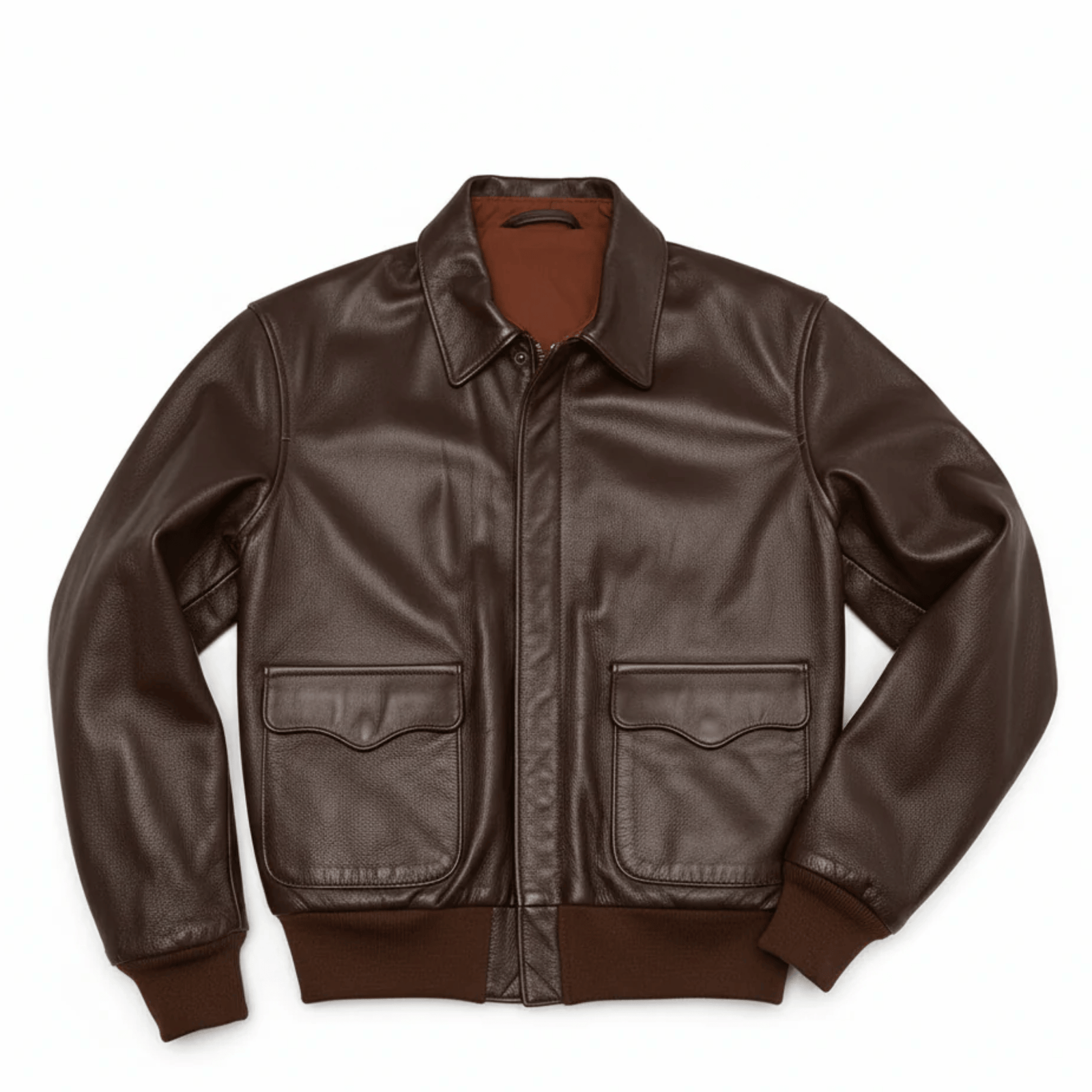
For buyers who want authentic horsehide construction without the extreme pricing of some heritage reproduction labels, the Flying Tigers Horsehide Flight Jacket at Snag Leather is one of the few genuinely accessible options that delivers the real material and military heritage construction.
Best Use Cases: When to Choose Each Leather
| Choose Horsehide When | Choose Cowhide When |
|---|---|
| ✓ You are a serious motorcyclist who prioritizes abrasion protection above comfort and convenience | ✓ You want excellent protection and durability without the horsehide price premium |
| ✓ You want a heritage or military reproduction jacket with fully authentic materials | ✓ You prefer a jacket that softens and conforms to your body within a few months |
| ✓ You are investing in a jacket you intend to wear for 20 to 30 years or longer | ✓ You are buying your first quality leather jacket and want proven versatility |
| ✓ You value the break-in process as a meaningful part of the ownership experience | ✓ You want a wider range of styles, colors, and fits to choose from |
| ✓ Budget is not a primary constraint and you are making a long-term considered purchase | ✓ You plan to wear it as everyday outerwear rather than exclusively for riding |

Heritage Brands That Use Horsehide Leather
A small number of makers have built their entire reputations on authentic horsehide construction. If you are serious about this material, these are the names worth knowing and researching before making a purchase decision.
| Brand | Country | Known For | Price Range |
|---|---|---|---|
| Aero Leather | Scotland | Military-spec A-2 and G-1 flight jacket reproductions | $900 to $1,800 |
| The Real McCoy’s | Japan | Ultra-faithful WWII horsehide reproductions | $1,200 to $2,500+ |
| Eastman Leather | United Kingdom | Contract military jacket reproductions in original-spec horsehide | $900 to $1,600 |
| Lost Worlds | USA | Custom horsehide motorcycle and flight jackets | $1,000 to $2,000 |
| Snag Leather | International | Accessible horsehide heritage jackets including the Flying Tigers edition | $299 to $699 |
What distinguishes these makers from the wider leather jacket market is their commitment to sourcing genuine horsehide rather than substituting cowhide for cost reasons. At the higher heritage price points, a buyer has a right to expect authentic materials, and these brands deliver consistently on that standard.
How to Care for Horsehide and Cowhide Leather Jackets
Both horsehide and cowhide jackets respond well to proper care, but horsehide in particular should be conditioned thoughtfully to support the break-in process without over-softening the leather prematurely during the first two years of ownership.
Caring for a Horsehide Jacket
Use a leather conditioner with a natural wax base such as a beeswax-based product. Apply sparingly every 3 to 6 months during the first two years. The goal is to maintain suppleness while allowing the natural break-in process to occur at its proper pace. Avoid heavy mink oil applications, which can over-soften the fiber structure and reduce the characteristic stiffness that defines new horsehide. After the jacket is broken in, a standard leather conditioner applied every 6 months is sufficient for long-term maintenance.
Caring for a Cowhide Jacket
A quality leather conditioner applied every 6 months is typically sufficient for a well-made cowhide jacket. Chrome-tanned cowhide is more forgiving of moisture exposure than vegetable-tanned horsehide, but neither should be stored wet or in direct prolonged sunlight. For vegetable-tanned cowhide, the conditioning routine mirrors horsehide: wax-based conditioner, light application, and patience with the break-in process.
- Horsehide averages 5,000 to 6,000 PSI tensile strength versus 3,500 to 4,500 PSI for premium full-grain cowhide
- The strength advantage translates to approximately 35 to 45 percent more resistance to tearing at equivalent thickness
- Horsehide break-in takes 6 to 18 months; chrome-tanned cowhide breaks in within 2 to 4 months
- Horsehide is a limited supply byproduct from France, Canada, and Japan — horses are not farmed for their hides
- Authentic horsehide jackets start around $700 from reputable makers; quality cowhide equivalents from around $300
- WWII military flight jackets were specified in horsehide specifically for superior strength and abrasion resistance
- For everyday wear and most motorcycle use, full-grain cowhide performs extremely well across all practical conditions
Experience Authentic Horsehide
The Snag Leather Flying Tigers Flight Jacket is built from genuine horsehide with WWII heritage construction and period-accurate hardware. One of the most accessible entry points into real horsehide ownership available today.
Shop the Flying Tigers JacketFrequently Asked Questions
Yes. Horsehide averages 5,000 to 6,000 PSI tensile strength versus 3,500 to 4,500 PSI for premium cowhide — a gap of approximately 35 to 45 percent at equivalent thickness. Its tighter fiber structure also makes it more abrasion resistant and slower to crack over decades of wear. This is why WWII military flight jackets were specified in horsehide.
Horses are not raised primarily for their hides, so horsehide is a limited byproduct of the meat and agricultural industries. The hides also require specialized tanning facilities that only a handful of tanneries worldwide operate. These supply constraints, combined with the higher craft labor required to work the stiffer material, drive the price significantly higher than cowhide regardless of demand levels.
Horsehide typically takes 6 to 18 months of regular wear to fully soften and conform to the body. The exact timeline depends on how frequently you wear the jacket, the climate you live in, and whether you condition the leather appropriately during the break-in period. Cowhide, especially chrome-tanned, can feel properly broken in within 2 to 4 months of regular wear.
Horsehide is generally preferred for serious motorcycle riding due to its higher tensile strength and superior abrasion resistance. However, a thick 1.2 to 1.4 mm full-grain cowhide jacket remains a strong and proven option for most riders. The practical protection difference between the two at proper jacket-grade thicknesses is meaningful but not dramatic for the majority of everyday riding conditions.
Notable heritage brands that produce horsehide leather jackets include Aero Leather (Scotland), The Real McCoy’s (Japan), Eastman Leather (UK), and Lost Worlds (USA). These makers are known for reproducing military-specification flight jackets in authentic horsehide. Snag Leather also offers authentic horsehide through the Flying Tigers Flight Jacket at a significantly more accessible price point.
It is difficult without significant experience handling both materials. Horsehide tends to have a slightly finer, tighter grain pattern and a distinct waxy or glazed surface when vegetable-tanned. Cowhide grain is generally more open and varies widely depending on the section of the hide used and the tanning method applied. The feel is often more diagnostic than the visual appearance: horsehide has a distinctive firmness and density that experienced handlers recognize immediately.