How to Clean a Leather Jacket at Home: Step-by-Step Guide (Without Ruining It)

You paid good money for your leather jacket. Maybe it’s been on a hundred rides, worn to every concert since 2021, or just the one piece in your closet that makes everything else look better. And now it’s dirty, scuffed, grimy, or hit with something it shouldn’t have been.
Here’s the good news: you can clean a leather jacket at home without taking it to a professional, without expensive equipment, and without ruining it — as long as you follow the right steps and avoid the wrong ones.
I’ve cleaned and conditioned hundreds of leather jackets over the years. In this guide, I’ll walk you through the exact process — from a quick surface wipe to handling stubborn stains — step by step, for every type of leather. I’ll also cover the most common mistakes that cause permanent damage, so you can avoid them entirely.
How Do You Clean a Leather Jacket at Home?
To clean a leather jacket at home: wipe away surface dirt with a dry microfiber cloth, mix a few drops of mild dish soap in distilled water, apply gently with a damp cloth in circular motions, wipe clean, then air dry away from heat. Finish by applying a leather conditioner to restore moisture. The full process takes about 30 minutes and should be done 2–4 times per year depending on wear frequency.
→ See SnagLeather’s full leather care FAQ- Why and how often should you clean a leather jacket?
- What you need before you start
- Step-by-step: how to clean a leather jacket at home
- How to remove specific stains from leather
- Cleaning by leather type: cowhide, goatskin, suede, shearling
- 8 mistakes that permanently damage leather jackets
- How to condition after cleaning (critical step most people skip)
- FAQ — 7 most asked questions answered
Why Should You Clean Your Leather Jacket — and How Often?
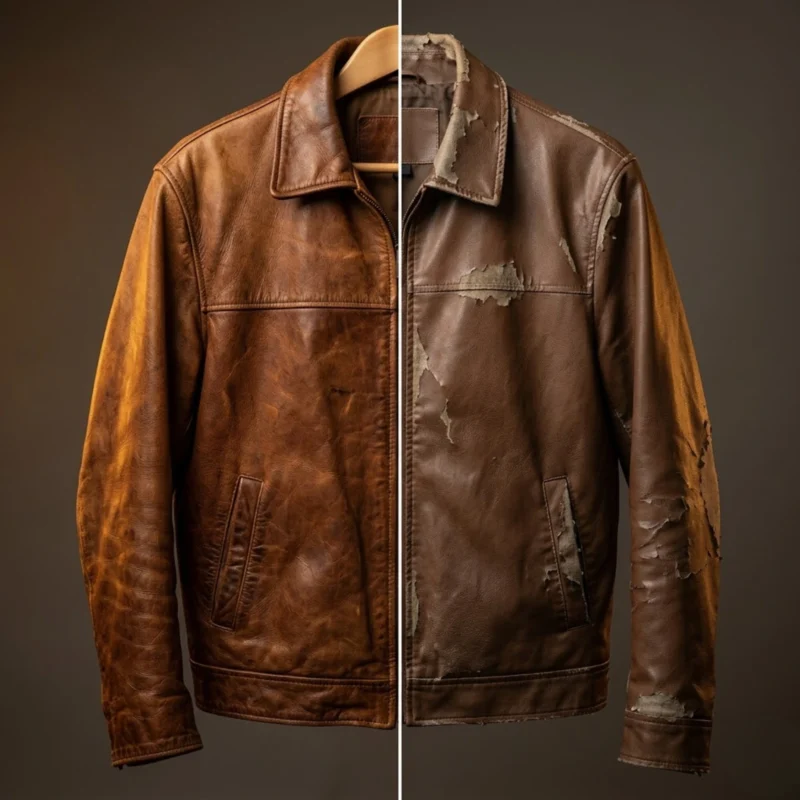
Leather is a natural, porous material. Every day you wear your jacket, it absorbs body oils, sweat, dust, pollution, and moisture from the environment. Over time, that buildup doesn’t just make the jacket look dull, it actively degrades the leather fibers from the inside, leading to cracking, stiffness, and premature aging.
A leather jacket that is never cleaned or conditioned will begin showing stress cracks within 3–5 years. One that receives regular care can last 25+ years and actually improve in appearance over that time — developing a rich, personalized patina that no new jacket can replicate.
How often you clean depends on how much you wear it:
| Wear Frequency | Surface Wipe | Full Clean | Deep Condition |
|---|---|---|---|
| Daily wear | Weekly | Every 6–8 weeks | Every 3 months |
| Regular (3–4x/week) | Every 2 weeks | Every 3 months | Every 6 months |
| Occasional (weekends) | Monthly | Twice a year | Once a year |
| Stored / seasonal | Before storing | Before & after storage | Before storing |
What You Need Before You Start Cleaning
You don’t need expensive products to clean a leather jacket at home. Most of what you need is probably already in your house. Here’s what to gather before you start:
- Rubbing alcohol or hand sanitizer — strips natural oils and causes irreversible drying
- Bleach or ammonia-based cleaners — destroys the surface finish and discolors leather permanently
- Baby wipes or wet wipes — contain alcohol, fragrance, and preservatives harmful to leather
- Saddle soap used excessively — strips oils when overused; once or twice a year maximum
- Olive oil or vegetable oil — goes rancid inside the leather, causes mold and odor over time
- Hair dryer or direct sunlight to dry — rapid heat drying causes surface cracking and shrinkage
How to Clean a Leather Jacket at Home: Step-by-Step
Follow these steps in order. Don’t skip the conditioning step at the end — cleaning strips moisture from leather, and failing to restore it is the #1 cause of post-cleaning cracks.
Check the Care Label and Leather Type
Before touching anything, check the inside tag. Most leather jackets have a care label specifying leather type (cowhide, lambskin, suede, nubuck) and any restrictions. If the tag says “dry clean only” — follow it. For unlabeled jackets, identify the leather by texture: smooth grain = finished leather (cleanable at home); fuzzy/matte surface = suede or nubuck (different process entirely).
💡 Pro Tip: Test your cleaning solution on a hidden interior seam first. Wait 10 minutes. If there’s no discoloration or texture change, you’re good to proceed.Remove Surface Dirt and Dust
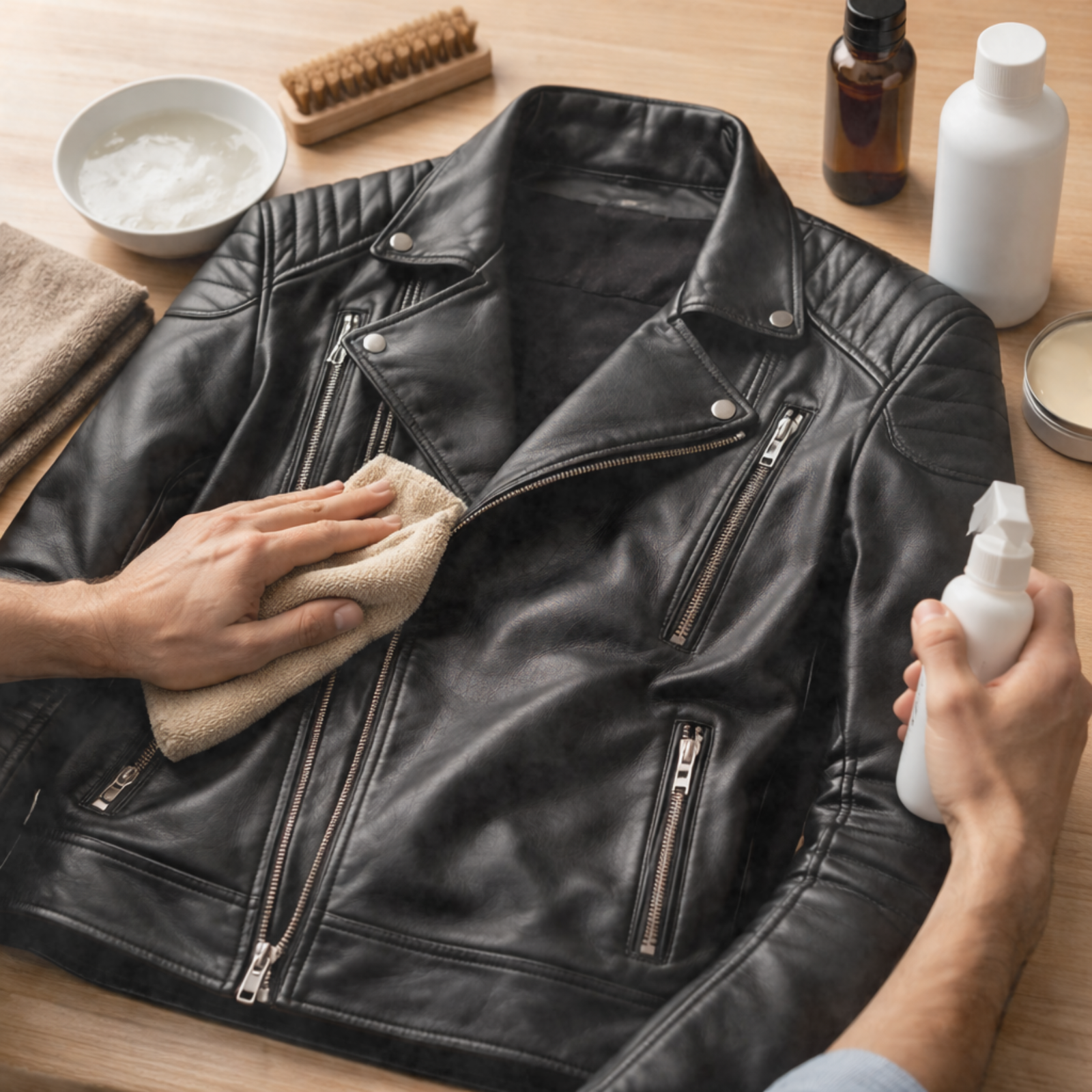
Lay the jacket flat on a clean surface or hang it on a padded hanger. Using a dry microfiber cloth, gently wipe the entire exterior surface to remove loose dust, lint, and surface debris. Pay attention to collar folds, pocket edges, and under the arms — these are the areas where grime accumulates fastest. Work in long, smooth strokes following the natural grain direction.
💡 Pro Tip: A soft lint roller works brilliantly for getting pet hair and fine dust out of textured leather grain before the wet clean.Mix Your Cleaning Solution
In a small bowl, mix 1 cup of distilled water with 3–4 drops of mild dish soap. Stir gently — you want a very lightly soapy solution, not suds. This dilution is important: too much soap leaves residue that attracts more dirt and can affect the leather finish. Dip one microfiber cloth into the solution and wring it out thoroughly. The cloth should be damp, never wet.
- 1 cup distilled water
- 3–4 drops mild dish soap (not antibacterial)
- Stir gently, wring cloth until barely damp
Clean the Jacket in Sections
Work in small sections — sleeves, front panels, back, collar — rather than trying to clean the whole jacket at once. Use gentle circular motions on soiled areas and straight strokes on clean areas. Apply light, even pressure. Don’t scrub — scrubbing breaks down the surface finish over time. For seams and hardware areas, use a soft-bristle brush dipped in the same solution.
💡 Pro Tip: Clean one section, then immediately wipe with the dry cloth before moving to the next. Don’t let the solution sit on the leather — 30 seconds maximum before wiping off.Wipe Away Soap Residue
Using a fresh, clean microfiber cloth dampened with plain distilled water (no soap), go over the entire jacket to remove any remaining soap residue. Any soap left on the surface will dry and attract grime, creating a dull, streaky appearance. This step takes 2–3 minutes but makes a significant difference in the final result. Pay extra attention to collar and cuff areas where residue likes to settle.
Air Dry — Never Use Heat
Hang the jacket on a wide, padded hanger in a well-ventilated area at room temperature. Keep it away from direct sunlight, radiators, space heaters, and hair dryers. Heat is the single biggest cause of leather cracking after improper cleaning. Allow the jacket to dry completely — this typically takes 2–4 hours depending on humidity. Never store or wear the jacket while still damp.
💡 Pro Tip: Stuff the sleeves loosely with dry newspaper or paper towels while drying to help the jacket hold its shape as moisture leaves the leather.Apply Leather Conditioner
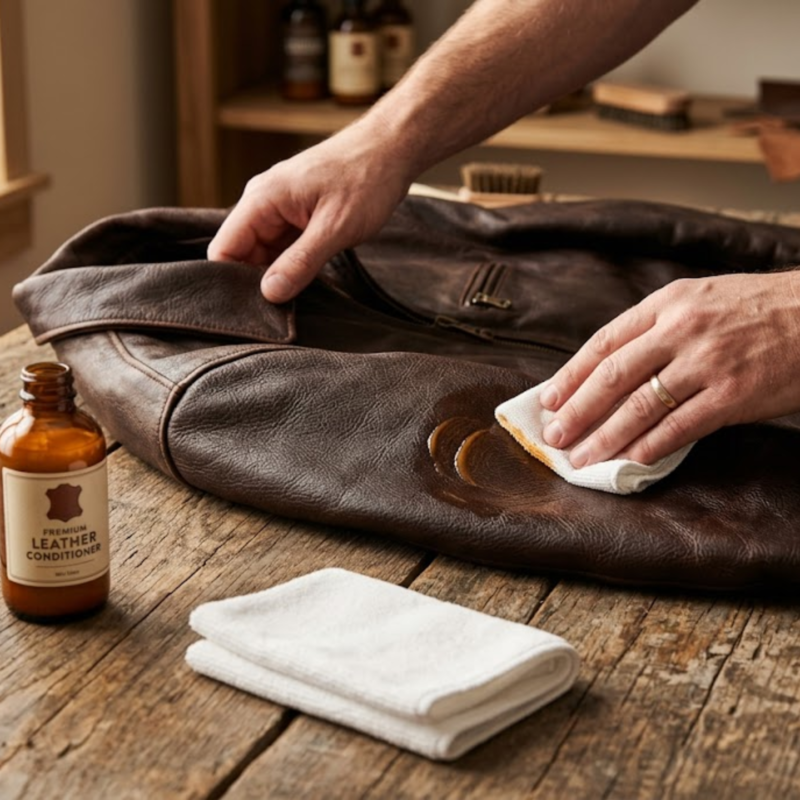
Once fully dry, this is the most important step. Cleaning removes natural oils from leather — conditioning restores them. Apply a small amount of quality leather conditioner to a clean cloth and work it into the jacket using circular motions, covering the entire surface including seams and creases. Let it absorb for 15–20 minutes, then buff off any excess with a clean dry cloth. The leather should feel soft and supple, with a subtle natural sheen.
- Use: mink oil, beeswax conditioner, Leather Honey, or Chamberlain’s Leather Milk
- Avoid: petroleum-based products (can soften leather excessively and affect stitching)
- A little goes a long way — thin, even coats absorb better than one heavy application
How to Remove Specific Stains From a Leather Jacket
Not all stains respond to the same treatment. Here’s how to handle the most common ones without making the situation worse.
| Stain Type | What to Do | What to Avoid | Difficulty |
|---|---|---|---|
| Grease / oil | Blot immediately. Sprinkle cornstarch or baking soda, leave 4–6 hours, brush off gently. Repeat if needed. | Do not rub — spreads the stain deeper into pores | Medium |
| Ink / ballpoint pen | Dab with a cotton ball lightly moistened with rubbing alcohol (tiny amount only). Work from outside in. Condition immediately after. | Do not saturate — alcohol dries leather fast | Hard |
| Water stains / rain spots | Dampen the entire panel (not just the spot) with distilled water. Allow to dry evenly. The spot will blend as it dries uniformly. | Do not spot-dry with heat — creates a ring | Easy |
| Mold / mildew | Mix equal parts water and rubbing alcohol. Wipe affected areas. Allow to dry fully. Condition generously. Improve storage ventilation. | Do not seal jacket in plastic — causes more mold | Medium |
| Salt stains (winter) | Mix equal parts cold water and white vinegar. Apply with cloth, let sit 2 minutes, wipe clean. Condition thoroughly after. | Do not let salt stains dry — they crystallize and cut leather fibers | Easy–Medium |
| Food / beverage | Blot immediately with dry cloth. Clean with standard soap-water solution once dry. Treat grease component with cornstarch first if oily. | Do not use soda water — carbonation can affect finish | Easy if treated fast |
| Scuffs / surface marks | Apply leather conditioner to the scuff, work in with fingers. Heat from your hand softens the leather and often makes minor scuffs disappear. For deeper scuffs, a leather repair kit. | Do not sand or scratch at the surface | Easy–Medium |
Cleaning Leather Jackets by Leather Type
Different leathers require different approaches. The soap-and-water method above works for most finished smooth leathers, but here’s how to adapt it for specific materials.
Cowhide Leather Jackets
The most forgiving leather to clean. Full-grain and corrected-grain cowhide handles the standard soap-and-water method well. Cowhide is dense enough that you can use slightly more solution pressure than with thinner leathers. SnagLeather’s cowhide biker jackets are built to handle regular cleaning — the tight grain structure resists moisture absorption.
→ Browse SnagLeather Cowhide Biker Jackets
Goatskin Leather Jackets
Goatskin is more porous than cowhide, so use a drier cloth and work faster per section to avoid over-saturating the surface. The natural pebbled grain can trap dirt in its texture — a soft brush on textured areas is particularly effective here. Goatskin benefits enormously from regular conditioning due to its naturally higher breathability.
Lambskin Leather Jackets
Lambskin is the most delicate. Use the most dilute soap solution possible and the lightest touch — the surface finish scratches and watermarks easily. Work with the grain, never against it. If your lambskin jacket is heavily soiled, consider a professional leather cleaner for safety. The SnagLeather Dark Brown Vintage Jacket in genuine lamb leather benefits from gentle monthly conditioning even between cleans.
Suede and Nubuck Leather Jackets
Do not use water or soap on suede or nubuck. These are nap-finish leathers that water permanently stains and flattens. For suede, use a dedicated suede brush for dry cleaning and a suede eraser for marks. For water damage on suede, allow to dry completely then gently restore the nap with a suede brush in one direction. Browse SnagLeather’s suede jacket collection — each comes with specific care instructions.
Shearling Lined Jackets
Clean the outer leather shell using the standard method, being careful not to saturate around the shearling-lined openings (collar, cuffs, hem). The shearling interior should only be spot-cleaned with a damp cloth — never fully wet. Hang with the shearling away from heat. SnagLeather’s Pilot Shearling Bomber Jacket benefits from professional cleaning for the shearling lining once per year.
8 Mistakes That Permanently Damage Leather Jackets During Cleaning
- Machine washing — The agitation, heat, and chemical detergents destroy the leather’s fiber structure. One wash cycle can ruin a jacket completely, regardless of how gentle the setting.
- Using too much water — Over-saturating leather causes it to warp, stiffen, and lose its shape as it dries. The cleaning cloth should always be damp, not wet.
- Skipping the patch test — Different dyes and finishes react differently to cleaning agents. A 10-second patch test on a hidden seam can save you from a visible discoloration disaster.
- Cleaning in direct sunlight — The combined effect of UV and heat while the surface is moist dramatically accelerates surface fading and can cause uneven drying marks.
- Skipping the conditioner after cleaning — This is the single most damaging omission. Every clean without a follow-up condition depletes moisture from the leather incrementally.
- Storing while still damp — Even slightly damp leather stored in a closet will develop mold within days. Always allow a minimum 4 hours of air drying before hanging in storage.
- Using colored or printed cloths — Dyes in fabric can transfer onto damp leather and cause irreversible staining. Use only white or undyed microfiber cloths.
- Scrubbing aggressively — Friction breaks down the topcoat finish of leather. What looks like a productive scrub is actually micro-abrasion that dull the surface permanently over multiple cleanings.
How to Condition Your Leather Jacket After Cleaning
Most people clean their leather jacket and stop there. That’s a mistake. Cleaning removes up to 30% of the natural oils in leather’s surface layer — conditioning is what puts them back.
Think of leather like skin. You wouldn’t wash your face and walk out into cold air without moisturizer. Leather needs the same care. A well-conditioned jacket is more resistant to water, stains, and cracking — and it looks dramatically better over time.
Best Leather Conditioners for Home Use in 2026
| Conditioner | Best For | Finish Effect | Notes |
|---|---|---|---|
| Leather Honey | All smooth leathers | Slight darkening, deep shine | Best overall for most riders and collectors |
| Chamberlain’s Leather Milk | Delicate and light-colored leather | Minimal darkening, matte finish | Best for lambskin and lighter hides |
| Beeswax Balm | Cowhide, horsehide, work leather | Slight darkening, weather resistance | Excellent for motorcycle jackets — adds water resistance |
| Mink Oil | Heavy-duty cowhide and work leather | Noticeable darkening | Very effective but darkens significantly — test first on a seam |
| Coconut oil | Emergency conditioning only | Darkening, can go rancid | Use sparingly as a temporary measure — not for regular use |
How to apply conditioner: Work a pea-sized amount per panel into the leather using a circular motion with a clean cloth or bare fingers. The warmth of your hands helps the conditioner penetrate deeper. Allow 15–20 minutes to absorb, then buff off excess with a clean dry cloth. Repeat on any areas that still feel dry or stiff.
SnagLeather Jackets Built to Be Maintained for Decades
The reason cleaning and conditioning matters so much is that quality leather is worth preserving. Here are three SnagLeather jackets that, with proper care following this guide, will outlast anything else in your closet.
Premium cowhide and goatskin. Dense grain that responds beautifully to regular conditioning, developing a rich patina over years of proper care. Free US shipping, lifetime warranty.
→ Shop Biker JacketsAuthentic B-3 heritage construction. The outer leather shell follows standard cleaning protocol; the shearling interior is low-maintenance spot-clean only. $339 — currently 32% off.
→ View This JacketGenuine lamb leather in a rich dark brown. The delicate finish rewards gentle cleaning and regular conditioning with Chamberlain’s Leather Milk. $299 — 30% off.
→ View This JacketFrequently Asked Questions: Cleaning a Leather Jacket at Home
No — never machine wash a leather jacket. The combination of water immersion, agitation, heat, and chemical detergents destroys the leather’s natural fiber structure, dye, and finish. Even a single gentle cycle can cause irreversible warping, cracking, color bleed, and shrinkage. All leather jacket cleaning should be done by hand using the methods described in this guide.
No. Baby wipes contain alcohol, fragrance, and preservative chemicals that dry out and damage leather over time. They may seem gentle, but they strip the natural oils from the surface with repeated use. Use a lightly dampened microfiber cloth with a mild soap-and-distilled-water solution instead.
For general mustiness: hang the jacket outdoors in fresh air (not direct sun) for 4–8 hours. For stronger odors: sprinkle baking soda inside the lining, place in a sealed bag overnight, then shake out. For sweat odor: wipe the lining with a cloth dampened with equal parts water and white vinegar, allow to dry fully. Persistent odors may require professional leather cleaning.
Safe household items for leather cleaning include: mild dish soap (a few drops in distilled water), white vinegar diluted with water (for salt stains and mildew), baking soda or cornstarch (for grease stains), and plain distilled water. For conditioning, coconut oil works as a temporary measure but should not replace a dedicated leather conditioner for regular use.
Hang the jacket on a wide padded hanger in a ventilated area at room temperature. Keep it away from radiators, heat vents, direct sunlight, and hair dryers. Allow 2–4 hours minimum for complete drying before applying conditioner or storing. Stuffing the sleeves loosely with paper towels helps maintain shape during drying.
For regular wear (3–4 times per week): a full clean every 3 months and conditioning every 6 months. For daily wear: clean every 6–8 weeks and condition every 3 months. For occasional wear: clean twice a year, before and after storage season. Always do a quick dry wipe between full cleans to prevent dirt from setting into the grain.
Yes, but use it sparingly — once or twice a year maximum. Saddle soap is effective at deep-cleaning leather, but it strips oils aggressively and can dry out the surface if used too frequently. If you use saddle soap, always follow with a generous application of leather conditioner. It is not recommended for delicate leathers like lambskin or nubuck.
Final Takeaway: Clean It Right, and Your Leather Jacket Gets Better With Age
A leather jacket is one of the few things you own that genuinely improves with time — but only if you take care of it. The process isn’t complicated, it doesn’t require expensive equipment, and it takes less than an hour twice a year. The payoff is a jacket that looks richer, feels better, and remains structurally protective for decades.
- Clean 2–4 times per year depending on wear frequency — more often for daily riders and commuters
- Always condition after every clean — this is non-negotiable if you want the leather to stay supple
- Never use heat to dry — hang at room temperature in ventilated air every single time
- Treat stains immediately — the longer a stain sits in leather pores, the harder it is to fully remove
Every SnagLeather jacket is handcrafted from premium hides built to last a lifetime — with the right care. Free US shipping and a lifetime warranty on every order.
Shop All Men’s Leather Jackets →- Motorcycle Leather Jacket Buying Guide: Everything You Need to Know (2026)
- The Best Men’s Leather Bomber Jackets in the USA — 2026 Guide
- The History of the A-2 Flight Jacket: From WWII to Modern Style
- How to Style a Leather Jacket in 2026: 12 Outfits for Men
- SnagLeather FAQ — Leather Care, Sizing & Shipping Questions Answered