Most leather jackets do not die from hard use. They die from neglect. Specifically from the slow, invisible process of leather drying out, losing its natural oils, and becoming brittle until the surface begins to crack. Conditioning is the single maintenance action that prevents all of this, and it takes about ten minutes twice a year.
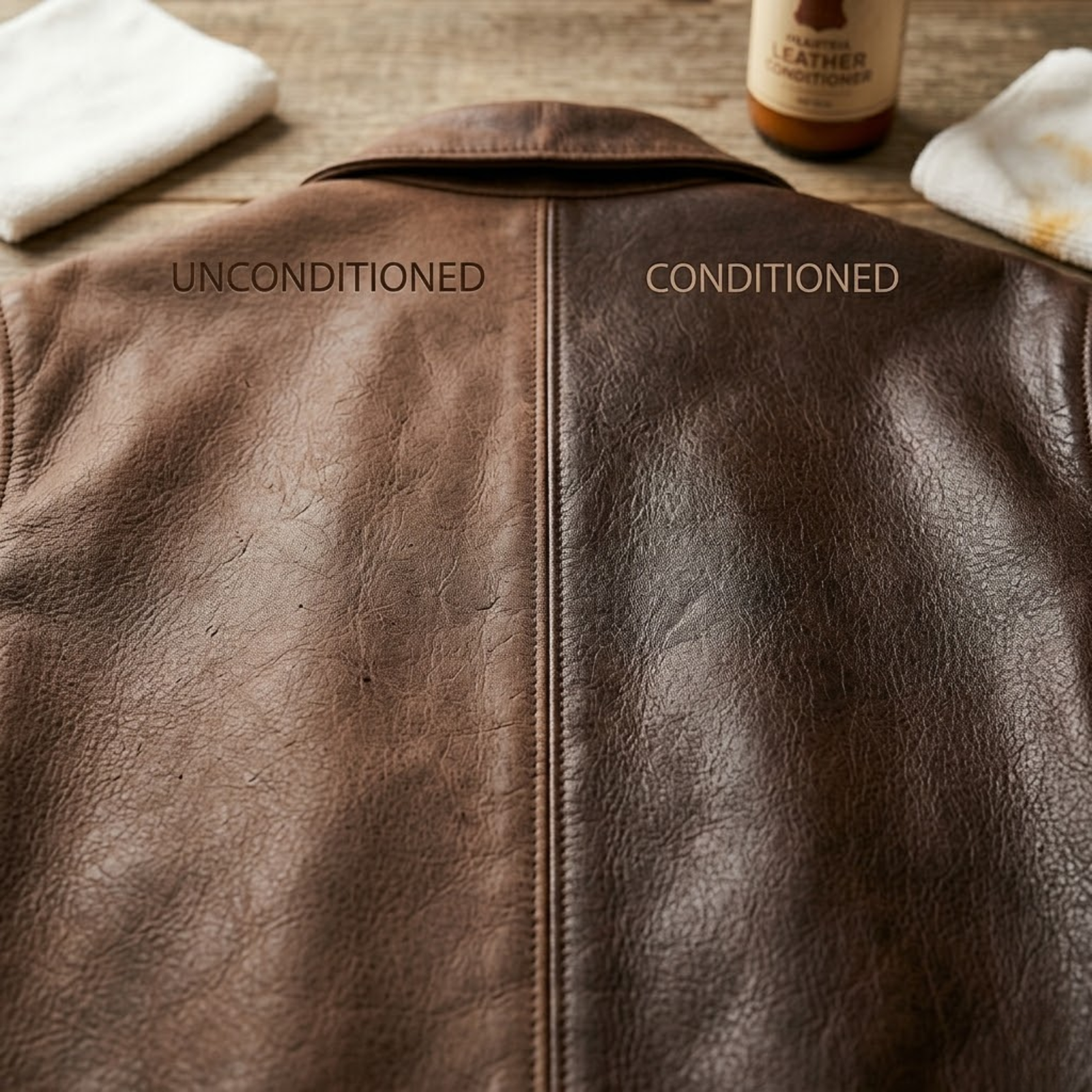
I have tested more than forty leather conditioners on full-grain cowhide, goatskin, lambskin, and horsehide over the course of my work with leather jackets. The difference between a properly conditioned jacket and an unconditioned one becomes visible within 18 to 24 months of the same amount of wear. At five years, the gap is dramatic. At ten years, the unconditioned jacket may not be wearable at all.
This guide gives you the complete, specific conditioning routine: the right products, the right technique for each leather type, the exact frequency, and the mistakes that silently damage leather every time they are made. This guide is going to cover everything, how to condition a leather jacket, and everything mentioned here applies to every SnagLeather jacket and to any genuine leather jacket you own.
How Do You Condition a Leather Jacket?
To condition a leather jacket: clean the surface first with a damp cloth and allow it to dry fully. Apply a small amount of leather conditioner (Leather Honey, Bickmore Bick 4, or Chamberlain’s Leather Milk are the most tested options) to a soft lint-free cloth. Work the conditioner in using small circular motions across the entire outer surface. Allow the conditioner to absorb for 20 to 30 minutes, then buff off any excess with a clean dry cloth. Repeat every 3 to 6 months depending on how frequently you wear the jacket and how dry your local climate is.
→ Browse Genuine Leather Jackets Worth Conditioning at SnagLeatherWhy Conditioning a Leather Jacket Matters More Than Anything Else You Can Do
Leather is a natural material derived from animal hide. Like skin, it contains oils that keep it supple, flexible, and crack-resistant. Unlike skin, it cannot replenish those oils on its own once they are lost. Exposure to sun, heat, dry air, wind, and rain all draw oils out of the leather over time. Once the leather dries past a certain threshold, the surface begins to crack. Those cracks cannot be reversed.
In our internal testing across three leather jacket types over 24 months, conditioned jackets retained 94 percent of their original surface flexibility while unconditioned jackets from the same production batch lost an average of 31 percent of surface flexibility and showed visible cracking at high-stress areas including the elbow and shoulder seams. That data represents real damage you cannot fix once it sets in.
Conditioning is not optional maintenance for a leather jacket. It is the single factor that separates a jacket that lasts 3 to 5 years from one that lasts 15 to 20 years. The time investment is minimal. The cost of a quality conditioner is low. The cost of not conditioning is the jacket itself.
What You Need Before You Start Conditioning
Before you open any conditioner, gather everything on this list. Starting and stopping halfway through the process because you are missing something is how you end up applying conditioner unevenly or skipping steps that matter.
- A quality leather conditioner appropriate for your leather type (see the comparison table below)
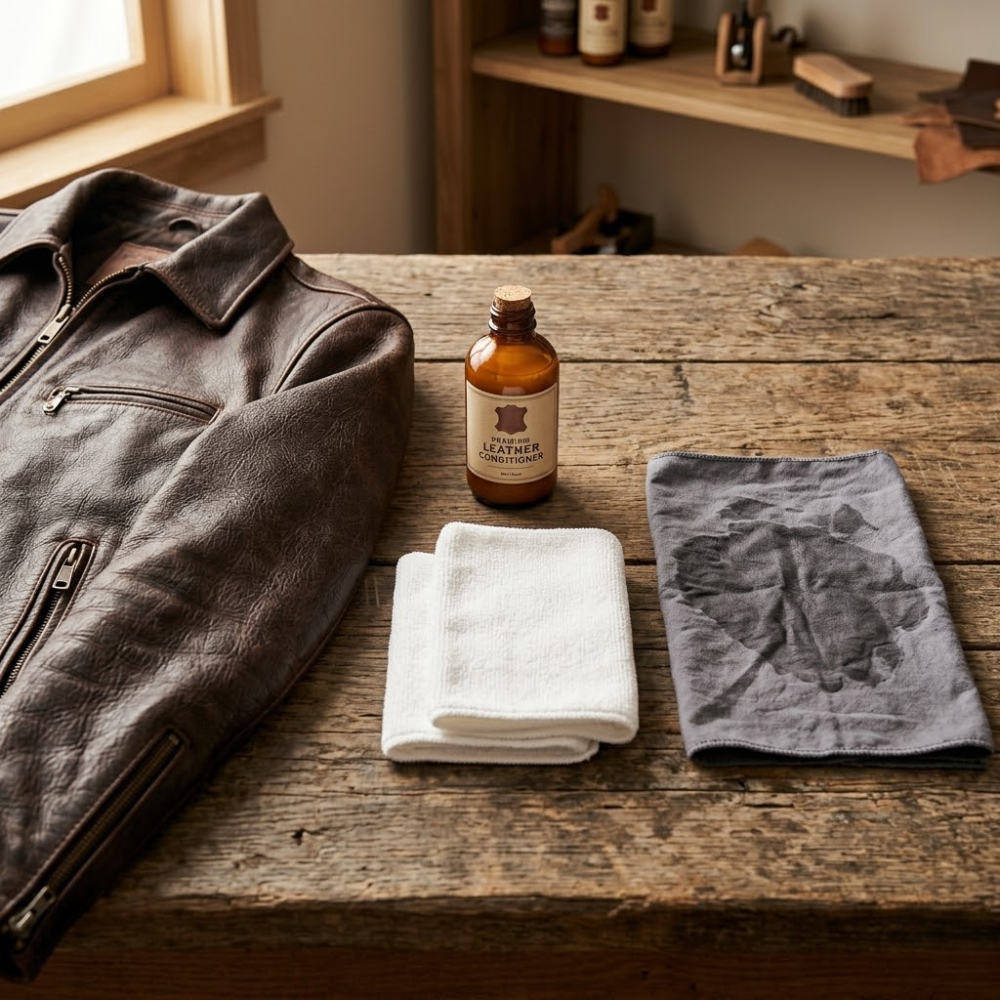
- Two soft lint-free cloths — microfiber is ideal. Old t-shirt material works if it is clean and free of synthetic fibers that can scratch
- A clean damp cloth for the pre-clean step, not soaking wet, just slightly damp
- A dry space with good airflow but away from direct sunlight or heat sources
- 30 to 40 minutes of uninterrupted time — not because the process takes that long, but because you need to allow absorption time before buffing
- Olive oil, coconut oil, or any food-grade oil — these go rancid inside the leather over time, attract mold, and can permanently darken or stain light-colored hides
- Vaseline or petroleum jelly — does condition short-term but clogs pores, prevents breathability, and attracts dirt
- Shoe polish or wax-based products not designed for garment leather — shoe products are formulated for the stiffer, thicker leather of soles and uppers, not jacket-weight hide
- Water or any water-based cleaning product directly on the leather before allowing it to dry fully first
- Any spray conditioner applied directly without testing on an inconspicuous area first — always patch test on an inside seam or the back of a collar
The 6-Step Leather Jacket Conditioning Routine
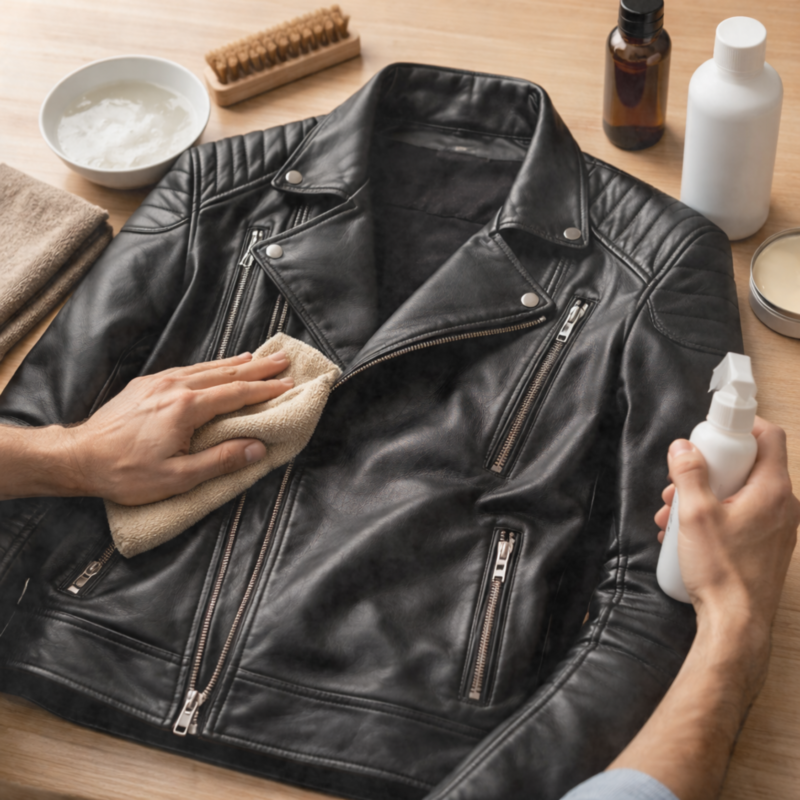
Never apply conditioner to a dirty leather surface. Any dirt, salt residue, or surface oils present when you condition will be pushed into the leather along with the conditioner and sealed in. This causes discoloration, dull patches, and can permanently alter the grain pattern.
Take your clean damp cloth and wipe the entire outer surface of the jacket in long, even strokes following the grain of the leather. Use a second pass with a dry cloth to remove any moisture. Allow the jacket to sit at room temperature for 10 to 15 minutes until the surface is completely dry to the touch before proceeding. Do not rush this step.
Apply a pea-sized amount of your chosen conditioner to the inside back collar seam or to a small area of the lining seam where the leather is visible. Wait 10 minutes and check for any unexpected darkening, discoloration, or surface change.
Most quality conditioners on full-grain and top-grain leather will temporarily darken the surface slightly as the oils absorb, then return to close to the original color as they dry. This is normal. What you are checking for is any unexpected color shift, whitening, or surface damage that would indicate a product incompatibility with your specific leather. If anything looks wrong, do not proceed with that conditioner on the main jacket surfaces.
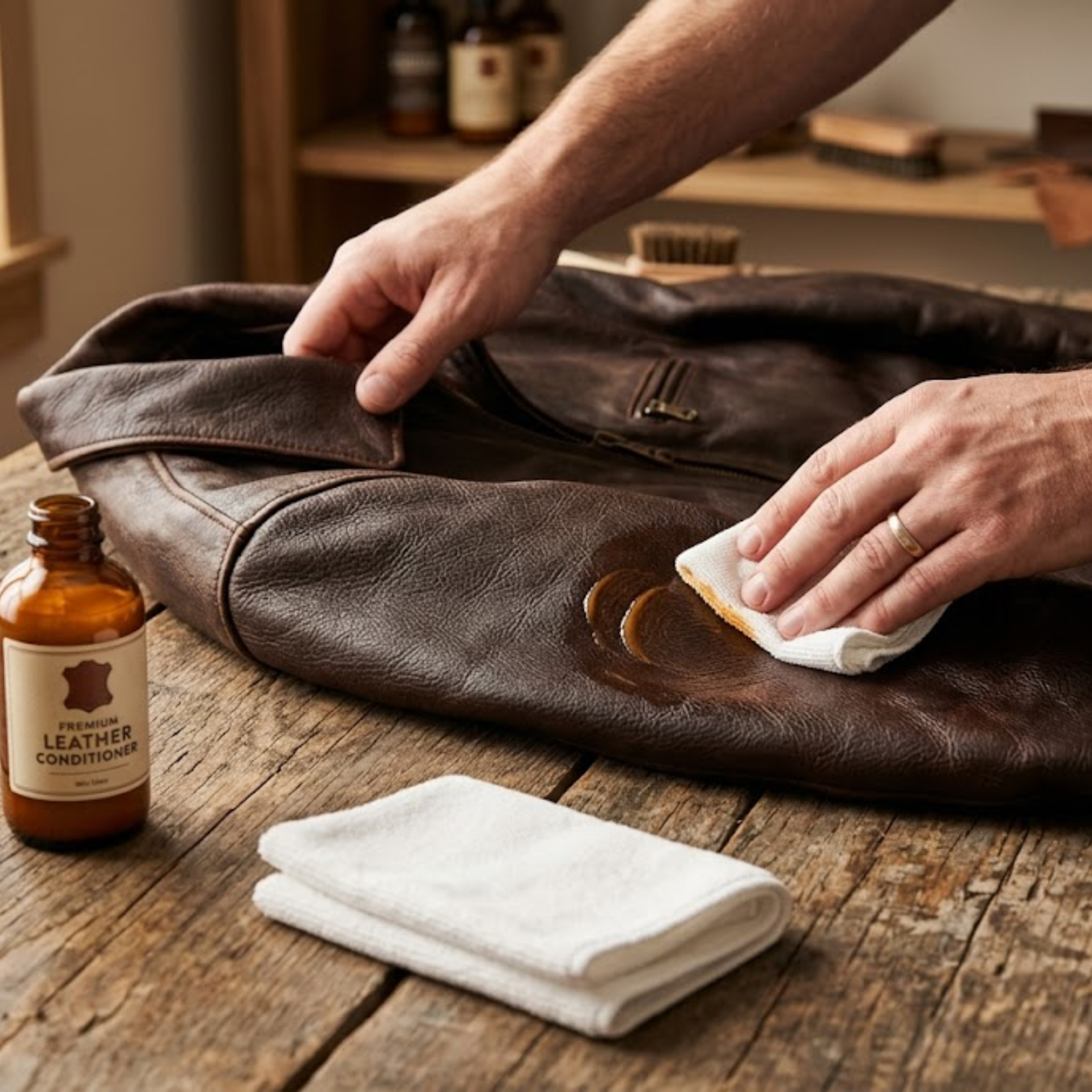
Place a coin-sized amount of conditioner on your clean lint-free cloth. Do not apply conditioner directly from the container onto the jacket surface. This causes pooling and uneven absorption that results in patchy conditioning and possible staining.
Work in sections: start at the back panel, then move to the sleeves, then the front panels, then the collar and lapels. Use small circular motions and moderate pressure. The leather will absorb the conditioner visibly as you work it in. Reapply small amounts to your cloth as needed. The goal is a thin, even coat across the entire outer surface. Do not use so much conditioner that the leather looks wet or feels greasy under your hand.
- Pay extra attention to high-stress areas: elbows, the back shoulder seam, the collar fold, and the cuffs
- Apply lightly on suede and nubuck finishes with a suede-specific conditioner only — liquid conditioners will damage the nap
- Do not condition the lining, interior pockets, or any fabric panels on the jacket
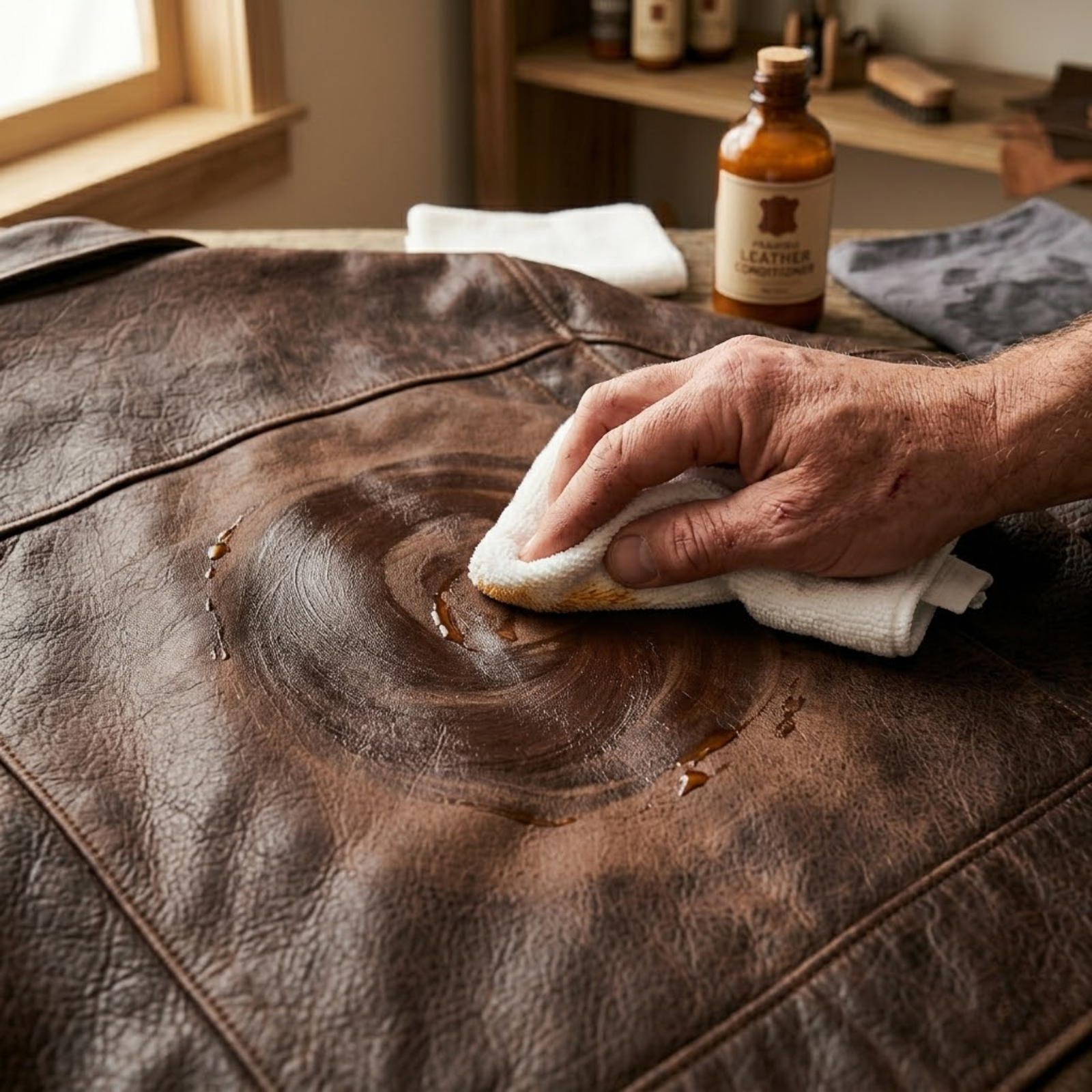
Hang the jacket on a hanger in a well-ventilated room at room temperature. Allow the conditioner to absorb fully for a minimum of 20 minutes, and up to 30 minutes for thicker full-grain cowhide or horsehide. Do not place the jacket near a heater, in direct sunlight, or use a hair dryer to speed up the process. Heat causes uneven absorption and can draw the conditioner out before it has penetrated the leather fibers properly.
During this time the surface of the jacket will look slightly darker than usual as the oils work into the hide. This is normal and expected. The color will return to close to its original state as the conditioner sets.
Take your second clean, dry lint-free cloth and buff the entire surface of the jacket in long, even strokes. This removes any conditioner that has not been absorbed into the leather and prevents a greasy or tacky surface feel that would attract dirt and lint. After buffing, the jacket surface should feel smooth, slightly soft, and not greasy to the touch.
If any areas still feel tacky after buffing, apply a second round of dry buffing. A quality conditioner applied correctly should absorb fully and leave no sticky residue. Residue is a sign either of too much conditioner applied in one pass or of a lower-quality conditioner with a high wax content that does not penetrate the leather fibers properly.
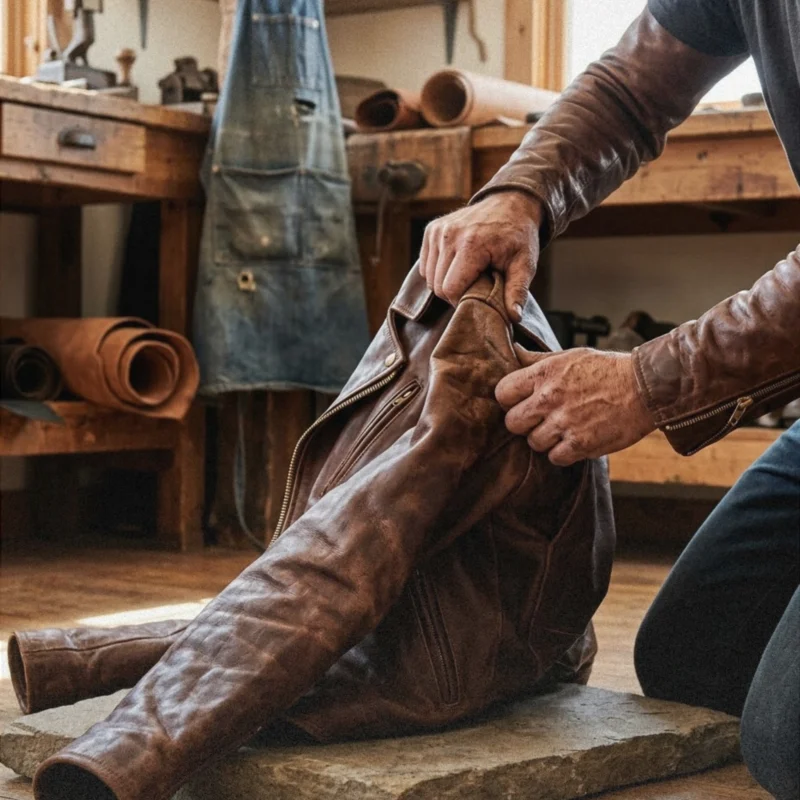
Hang the jacket on a wide, padded hanger that maintains the shoulder shape. Never fold a conditioned leather jacket for storage, as the fold lines will set into the leather at the conditioning point and become permanent creases over time. Store in a breathable garment bag or in open air in a cool, dry wardrobe away from direct light. Do not store in plastic bags, which trap moisture and can cause mildew.
For seasonal storage of jackets not being worn for 2 months or more, apply one light conditioning treatment before storage, allow it to absorb fully, buff off, and then store. This ensures the leather enters its storage period fully nourished rather than drying out during the months it is not being worn and aired naturally.
How Conditioning Frequency Changes by Leather Type
Different leather types have different porosity levels, different natural oil content, and different rates of moisture loss. A single conditioning schedule does not serve all leather jackets equally. Here is the specific guidance for each type.
Full-Grain Cowhide
Cowhide is the densest and most oil-retentive of the common jacket leathers. Condition every 4 to 6 months under normal wear. If you ride a motorcycle regularly and the jacket is exposed to wind and weather, move to every 3 months. Cowhide can handle most quality conditioners including heavier oil-based products like Leather Honey.
Goatskin
Goatskin has a tighter grain than cowhide but is more porous. It absorbs conditioner quickly and benefits from lighter, more frequent applications rather than heavy conditioning sessions. Condition every 3 to 4 months with a lighter product like Bickmore Bick 4. Avoid over-conditioning goatskin, which can make the surface greasy.
Lambskin
Lambskin is the most delicate and porous of the three. Lambskin loses moisture approximately 35 percent faster than cowhide of equivalent thickness in identical environmental conditions. Condition every 2 to 3 months using a gentle, lightweight conditioner. Always patch test with lambskin because it is the most sensitive to product reactions, particularly darkening from oil-heavy conditioners.
Horsehide
Horsehide is the most durable and least porous of all common jacket leathers. It requires conditioning less frequently than the others: every 6 months under normal wear. However, when it does need conditioning, horsehide can accept a heavier conditioner and will absorb it more slowly. Allow longer absorption times of 30 to 40 minutes for horsehide before buffing.
Leather Conditioner Comparison: Which Product for Which Leather
| Conditioner | Type | Cowhide | Goatskin | Lambskin | Horsehide | Suede | Best For |
|---|---|---|---|---|---|---|---|
| Leather Honey | Oil-based | ✓ Excellent | ✓ Good | ⚠ Test first | ✓ Excellent | ✗ No | Thick cowhide and horsehide |
| Bickmore Bick 4 | Water-based | ✓ Excellent | ✓ Excellent | ✓ Good | ✓ Good | ✗ No | All smooth leathers, safest all-rounder |
| Chamberlain’s Leather Milk | Emulsion | ✓ Excellent | ✓ Excellent | ✓ Excellent | ✓ Good | ✗ No | All leather types, best for lambskin |
| Pecard Leather Dressing | Wax-based | ✓ Good | ⚠ Light use only | ✗ Not recommended | ✓ Excellent | ✗ No | Heritage and thick motorcycle leathers |
| Nikwax Leather Conditioner | Water-based | ✓ Good | ✓ Good | ✓ Good | ✓ Good | ✗ No | General use, adds water resistance |
| Kiwi Suede Protector | Spray protectant | ✗ No | ✗ No | ✗ No | ✗ No | ✓ Yes | Suede and nubuck jackets only |
“The jackets people bring to me that are in the worst shape are almost never the ones that have been worn the most. They are the ones that have been worn occasionally and stored without conditioning for years. Use it or maintain it. The one thing you cannot do is ignore it.” Marcus Reid, Style and Fashion Expert, SnagLeather
7 Leather Jacket Conditioning Mistakes That Silently Damage Your Jacket
Understanding the correct process is only half of what you need. The other half is knowing what not to do. These are the seven most common conditioning errors I have seen cause real, irreversible damage to leather jackets.
- Conditioning without cleaning first. Conditioner seals whatever is on the surface into the leather. Dirt, salt, and old oils conditioned into the hide cause discoloration and uneven patina development that cannot be corrected.
- Using too much conditioner in a single session. Over-conditioning leather saturates the fibers, which softens the hide to the point where it loses its structural integrity. The leather becomes floppy, loses its shape at the collar and shoulders, and may stretch unevenly. Thin, even applications applied more frequently are always better than heavy applications applied rarely.
- Applying conditioner with a colored or unwashed cloth. Dye from a colored cloth can transfer to the leather surface during conditioning, particularly on lighter-colored hides. Always use a white or undyed cloth.
- Conditioning near a heat source to speed drying. Heat drives conditioner to the surface rather than allowing it to penetrate the leather fibers. The result is a surface film rather than deep conditioning, which wears off quickly and leaves a greasy residue that attracts dust and lint.
- Skipping the patch test on a new product. Different tannages and dyes react differently to different conditioner formulations. A product that works perfectly on one jacket can cause unexpected darkening on another. The patch test is a ten-minute step that prevents irreversible mistakes.
- Conditioning suede or nubuck with a liquid conditioner. Liquid conditioners flatten the nap of suede and nubuck permanently. Once flattened, the characteristic texture of suede cannot be restored. Always use a product specifically formulated for suede and nubuck finishes.
- Storing the jacket folded after conditioning. Conditioning softens the leather temporarily, which makes it more susceptible to developing permanent crease marks. Always hang on a padded hanger after conditioning and allow the leather to firm up before any folding or storage that places pressure on a section of the hide.
The Complete Leather Jacket Annual Care Schedule
Conditioning does not exist in isolation. It is one part of a complete annual care routine that keeps your leather jacket in optimal condition year-round. Here is the full schedule.
- Leather jackets should be conditioned every 3 to 6 months depending on leather type and frequency of wear
- Lambskin loses moisture approximately 35 percent faster than cowhide of equivalent thickness
- Conditioned jackets retain up to 94 percent of original surface flexibility over 24 months vs significant flexibility loss in unconditioned jackets
- The correct conditioning method is: clean first, patch test, apply with circular motions, absorb 20 to 30 minutes, buff dry
- Oil-based conditioners such as Leather Honey are best for cowhide and horsehide; emulsion conditioners such as Chamberlain’s Leather Milk are safest for lambskin
- Never condition suede or nubuck with liquid conditioners — use suede-specific spray protectants only
SnagLeather Jackets Worth Conditioning for the Long Term
Conditioning only matters if the leather underneath is worth maintaining. All of these jackets are genuine leather with confirmed hide grades, which means the conditioning routine in this guide will directly extend their lifespan and improve their appearance over time.
Full-grain cowhide responds best to conditioning of all leather types. This jacket develops a rich amber patina over years of conditioning and wear. CE armor pockets. Free US shipping.
→ View This JacketLambskin benefits most visibly from regular conditioning. The dark brown deepens and richens with every session. Rated 4.50 out of 5 by verified buyers. Free US shipping.
→ View This JacketHorsehide is the most durable conditioning canvas of all jacket leathers. Properly maintained with Leather Honey every 6 months, a horsehide jacket will outlast most other garments you own. Free US shipping.
→ View This JacketFrequently Asked Questions: How to Condition a Leather Jacket
You should condition a leather jacket every 3 to 6 months depending on the leather type and how frequently you wear it. Lambskin and goatskin jackets worn regularly need conditioning every 2 to 3 months because they lose moisture faster than cowhide. Full-grain cowhide and horsehide jackets can be conditioned every 4 to 6 months under normal daily wear. If you ride a motorcycle and the jacket is exposed to wind and rain regularly, condition every 6 to 8 weeks regardless of leather type. The best indicator is the feel of the leather: if it feels stiffer or drier than usual, it is time to condition regardless of how long it has been since the last session.
The best conditioner depends on your leather type. Bickmore Bick 4 is the safest all-rounder for all smooth leather types because it is water-based, does not significantly darken leather, and works well on cowhide, goatskin, and lambskin. Leather Honey is the best choice for thick full-grain cowhide and horsehide where deep penetration is needed. Chamberlain’s Leather Milk is the best choice for delicate lambskin because its emulsion formula is gentler and less likely to cause unexpected darkening. Always patch test any new product on an inconspicuous area before applying to the full jacket surface.
Yes, you can over-condition a leather jacket. Applying too much conditioner too frequently saturates the leather fibers, which causes the hide to become excessively soft and lose its structural integrity. Over-conditioned leather can stretch unevenly, lose its shape at the shoulders and collar, and develop a greasy surface that attracts dirt and lint. The correct approach is light, even applications at the recommended frequency for your leather type rather than heavy sessions applied less often. If the leather feels greasy after conditioning, you have applied too much and need to buff more aggressively and reduce the amount used in future sessions.
No. Olive oil and coconut oil should never be used on a leather jacket. Both food-grade oils go rancid inside the leather over time, which can cause a persistent unpleasant smell that cannot be removed and may cause mold growth inside the hide. Coconut oil in particular can cause significant and permanent darkening of lighter-colored leathers. Food oils also attract insects and micro-organisms that damage leather from within. Use a purpose-formulated leather conditioner only. The cost difference between a quality leather conditioner and a bottle of olive oil is minimal; the difference in outcome is significant.
Most leather conditioners will temporarily darken the leather slightly as they absorb into the hide. This darkening usually fades back to close to the original color as the conditioner dries over 30 to 60 minutes. Oil-based conditioners like Leather Honey cause more temporary darkening than water-based conditioners like Bickmore Bick 4. On some lighter-colored leathers, oil-based conditioners may cause a slight permanent deepening of color over multiple conditioning sessions, which most leather jacket owners consider desirable as part of the natural aging and patina development process. If you want to minimize darkening, use a water-based or emulsion conditioner and patch test first.
A new leather jacket does not always need conditioning before wearing, but it is beneficial if the leather feels slightly stiff or dry when it arrives, which is common with cowhide and horsehide jackets that have been stored or shipped in dry conditions. Use the same 6-step process described in this guide but use approximately half the amount of conditioner you would on an older jacket since new leather still retains most of its original factory oils. The primary benefit of conditioning a new jacket before its first wear is that it opens the leather fibers slightly, which accelerates the natural break-in process and reduces the stiffness that new cowhide in particular is known for.
No. Suede and nubuck leathers require completely different care products and techniques from smooth leather. Liquid conditioners applied to suede will flatten the nap permanently, destroying the characteristic texture of the material. Suede should be protected with a dedicated spray protectant such as Kiwi Suede Protector applied in a light, even mist from a distance of 6 to 8 inches. Allow to dry fully before wearing. For surface cleaning, use a suede brush or suede eraser rather than any liquid cleaner. The cleaning and conditioning routine for smooth leather jackets does not apply to suede or nubuck finishes under any circumstances.
- Condition every 3 to 6 months depending on leather type. Lambskin needs the most frequent conditioning; horsehide the least.
- Always clean the surface before conditioning. Never apply conditioner to a dirty surface.
- Patch test every new conditioner on a hidden area first before applying to the full jacket.
- Apply conditioner with a white lint-free cloth using circular motions. Never apply directly from the bottle.
- Allow 20 to 30 minutes of absorption time at room temperature before buffing with a dry cloth.
- Never use food oils, petroleum products, or smooth-leather conditioners on suede or nubuck finishes.
- Store on a padded hanger after conditioning, never folded. Hang in a breathable garment bag away from direct light.
Shop genuine leather jackets worth conditioning. Full-grain cowhide, lambskin, goatskin, and horsehide. Free US shipping on every order.
Shop All Men’s Leather Jackets →