Motorcycle Leather Jacket Buying Guide: Everything You Need To Know Before You Buy (2026)

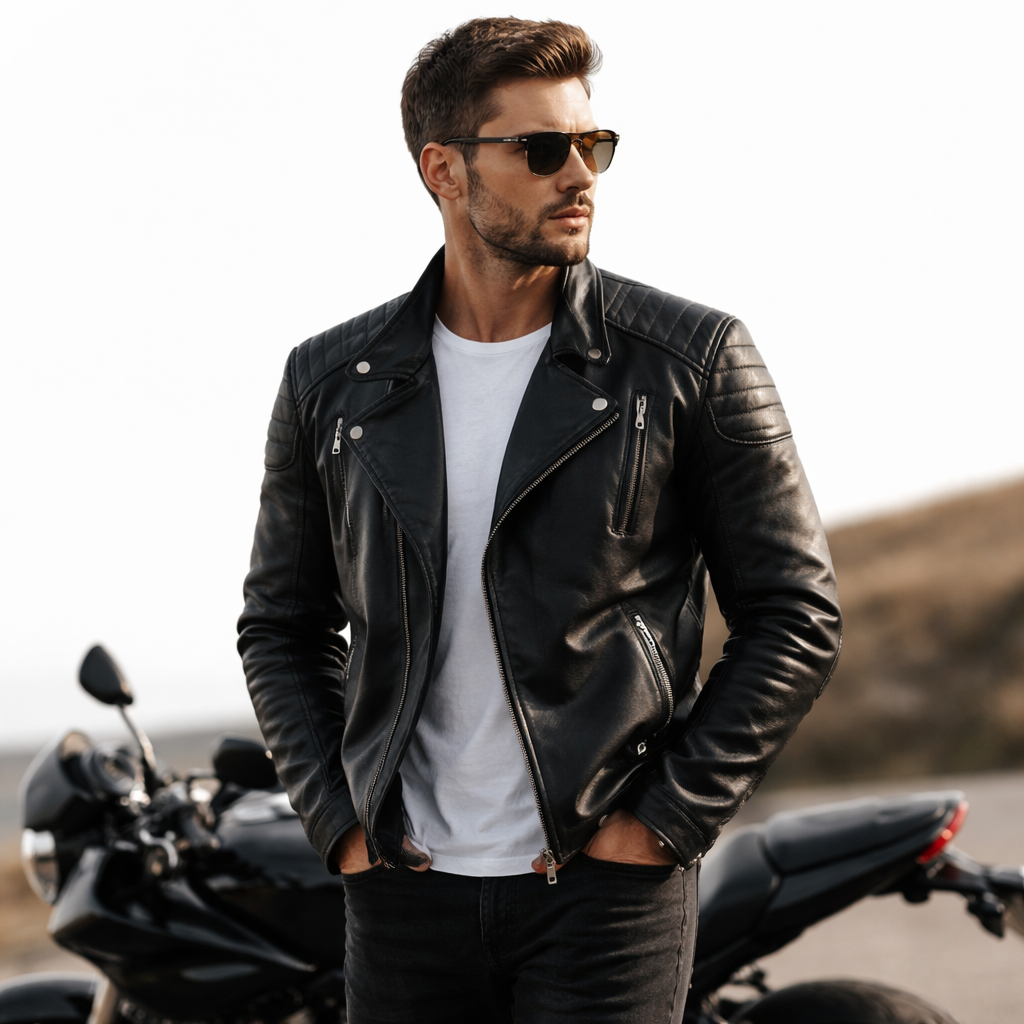
Picture this: you’re rolling out of your garage on a warm Saturday morning, engine rumbling beneath you, wind picking up — and you’re wrapped in a motorcycle leather jacket that fits like a second skin. It’s not just protection. It’s identity. It’s the difference between feeling ready and feeling underdressed for the road ahead.
But here’s the problem — most riders buying a motorcycle leather jacket get it wrong. They prioritize looks over lining, ignore leather grades, skip armor ratings, and end up with something that looks sharp on a hanger and lets them down at 60 mph.
In this guide, I’ve broken down everything that actually matters when choosing a motorcycle leather jacket for men in 2026: leather types, fit, CE armor ratings, jacket styles, sizing, and how to spot quality that will genuinely outlast a decade of hard riding. Whether you’re a weekend warrior, a daily commuter, or building out a full riding kit — this guide will save you from an expensive mistake.
What Is the Best Motorcycle Leather Jacket for Men?
The best motorcycle leather jacket for men combines full-grain cowhide or goatskin leather (1.1–1.3mm thickness), CE Level 1 or Level 2 armor at shoulders and elbows, a pre-curved riding fit, and a back protector pocket. For most riders, the $250–$500 range delivers the best balance of protection, durability, and style. SnagLeather’s biker jackets are handcrafted from premium hides with built-in protection-ready construction — and ship free across the USA.
→ Browse SnagLeather Men’s Biker Jackets- Why a motorcycle leather jacket is more than fashion
- What type of leather is best for motorcycle jackets
- CE armor ratings explained: Level 1 vs. Level 2
- Motorcycle jacket styles: which one fits your riding
- How to size a motorcycle leather jacket correctly
- SnagLeather product spotlight
- 7 expert tips salespeople won’t tell you
- Full style comparison table
- FAQ — 7 most asked questions answered
Why a Motorcycle Leather Jacket Is More Than Just Fashion
There’s a reason riders have worn leather for over a century — and it has nothing to do with looking cool (though that helps). Leather remains, in 2026, the single best natural material for motorcycle abrasion resistance. A quality leather jacket can maintain structural integrity through a low-speed slide that would shred denim or a textile jacket in under a second.
Testing standards used by the CE framework for motorcycle gear show that full-grain cowhide at 1.2mm thickness can withstand 4–8 seconds of abrasion at 45 km/h before reaching skin — compared to under 1 second for most casual fabrics. That gap is the difference between road rash and a serious injury.
Beyond abrasion, a well-constructed leather jacket provides structural impact resistance (especially with CE-rated armor inserts), wind protection that keeps your core temperature stable at highway speeds, and the kind of psychological readiness that makes you a more confident, focused rider. A good jacket doesn’t just protect your body — it changes how you ride.
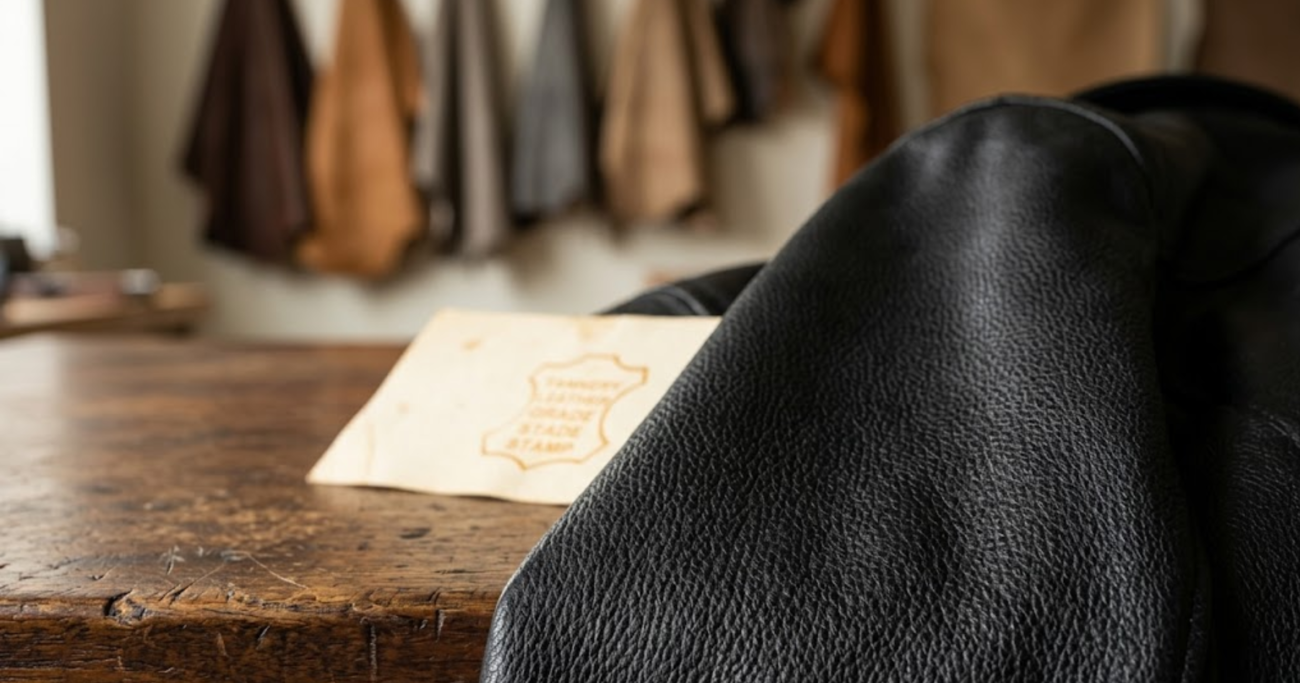
What Type of Leather Is Best for a Motorcycle Jacket?
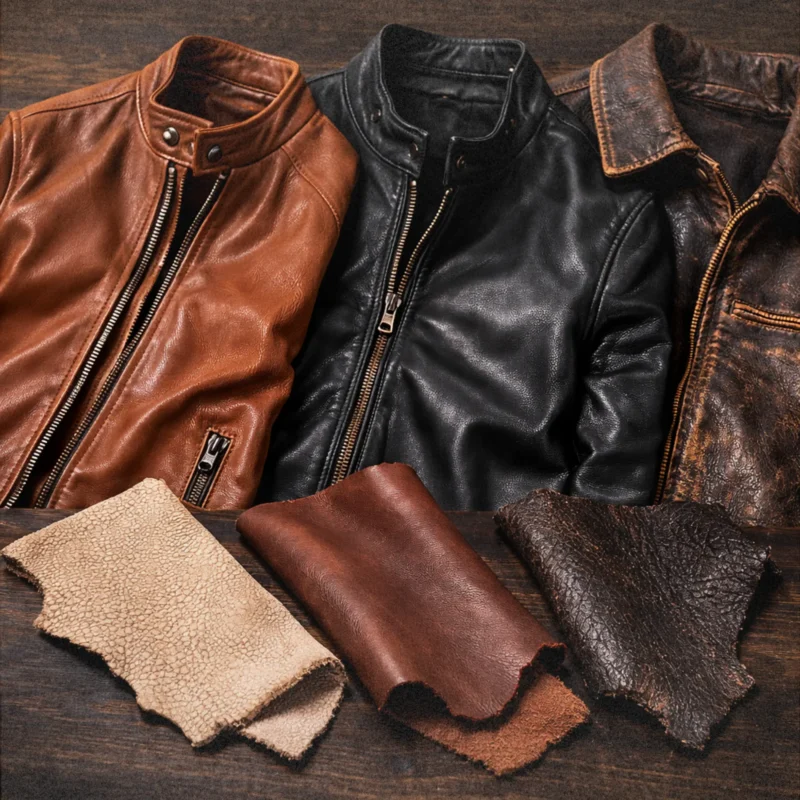
Not all leather is created equal — especially in the motorcycle world. Here’s a breakdown of the four leather types you’ll encounter when shopping, and what each one means for your ride.
Cowhide — The Gold Standard for Protection
Cowhide leather is the most common choice for motorcycle jackets, and for good reason. It’s thick, tough, and highly abrasion-resistant. Full-grain cowhide at 1.1–1.4mm is the benchmark for protective riding gear. The trade-off is weight — cowhide jackets are heavier than alternatives, but that weight is also part of what makes them so protective in a slide.
Goatskin — Lighter, Tougher Than It Looks
Goatskin leather is arguably the most underrated leather for motorcycle use. Pound for pound, goatskin has higher tensile strength than cowhide — meaning it resists tearing and abrasion even at lighter weights. It’s more supple from day one, molds to your body faster, and has a natural pebbled grain that adds grip and texture. SnagLeather uses premium goatskin hides on several biker jackets for exactly this reason.
→ Shop SnagLeather Goatskin Biker Jackets
Horsehide — Heritage and Hard-Core Performance
Horsehide is the original motorcycle leather — the material used in WWI and WWII military flight jackets. It’s extremely dense and tight-grained, offering exceptional abrasion resistance that actually improves with age and wear. The downside: it’s expensive and stiff to break in. SnagLeather’s Flying Tigers Horsehide Flight Jacket is a nod to this heritage — built for collectors and serious enthusiasts.
→ View the Flying Tigers Horsehide Flight Jacket
Leather Type Comparison Table
| Leather Type | Abrasion Resistance | Weight | Break-In Time | Best For |
|---|---|---|---|---|
| Cowhide (full-grain) | ★★★★★ | Heavy | Medium | All-round riding |
| Goatskin | ★★★★½ | Medium | Short | Touring & daily riding |
| Horsehide | ★★★★★ | Heavy | Long | Heritage & track |
| Lambskin | ★★☆☆☆ | Light | Minimal | Fashion / casual only |
CE Armor Ratings Explained: Level 1 vs. Level 2
Armor is where most buyers get confused — or worse, get misled. Here’s what the CE rating system actually means, and why it should be a non-negotiable factor in your buying decision.
CE Level 1 (EN 13594:2015) is the baseline standard. It covers shoulder, elbow, and hip protectors. Level 1 protectors transmit a mean force of under 18kN at shoulders and 35kN at limbs — sufficient protection for most road riding speeds and the legal minimum in most EU countries for road-legal gear.
CE Level 2 is the upgraded standard: under 9kN at shoulders and 20kN at limbs. Level 2 is recommended for sport riding, track days, and anyone who regularly rides at highway speeds. If you’re choosing between a jacket with Level 1 and Level 2 armor at similar price points — always choose Level 2.
Mandatory (non-negotiable):
- ✅ Shoulder protectors — CE Level 1 minimum
- ✅ Elbow protectors — CE Level 1 minimum
- ✅ Back protector pocket (even if protector not included)
Highly Recommended:
- ⭐ CE Level 2 at all impact zones if you ride over 60 mph regularly
- ⭐ Chest protector pocket for high-speed or track use
- ⭐ Connection zip to riding pants for full-body coverage
Important: Many jackets ship with armor pockets but no actual protectors included. Always confirm whether CE-rated protectors are included — if not, budget an extra $40–80 for quality inserts.
Motorcycle Leather Jacket Styles: Which One Is Right for You?
The style you choose affects both your protection profile and riding position comfort. Here’s a breakdown of the main styles — with honest assessments of who each one is actually built for.
Classic Biker / Moto Jacket
The asymmetric zip, snap collar, and epaulet shoulder silhouette — this is the archetype. Born from the Schott Perfecto and immortalized by Marlon Brando in The Wild One. The classic biker jacket has a slightly cropped cut designed to stay tucked during a riding position, with a short front hem and longer back hem to cover your lower back when leaning forward. Ideal for cruiser and standard bike riders who want all-day wearability on and off the bike.
Café Racer
Minimal, clean, and stripped of hardware. The café racer jacket sits closer to the body with a band collar and simple front zip. Popular with modern British-style bikes, scramblers, and naked bike riders who want protection without the aggressive biker aesthetic. Usually lighter with less built-in armor — always verify CE rating before buying a café racer jacket, as many in this category are fashion-forward rather than protection-forward.
Touring Jacket
Built for long-distance riding. Touring motorcycle leather jackets are cut longer (hip or thigh length), feature multiple ventilation zips, wrist and waist adjustment straps, and often include CE armor across all zones plus a removable thermal liner. Less stylish off the bike, but unbeatable for comfort over 200+ mile days. If you’re doing any serious touring, a dedicated touring jacket is worth the investment.
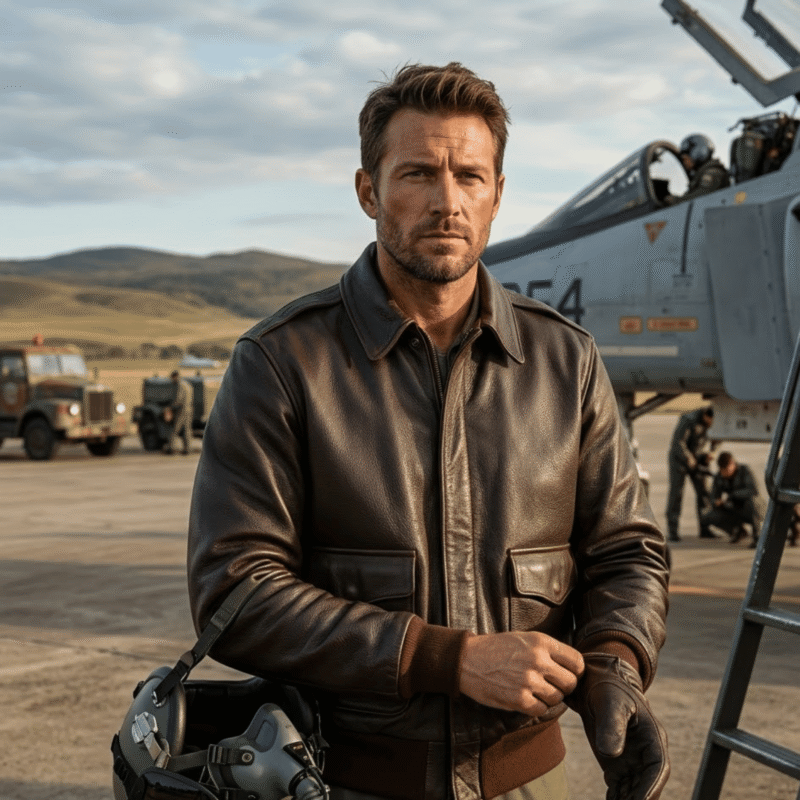
Bomber / Flight Jacket
The crossover between heritage aviation style and motorcycle function. Bomber-style leather jackets — like the SnagLeather Pilot Shearling Bomber — provide substantial wind protection and a relaxed fit that works perfectly for urban riding and cold-weather touring. While not traditionally armor-equipped, quality bombers pair well with under-jacket CE vest inserts for riders who want heritage aesthetics with real protection.
How to Size a Motorcycle Leather Jacket Correctly
Fit is the most critical — and most botched — aspect of buying a motorcycle leather jacket. A jacket sized for standing around is sized wrong for riding. Here’s how to get it right.
- Measure in your riding position, not standing upright. Sit in the crouched position you’d be in on your bike — your chest measurement and shoulder width change noticeably between standing and riding posture. This single step eliminates most sizing mistakes.
- The jacket should feel slightly snug when standing. Leather stretches and molds over time. If it feels perfectly comfortable in the store, it’ll feel loose after 6 months of regular riding. Go snug; let the leather do its job.
- Check sleeve length with arms bent at 90°. Sleeves should reach your wrist bone with elbows bent — they’ll ride up 1–2 inches on the bike and should land exactly at your wrist in riding position.
- Shoulder seam must sit at the edge of your shoulder. A tight or pulled shoulder seam is the single most common fit mistake. It restricts movement and creates pressure points that become uncomfortable on longer rides.
- Back hem should cover your entire lower back when seated. Stand, sit, and lean forward in the jacket before buying. The back hem needs to stay put when you’re hunched over the tank.
For tall riders: Look for jackets with longer body and sleeve options, or size up and use the waist adjustment straps to cinch in the fit. SnagLeather offers custom sizing — contact support@snagleather.com for details.
For wide shoulders: Prioritize shoulder room over chest measurement and adjust at the waist. A tight shoulder seam is far more uncomfortable and harder to fix than a slightly roomy chest.
SnagLeather Spotlight: Top Picks for Motorcycle Riders
After evaluating motorcycle leather jackets across every price point, SnagLeather’s lineup consistently stands out for one reason: the leather quality is genuinely exceptional at prices that make sense. All jackets ship free across the USA and are backed by a lifetime warranty. Here are three picks worth knowing about.
SnagLeather’s core biker range is built from premium cowhide and goatskin hides, pre-curved at the elbows for riding position comfort. Every jacket ships with armor pockets at shoulders, elbows, and back. Hand-finished construction, dense stitching, YKK hardware throughout.
→ Browse Biker Jackets CollectionGenuine lamb leather, classic silhouette, and a rich dark brown tone that ages beautifully. Currently $299 (down from $429). Best suited for urban and lower-speed riding paired with an under-jacket CE vest armor insert.
→ View This JacketGenuine B-3 heritage proportions with authentic shearling lining — exceptional warmth for fall and winter riding. $339 (down from $499). Pair with a CE Level 2 vest insert for cold-weather protection that actually works.
→ View This Jacket7 Expert Tips From a Leather Jacket Rider — Things Salespeople Won’t Tell You
- Never buy a motorcycle jacket based on photos alone. Studio lighting hides grain inconsistencies, finishing shortcuts, and thin leather. Always request detailed close-up shots of seams and hardware, or read reviews that specifically mention leather thickness and hand feel.
- The lining tells you everything about build quality. A quality motorcycle jacket has a full, tear-resistant lining — often Kevlar-reinforced in serious protective gear. A half-lining or thin polyester lining is almost always a sign of corners cut elsewhere in the construction.
- Check the stitching density at high-stress points. Armhole, shoulder seam, and cuff areas should have 7+ stitches per inch with doubled seams. Fewer stitches means weaker protection in a slide — exactly where the jacket will be tested hardest.
- Armor pockets and included armor are different things. Many jackets ship with armor pockets but zero actual protectors inside. Ask explicitly: are CE-rated protectors included? If not, budget an extra $40–80 for quality Level 1 or Level 2 inserts before you ride.
- Full-grain vs. corrected-grain leather matters more than brand name. Full-grain preserves the natural fiber structure — it’s stronger, more breathable, and develops a better patina. Corrected-grain leather has been sanded and embossed to hide imperfections, which weakens the hide’s surface layer. Always ask which one you’re buying.
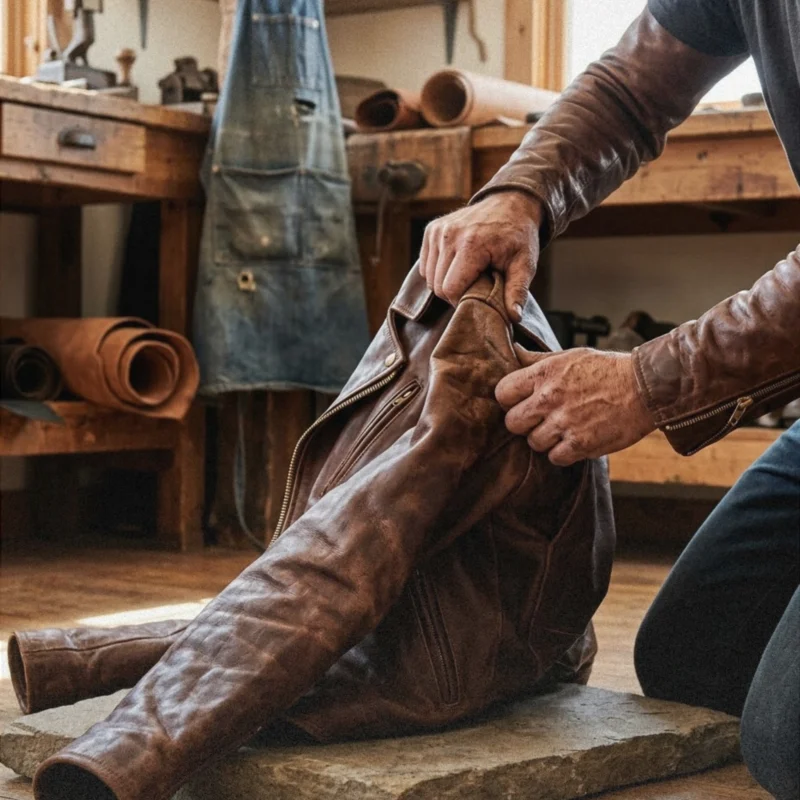
- A stiff break-in period is a quality signal, not a flaw. A jacket that feels stiff initially will conform to your specific riding position and body shape over time. The stiffness you feel is the tight grain structure that protects you. Read our guide on breaking in a leather jacket properly for practical methods that speed up the process without damaging the hide.
- Lifetime cost beats purchase price every time. A $500 goatskin jacket lasting 15 years costs $33/year. A $150 faux leather jacket replaced every 2–3 years costs $50–75/year — and doesn’t protect you in a fall. The math is clear, even before you factor in the protection differential.
Motorcycle Leather Jacket Styles: Full Comparison Table
| Jacket Style | Best Riding Style | Typical Armor Coverage | Off-Bike Wearability | Price Range |
|---|---|---|---|---|
| Classic Biker | Cruiser, Standard | Shoulder, Elbow, Back | ★★★★★ | $200–$500 |
| Café Racer | Scrambler, Naked Bike | Shoulder, Elbow | ★★★★★ | $180–$450 |
| Touring Jacket | Long Distance, ADV | Full Coverage (all zones) | ★★☆☆☆ | $350–$800 |
| Bomber / Flight | Urban, Casual Touring | Varies by model | ★★★★★ | $250–$600 |
| Sport / Race Replica | Sport, Supersport, Track | Full CE Level 2 | ★☆☆☆☆ | $400–$1,200+ |
Frequently Asked Questions About Motorcycle Leather Jackets
For genuine protection, look for full-grain cowhide or goatskin at 1.0–1.4mm thickness. Below 1.0mm offers limited abrasion resistance. Most premium motorcycle jackets specify leather weight in ounces (3–4oz is ideal for riding) or mm thickness in the product description. If a brand doesn’t disclose leather thickness, treat that as a red flag and ask before buying.
For most riders, goatskin offers a better balance: slightly higher tensile strength at a given weight, faster break-in, and a more natural conforming fit over time. Cowhide edges out goatskin slightly in raw thickness and abrasion duration at very high speed. For general riding and daily commuting, goatskin is the smarter choice. For track days and high-speed sport riding, opt for thick full-grain cowhide.
Yes — unambiguously. CE armor at shoulders, elbows, and back is the minimum for responsible motorcycle riding. Modern CE Level 1 protectors are thin, flexible, and barely noticeable during wear. CE Level 2 is worth the small premium for anyone riding above 50 mph regularly. A leather jacket without armor pockets is a fashion item, not protective motorcycle gear.
A well-made full-grain leather motorcycle jacket, properly conditioned and stored, will last 15–25+ years. The leather itself is virtually indefinite in lifespan — it’s the hardware (zippers, snaps) and lining that typically need repair first. SnagLeather’s lifetime warranty covers manufacturing defects for the life of the jacket, making it one of the strongest guarantees in the industry.
The key differences are leather thickness (motorcycle: 1.0mm+, fashion: 0.6–0.9mm), armor pocket construction, pre-curved riding fit, reinforced high-stress seam stitching, and a longer back hem to cover your lower back when hunched forward. A fashion leather jacket will not provide adequate protection in a fall. A quality motorcycle jacket absolutely can be worn as a fashion piece off the bike — but it’s designed for function first.
Snug but not restrictive in your riding position. Sleeves should reach your wrist with arms slightly bent. Shoulders should sit right at the edge — not pulled toward your neck. The hem should cover your waistband when seated. If you’re between sizes, size for your riding position — that’s where you’ll spend most of your time in the jacket.
Over a 10-year horizon, yes — decisively. Quality leather jackets hold their protective integrity, improve in appearance over time, and cost far less per year than replacing cheaper alternatives every 2–3 years. The protection difference in a crash scenario is even more significant. Consider it protective equipment first, fashion second — and the math is easy.
Final Verdict: How to Buy the Right Motorcycle Leather Jacket in 2026
After evaluating motorcycle leather jackets across every price point and style category, three things consistently separate the jackets worth your money from those that will let you down:
- Leather integrity: Full-grain cowhide or goatskin at 1.0mm+ thickness. If a brand won’t disclose this, walk away.
- CE armor coverage: Minimum Level 1 at shoulders, elbows, and a back protector pocket. Level 2 if you ride highway speeds regularly.
- Construction honesty: Dense seam stitching, YKK hardware, and a full lining. The details that don’t photograph well are the ones that matter most in a slide.
SnagLeather’s handcrafted motorcycle jackets tick every box — built from premium hides, shipped free across the USA, and backed by a lifetime warranty that means something. Whether you’re gearing up for your first riding season or replacing gear that’s finally earned its retirement, the right jacket is waiting.
Handcrafted from premium hides. Free US shipping. Lifetime warranty. Built for riders who are serious about the ride — and the look.
Shop Men’s Motorcycle Jackets →