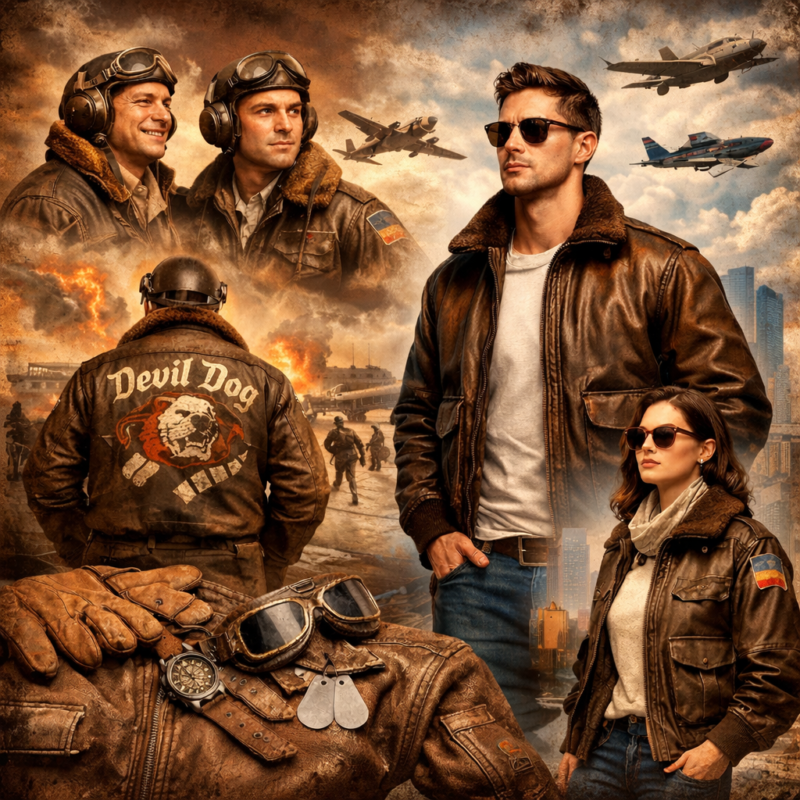
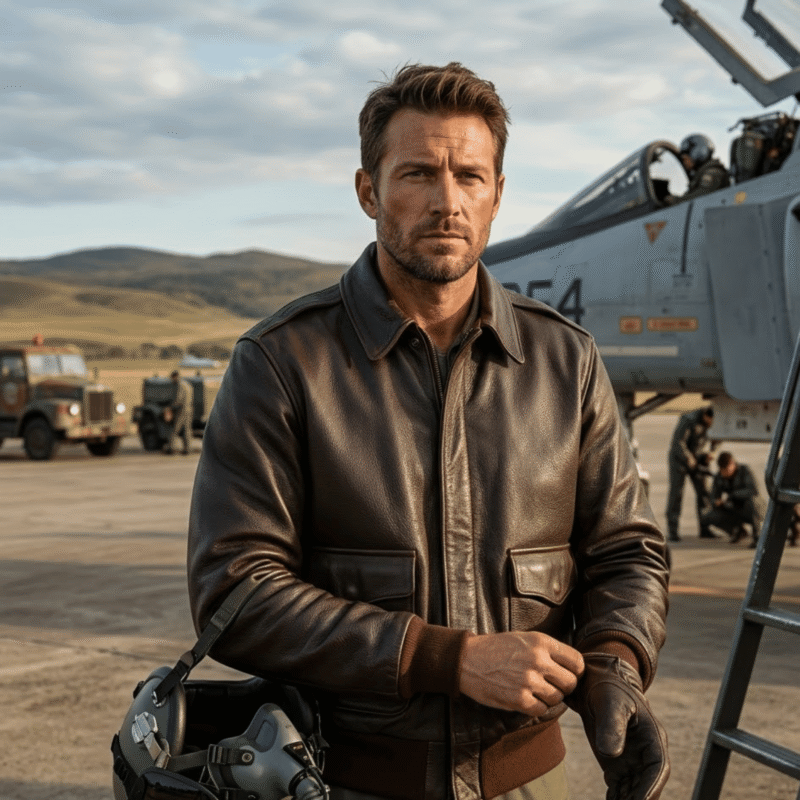
Types of WWII Bomber Jackets Explained: A-2, B-3, G-1 and Beyond

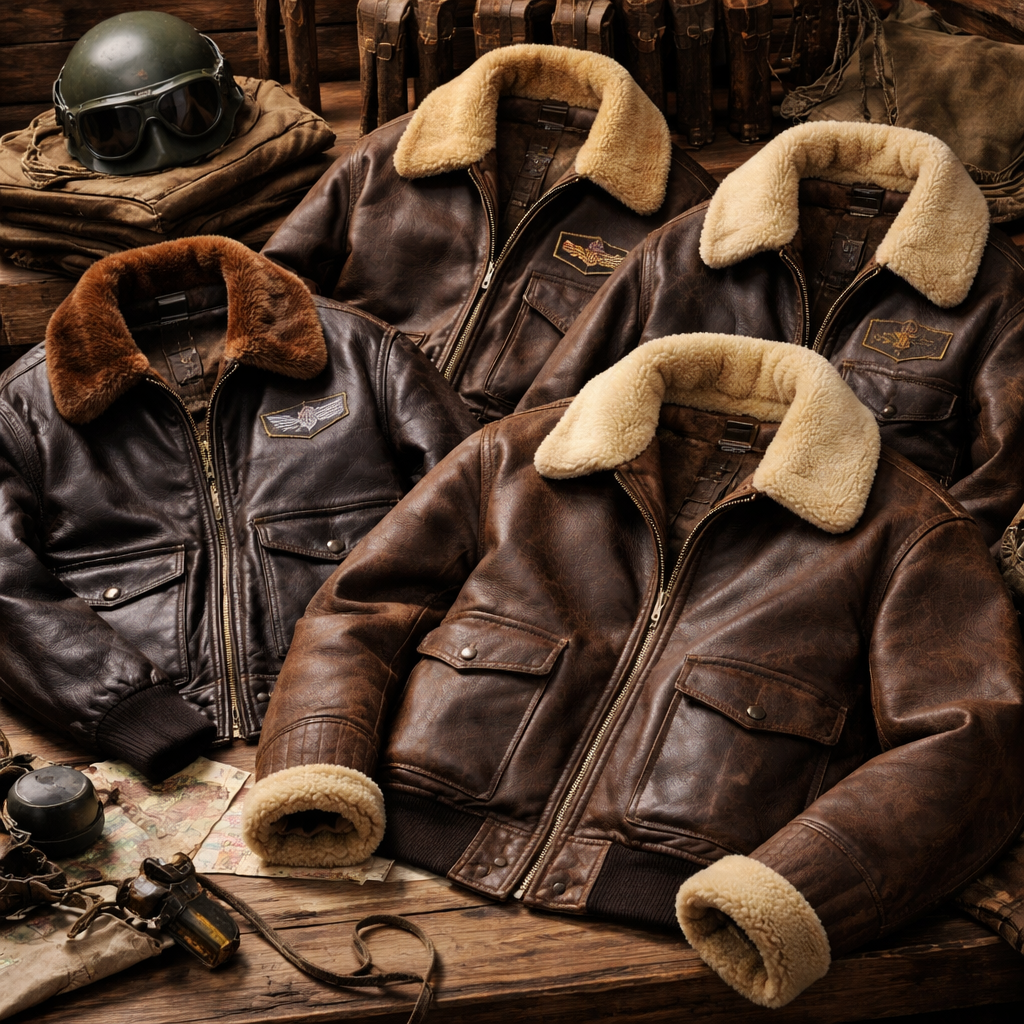
Walk into any serious leather jacket conversation and someone will eventually bring up the A-2. Maybe someone mentions the B-3 in the same breath, and if a Navy man is in the room, the G-1 comes up too. Most people know these names. Far fewer people can tell you what actually separates them, why each one was designed the way it was, or which branch of the American armed forces wore which jacket and why.
I have spent 22 years studying American military outerwear from the WWII era. In that time I have handled dozens of original issue jackets, spoken with veterans and their families, and traced the procurement histories of each specification through US military archives. What follows is the definitive guide to WWII bomber jacket types: what they are, who wore them, what made each one the right tool for a specific job, and how you can wear them authentically in 2026.
These jackets are not vintage costume pieces. They are engineering documents. Each seam, each material choice, each spec change between production runs tells you something true about what American airmen faced over Europe and the Pacific between 1939 and 1945.
What Are the Main Types of WWII Bomber Jackets?
There are four primary WWII US military flight jacket types, each issued to a specific branch and mission profile:
- A-2 — US Army Air Forces (USAAF), 1931 to 1943. Lightweight horsehide or goatskin, straight zip, shirt collar. The definitive American pilot jacket.
- B-3 — USAAF heavy bomber crews, 1934 onward. Shearling sheepskin, designed for open cockpit and high-altitude cold at 30,000 feet.
- G-1 — US Navy and Marine Corps aviators, 1947 onward (descended from M-422A, worn from 1943). Goatskin or horsehide body, mouton collar, naval heritage.
- B-15 and MA-1 — Transitional nylon jackets, late WWII onward, bridging leather era into modern flight gear.
- Why did different jacket types exist at all?
- The A-2: the definitive American pilot jacket
- The B-3: engineering for survival at 30,000 feet
- The G-1 and M-422A: the Navy’s answer
- The B-10, B-15, and the end of the leather era
- Full comparison table: all WWII jacket types
- Spotters guide: how to identify an authentic original
- Wearing WWII jacket types in 2026
- FAQ: 7 expert answers
Why Did Different WWII Jacket Types Exist?
The United States military did not design one jacket and issue it to everyone. Each branch of the armed forces had a procurement system, a set of mission requirements, and a budget. The result was a series of separate jacket specifications, each optimized for a distinct set of physical conditions.
The key variables were altitude, cockpit configuration, branch of service, and the temperature range a pilot or crew member would face. A fighter pilot flying a P-51 Mustang at 20,000 feet in a heated, enclosed cockpit had completely different needs from a B-17 ball turret gunner operating an open defensive position over Germany in winter at 30,000 feet. The difference in temperature between those two situations could be 70 degrees Fahrenheit or more.
In unheated aircraft at 30,000 feet, ambient temperatures routinely reached minus 50 degrees Fahrenheit over the European and Pacific theaters, requiring insulation capable of sustaining core body temperature during missions lasting 8 to 12 hours. That is not a fashion problem. It is a survival engineering problem. Understanding this makes the design of each jacket type make immediate sense.
The A-2 Flight Jacket: The Definitive American Pilot Jacket
The A-2 was the standard flight jacket of the United States Army Air Forces from its approval in 1931 until it was officially discontinued in 1943. It was the jacket that American pilots wore when they flew over Britain, North Africa, the Pacific Islands, and mainland Europe. At peak WWII production, over 2.5 million A-2 jackets were manufactured by more than 30 US contractors including Aero Leather, Perry Sportswear, and Dobbs Industries.
The design is a masterwork of functional restraint. The shell is horsehide or goatskin at a thickness of approximately 1.0 to 1.2mm, chosen for its superior abrasion resistance and tight grain structure relative to cowhide at equivalent weight. The front closes with a straight zip under a snap storm flap. The collar is a classic point collar very similar to a dress shirt collar, designed to lie flat against the neck without restriction in the cockpit. Knit ribbing at the cuffs and waistband seals out wind and keeps the jacket close to the body in unpressurized cockpits.
The A-2 had two chest pockets and, critically, no external hip pockets, keeping the silhouette clean and avoiding bulk that could interfere with the parachute harness. Inside the left chest there was typically a map pocket. The lining was a smooth acetate or cotton twill that allowed the jacket to slide on and off easily over wool uniform layers.
Each squadron and group personalized their A-2 jackets with hand-painted artwork on the back, unit patches on the shoulders, and mission tally marks on the chest. This personalization is why original A-2 jackets from named veterans command prices of $15,000 to $80,000 at auction today. The jacket became a personal document of service.
The A-2 was officially discontinued in 1943 as the USAAF transitioned to nylon alternatives that were cheaper to produce at the scale the war demanded. This made surviving original A-2 jackets immediately precious to the men who owned them, and they kept wearing them unofficially throughout the remainder of the war. The jacket was reintroduced as a standard issue item for USAF officers in 1988, a testament to its design authority.
- Brown or seal-brown horsehide body, original colorway. Avoid black A-2s, which were not issue spec
- Wear over a khaki or olive crewneck, dark chinos, and leather boots for the full heritage look
- The A-2 fits closer than a biker jacket. Size for the shoulders first, not the chest
- Original-style patches on the back or shoulders are authentic to how servicemen wore them, not a costume choice
- The SnagLeather WWII A-2 in Mahogany Full-Grain Leather is the closest modern reproduction to the original 1940s spec
The B-3 Bomber Jacket: Engineering for Survival at 30,000 Feet
If the A-2 is a precision instrument, the B-3 is a survival device. It was designed for one specific mission: keeping the crews of heavy bombers like the B-17 Flying Fortress and the B-24 Liberator alive in temperatures that could reach minus 50 degrees Fahrenheit at operational altitude over Europe in winter.
The B-3 is constructed from genuine sheepskin with the wool left inside, creating a natural insulation system that no synthetic of the era could match. The outer shell is the leather side of the same hide, tanned to a soft reddish-brown or seal-brown. The collar is a wide, dramatic lapel of the same shearling that can be folded up to cover the neck and lower face entirely. Leather straps at the waist and chest allow the jacket to be cinched against wind penetration at the cockpit openings.
The B-3 provided an insulation rating equivalent to approximately 4 CLO units, which was sufficient to maintain core body temperature down to minus 40 degrees Fahrenheit during sustained flight at altitude. This was critical because heated suits were not yet standard issue in 1934 and the interiors of heavy bombers were neither pressurized nor reliably heated throughout.
The B-3 is dramatically bulkier than the A-2, which was intentional. A fighter pilot needed full range of motion and minimal bulk. A bomber crew member, often operating a turret or manning a radio position, needed warmth above all else. The jacket was worn over multiple layers of wool uniform and sometimes over an electric heating suit, so the large size was a deliberate design allowance.
The B-3 collar is one of the most recognizable silhouettes in American aviation history. When you see a WWII photograph of bomber crews posing in front of a B-17, the wide shearling lapels on many of the men are B-3 jackets. It is the jacket most often associated with the Mighty Eighth Air Force and the bombing campaign over Germany from 1942 to 1945.
- The B-3 is a statement piece, not a transitional layer. Wear it as the outermost item with nothing competing underneath
- Brown or tan shearling over a dark henley, dark jeans, and heavy boots reads as authentic heritage without costume
- The collar can be worn folded down for a cleaner look or pulled up in genuine cold. Either is correct
- Size generously. The B-3 was designed to accommodate layering and a full range of motion despite its bulk
- The SnagLeather Pilot Shearling Bomber Jacket carries the B-3 heritage construction with genuine shearling collar and leather body
“The B-3 is not a jacket you put on because it looks good. It is a jacket that looks the way it looks because it was designed to keep a man alive at minus 50 degrees in an open gun position over Frankfurt. That heritage is inseparable from every inch of it.” Ray Watson, Military History and Heritage Expert, SnagLeather
The G-1 and M-422A: The US Navy’s Answer to the A-2
The US Navy had its own procurement system, its own contractors, and its own vision of what a naval aviator’s flight jacket should look like. The result was the M-422A, issued from 1943, which was redesignated the G-1 in 1947 and has remained in continuous production for US naval aviators ever since. The G-1 is one of the longest continuously authorized pieces of military outerwear in American history, having been in official issue for over 75 years.
The G-1 shares the clean silhouette of the A-2 but differs in two immediately visible ways. The collar is mouton fur, a dense, tightly curled sheepskin, rather than the A-2’s flat leather shirt collar. And the body is typically goatskin, which the Navy preferred for its finer grain, lighter weight, and faster break-in compared to the USAAF’s preferred horsehide.
The mouton collar was a practical decision, not an aesthetic one. Naval aviators operating from carriers in the Pacific and Atlantic needed a collar that could be turned up and would stay up in wind without being held in place, providing neck and lower face protection during deck operations and ditching procedures. The mouton achieves this where leather cannot.
Naval aviators were permitted to wear squadron patches, name tags, and flag insignia on the G-1, creating the same tradition of personalized jacket identity that existed in the USAAF with the A-2. The jacket featured heavily in carrier operations in the Pacific from 1943 and became globally recognizable through the 1986 film Top Gun, which depicted US Navy F-14 crews wearing the current production version with naval insignia.
- Brown goatskin body with mouton collar. The mouton frames the face in a way no other collar does and is the defining visual of the G-1
- Wear over a white t-shirt or olive crewneck, clean chinos or dark denim, and tan desert boots or leather sneakers
- Naval insignia patches on the chest and shoulders are authentic and appropriate if you have a connection to naval service. Otherwise, wear it clean
- The G-1 is slightly slimmer than the B-3 and sits between the A-2 and B-3 in terms of bulk. It is the most versatile of the three for daily city wear
- The SnagLeather Pilot Shearling Bomber carries the mouton collar heritage of the G-1 in a modern cut
The B-10, B-15, and the End of the Leather Era
The A-2 was officially discontinued in 1943, not because it failed, but because wartime production demands made leather jackets prohibitively expensive to manufacture at the quantities needed. The US military began transitioning to nylon and cotton blend alternatives that could be produced faster and at lower cost.
The B-10 was introduced in 1943 as a transitional design: a cotton shell with mouton collar, designed to be cheaper than the A-2 while providing comparable warmth through the addition of an alpaca or wool lining. It is less collectible than the A-2 or B-3 but was actually more common among late-war USAAF personnel because it was the jacket in production during the final years of the war.
The B-15 followed in 1944, using a nylon shell for the first time in US military outerwear. It was a significant design departure from the leather tradition and represented the beginning of the modern flight jacket lineage that eventually produced the MA-1 in the 1950s, which became the most produced military jacket in history and the garment that defines streetwear bomber aesthetics to this day.
The transition from leather to nylon flight jackets was not a quality decision. It was a logistics decision driven by three wartime realities:
- Hide supply constraints: Producing 2.5 million A-2 jackets required approximately 5 million hides of horsehide and goatskin. As the war expanded, the competition for quality hides between military jackets and other leather goods (boots, belts, holsters, harnesses) became acute.
- Production speed: Nylon could be manufactured and converted into jacket panels in days. Quality leather tanning required weeks at minimum. At wartime production scales, this difference mattered enormously.
- Weight and packability: As aircraft became faster and cockpits became more enclosed and heated, the premium thermal performance of the B-3 became less critical. A lighter, packable nylon jacket that provided moderate warmth was more practical for the missions of 1944 and 1945 than an 8-pound shearling.
Full Comparison: WWII American Flight Jacket Types
| Designation | Branch | Years Issued | Outer Material | Insulation | Collar Type | Primary Use | Modern Status |
|---|---|---|---|---|---|---|---|
| A-2 | USAAF | 1931 to 1943 | Horsehide or goatskin | None | Shirt collar | Fighter and light bomber | Reissued 1988, collector classic |
| B-3 | USAAF | 1934 onward | Sheepskin (leather outer) | Full shearling | Wide mouton lapel | Heavy bomber crews | Collector and heritage wear |
| M-422A | US Navy | 1943 to 1947 | Goatskin or horsehide | Light wool lining | Mouton fur | Naval aviators, Pacific | Predecessor to G-1 |
| G-1 | US Navy and USMC | 1947 to today | Goatskin or horsehide | Quilted lining | Mouton fur | Naval aviators | Still authorized issue |
| B-10 | USAAF | 1943 to 1945 | Cotton poplin | Alpaca or wool | Mouton fur | General USAAF aircrew | Less collectible, uncommon |
| B-15 | USAAF | 1944 to 1947 | Nylon shell | Wool or alpaca | Mouton fur | Transition period issue | Transitional design |
| MA-1 | USAF | 1950s onward | Nylon | Nylon fill | Knit collar | Modern aircrew | Widely reproduced in fashion |
Spotter’s Guide: How to Identify an Authentic Original
Original WWII flight jackets in good condition sell for thousands to tens of thousands of dollars. The market has enough reproduction and misrepresented pieces that knowing what to look for when evaluating any jacket presented as original is essential.
For the A-2
- Contract number: Every authentic A-2 has a contract label inside the left chest pocket or on the inner lining giving the USAAF contract number, size, and manufacturer name. No label means no provenance.
- Zipper maker: Early contract A-2s use Talon, Conmar, or Crown zippers. These names should be embossed on the zipper pull. Post-war reproductions frequently use YKK, which was not in US use during the original production period.
- Leather smell: Genuine horsehide aged 80 years has a very specific dry, earthy smell completely unlike modern tanned leather. It is difficult to describe but unmistakable once you have encountered it.
- Knit collar color: Original A-2 knit collars, cuffs, and waistbands were brown wool, typically a warm tobacco or seal-brown to match the hide. Off-white or cream knits are a later reproduction convention, not original.
For the B-3
- Shearling thickness: Authentic B-3 shearling is deep, typically 1 to 1.5 inches of wool pile. Thin shearling on a jacket presented as WWII original is a warning sign.
- Hardware: Original B-3 buckles and D-rings at the waist and chest strap are cast hardware, not pressed sheet metal. Pressed metal hardware appeared on post-war reproductions.
- Lining color: The shearling interior of an original B-3 was left in its natural off-white to cream color. Dyed black or gray interiors are post-war or reproduction.
- The A-2 was issued only to USAAF personnel from 1931 to 1943, with over 2.5 million produced
- The B-3 was designed for minus 50 degree Fahrenheit conditions in unheated WWII heavy bomber positions
- The G-1 (originally M-422A) is a US Navy and Marine Corps jacket that has been in continuous authorized issue since 1947
- The transition from leather to nylon flight jackets in 1943 to 1944 was driven by wartime production economics, not quality preferences
- Original WWII A-2 jackets with documented service history sell for $15,000 to $80,000 at auction
- The MA-1 nylon bomber jacket, descended from this lineage, became the most reproduced military jacket in fashion history
Wearing WWII Heritage Jacket Types in 2026: A Practical Guide
There is a right way and a wrong way to wear a WWII-heritage flight jacket in 2026. The wrong way is to treat it as a costume: over-accessorized with military insignia you have no connection to, paired with everything at once, worn as a performance rather than a garment. The right way is to respect the jacket’s specific identity and build an outfit around it rather than trying to make the jacket fit an outfit you already had in mind.
Wearing the A-2 in 2026
The A-2’s clean silhouette makes it the most versatile of the WWII jackets for daily wear. It bridges the gap between heritage and contemporary as well as any garment in existence. Wear it over dark chinos and a chambray shirt for a business-casual look that carries genuine heritage weight. Wear it over a plain crewneck and jeans for a weekend look that connects to 90 years of American aviation history without trying too hard.
Wearing the B-3 in 2026
The B-3 is a winter piece and a statement piece simultaneously. It works best when everything else is stripped back to let the shearling presence speak for itself. Dark jeans, heavy boots, and a simple layer underneath. The B-3 was never subtle and should not be treated as such.
Wearing the G-1 in 2026
The mouton collar of the G-1 frames the face uniquely well and suits a wider range of face shapes than any other flight jacket collar. It transitions between casual and evening more easily than the B-3 or A-2 because the mouton reads as luxurious rather than workwear. White t-shirt, slim trousers, and clean leather shoes transforms it from heritage piece to modern luxury item.
SnagLeather WWII Heritage Jackets: Authentic Reproductions Built to Spec
These are the SnagLeather jackets that carry the WWII flight jacket heritage forward in genuine leather with authentic design references to the original military specifications.
Full-grain mahogany leather with the clean A-2 silhouette: shirt collar, straight zip, knit cuffs and waistband, and the exact fitted body that defined fighter pilot style for three generations. Free US shipping
→ View the A-2 Heritage JacketAuthentic shearling collar construction carrying the DNA of both the B-3 and the G-1. Genuine leather body, deep mouton collar, and the silhouette that defined American air power. Currently 32% off at $339.
→ View the Pilot Shearling BomberHorsehide construction honoring the American Volunteer Group pilots who flew in China from 1941 to 1942. Limited edition WWII heritage design in genuine horsehide. One of the most historically specific pieces in the SnagLeather range.
→ View the Flying Tigers JacketFrequently Asked Questions: WWII Bomber Jacket Types
The A-2 was issued to the US Army Air Forces (USAAF) from 1931 to 1943 and features a flat shirt collar, horsehide or goatskin body, and no collar insulation. The G-1 (originally the M-422A from 1943) is a US Navy and Marine Corps jacket that features a distinguishing mouton fur collar on a goatskin or horsehide body. The G-1 has been in continuous authorized naval issue since 1947. The A-2 is a USAAF Army jacket; the G-1 is a US Navy jacket. Both are genuine WWII-era designs but they belong to different branches and have different collar constructions as their primary visual distinction.
The B-3 bomber jacket is made from genuine sheepskin with the wool retained on the inside to create natural shearling insulation. The outer shell is the tanned leather side of the same sheepskin hide, typically finished in a reddish-brown or seal-brown color. The collar is the same shearling material folded into a wide dramatic lapel. The B-3 was designed specifically for US Army Air Forces heavy bomber crews operating at altitudes where temperatures reached minus 50 degrees Fahrenheit, and the shearling construction was chosen because it provided the highest thermal insulation available in a wearable garment at the time.
The A-2 was discontinued in 1943 primarily due to wartime production economics rather than any failure of the jacket itself. Producing leather jackets at the scale required by the expanding US Army Air Forces required enormous quantities of horsehide and goatskin, which competed with other critical military leather goods like boots, holsters, and harnesses. Nylon alternatives could be manufactured faster and in greater quantities. The A-2 was so well-regarded by the men who wore it that it was officially reintroduced as standard issue for USAF officers in 1988.
Yes. The G-1 has been in continuous authorized issue for US Navy and Marine Corps aviators since its official designation in 1947, making it one of the longest-lived pieces of military outerwear in American history. Current production G-1 jackets are manufactured to specifications that closely follow the original 1947 design, with goatskin or horsehide body, mouton fur collar, and provision for official insignia, name tags, and squadron patches. Active naval aviators can be seen wearing G-1 jackets on carrier flight decks today.
Original WWII A-2 flight jackets were manufactured in horsehide or goatskin depending on the contractor and the production period. Horsehide was preferred by many contractors for its tight grain structure, superior abrasion resistance, and the characteristic surface texture that aged particularly well. Goatskin was used when horsehide supply was constrained. Both hides were specified at approximately 1.0 to 1.2mm thickness. Cowhide was not used in authentic A-2 production, which is one of the distinguishing features separating original-spec reproductions from generic leather jackets marketed as flight jacket style.
The value of an original WWII A-2 flight jacket depends significantly on condition, provenance, and artwork. A plain A-2 in good condition with a legible contract label sells in the range of $1,500 to $4,000. A jacket with documented service history, squadron identification, and intact original nose art or mission tallies can sell for $15,000 to $80,000 at specialist aviation memorabilia auctions. Jackets attributed to named aces or with photographic documentation of the wearer can exceed $100,000. The combination of genuine leather, WWII manufacture, and personal wartime history makes each surviving example unique.
The A-2 (1931 to 1943) is a leather jacket with horsehide or goatskin shell, shirt collar, no insulation, and the classic WWII fighter pilot silhouette. The B-15 (introduced 1944) was the transitional jacket that replaced it, featuring a nylon outer shell rather than leather, a mouton fur collar, and a wool or alpaca lining for insulation. The B-15 represented the end of the leather era in US military flight jackets. It was cheaper to produce than the A-2, more insulating for its weight, and could be manufactured at the quantities demanded by the final years of WWII production. The B-15 led directly to the MA-1, the nylon bomber jacket that became the template for modern streetwear bomber aesthetics.
The Full Story of WWII Bomber Jacket Types in Summary
Every WWII flight jacket type tells you something precise about where it was designed to be worn, by whom, and in what conditions. The A-2 is restraint and precision: a lightweight horsehide shell for fighter pilots who needed full movement and would be in heated or semi-heated cockpits. The B-3 is pure thermal survival engineering: four inches of shearling for bomber crew members sitting in open gun positions at 30,000 feet in midwinter. The G-1 is the Navy’s independent answer to the same challenge: goatskin and mouton for carrier aviators who needed a jacket that could also withstand deck weather at sea.
- A-2: the USAAF fighter pilot jacket, 1931 to 1943, horsehide or goatskin, no collar insulation, the defining American aviator image
- B-3: the USAAF heavy bomber survival jacket, shearling construction, rated to minus 50 degrees Fahrenheit, the most thermally capable jacket in US military history
- G-1: the US Navy and Marine Corps aviator standard, mouton collar on goatskin body, in continuous authorized issue for over 75 years
These are not fashion categories. They are engineering categories that happen to have produced some of the most beautiful and enduring leather garments in human history. Wearing one of them in 2026 is not nostalgia. It is choosing a garment that was designed to function under the most demanding conditions imaginable, and discovering that it functions just as well in everyday American life.
Authentic WWII-heritage leather flight jackets. Genuine horsehide, goatskin, and shearling. Free US shipping
Shop Authentic Bomber Jackets →- The History of the A-2 Flight Jacket: From WWII to Modern Style
- The Best Men’s Leather Bomber Jackets in the USA (2026 Ultimate Guide)
- Goatskin vs Lambskin vs Cowhide: Which Leather Is Best for Jackets?
- The 10 Most Iconic Leather Jacket Moments in American Culture
- Motorcycle Leather Jacket Buying Guide: Everything You Need to Know (2026)